Vanessa Lavorato Tested Infusion Times Before I Did.
Here’s what her research shows, what my own kitchen experiments confirmed, and what it means for how you make edibles from here on out.
For years, home cooks have been hovering over pots of cannabis butter for two, four, sometimes eight hours, convinced that time equals potency. I did it too. We all did.
Turns out, we were wrong. Or at least, mostly wrong.
This post is about what actually drives cannabinoid extraction, why 30 minutes is enough for fat-based infusions, and where longer infusion times do make a measurable difference. The tincture situation, specifically, is more nuanced than I initially thought.
Credit Where It’s Due: Vanessa Lavorato Did This First
About six weeks before I published this post, I sat down with Vanessa Lavorato for episode 295 of Bite Me. Vanessa is the author of How to Eat Weed & Have a Good Time and one of the most rigorous home-kitchen researchers in the edibles space. She ran her own lab tests on infusion times repeatedly, questioned the results, and ran them again. The finding that shorter infusion times are just as effective as long ones came from her work first.
When I later shared a graphic about this topic online without crediting her explicitly, she called me out on it, and she was right. This is her research. My kitchen experiments came after, as a way to verify it for myself and bring the numbers to you directly. Please give that episode a listen if you haven’t already. There is a lot of good information in that conversation that goes well beyond infusion times.
One thing Vanessa said in that episode that stopped me cold: “50% of that infusion happens in the first 30 seconds.” The remaining 50% takes longer, sure. But the idea that half the extraction is done before you’ve even had a chance to stir the pot? That reframes everything.
Listen to this episode:
The Myth Worth Retiring
The conventional wisdom is that more time in the fat means more potency in your edibles. Simmer that butter for at least a couple of hours. Let it go overnight if you really want results. The longer the better.
The chemistry does not support this.
Cannabinoids like THC and CBD are fat-soluble. When decarboxylated cannabis meets a warm fat, extraction happens quickly because the cannabinoids move from the plant material into the fat until the system reaches equilibrium. Once equilibrium is hit, additional time does not give you more extraction. You’re just cooking.
Two peer-reviewed studies back this up. One published in the journal Molecules found that optimal extraction in controlled conditions could be achieved in as little as ten minutes. Another found that extending extraction time past a certain point yielded no meaningful increase in cannabinoid content. These studies used specialized equipment, but the underlying chemistry applies to your stove just as much as to a lab.
The Six Variables That Actually Matter
If time is not the controlling factor, what is? Here’s what actually drives how much you get out of your cannabis:
Optimize those six variables, and 30 minutes is genuinely sufficient for a fat-based infusion. The clock is not the variable you should be managing.
My Own Experiments: The Numbers
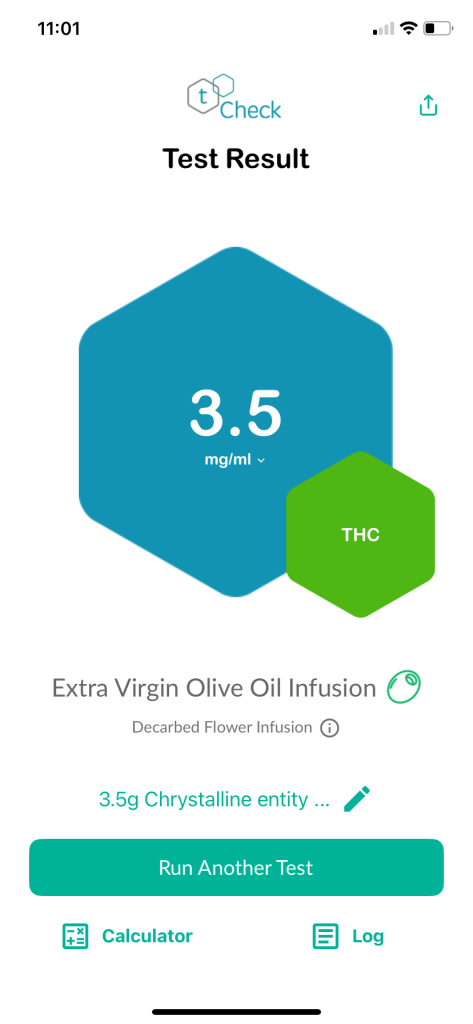
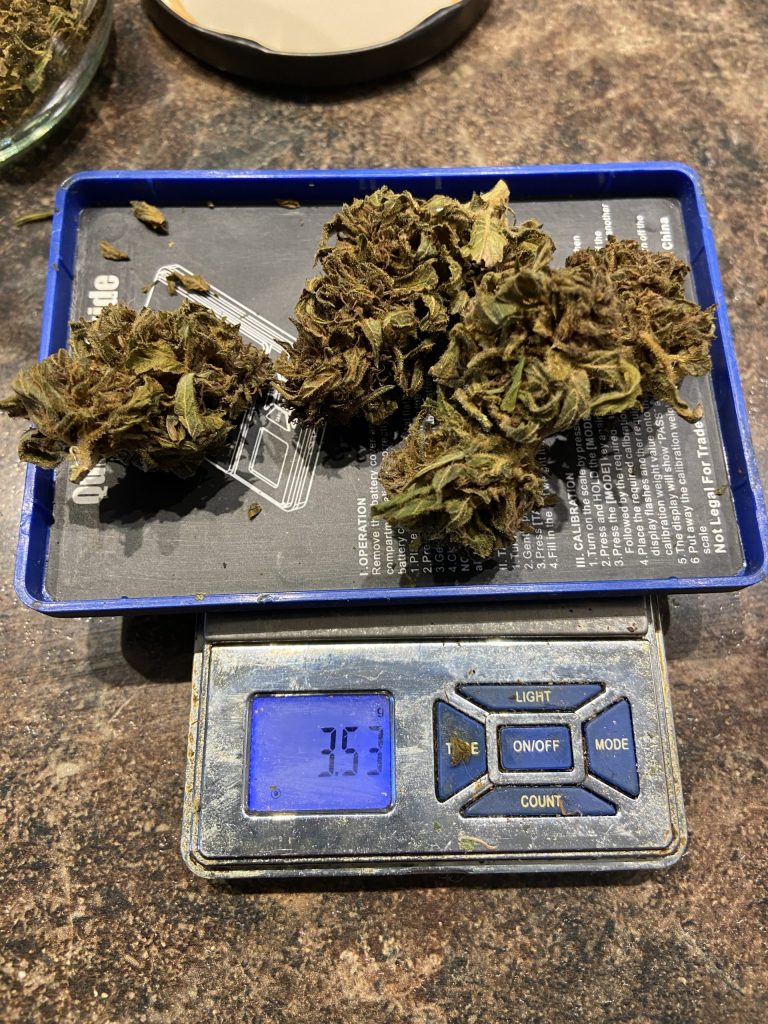
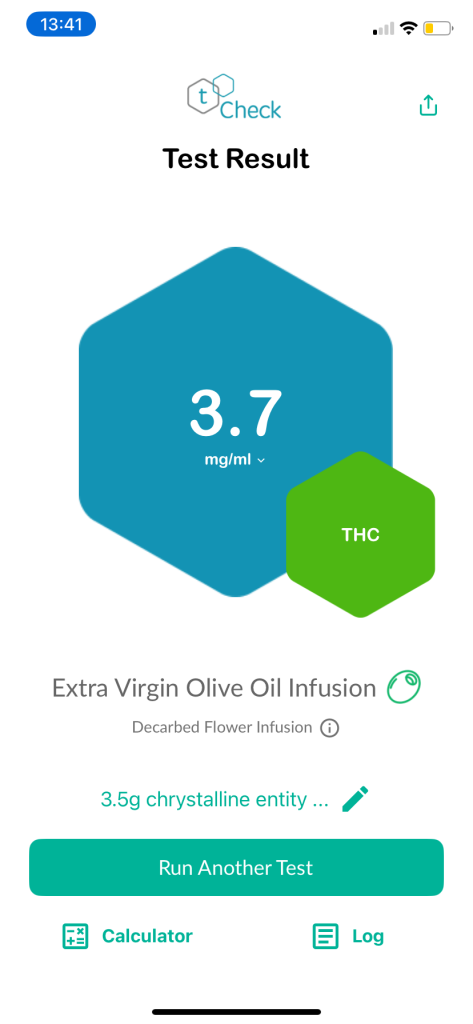
I don’t like telling people to change how they cook without testing it myself first. So I ran a few batches side by side in my own kitchen and used a tCheck device to measure potency.
Two infusions, two fats, two time points each. Here’s what I got:
| Infusion | Time | Result (mg/mL) |
|---|---|---|
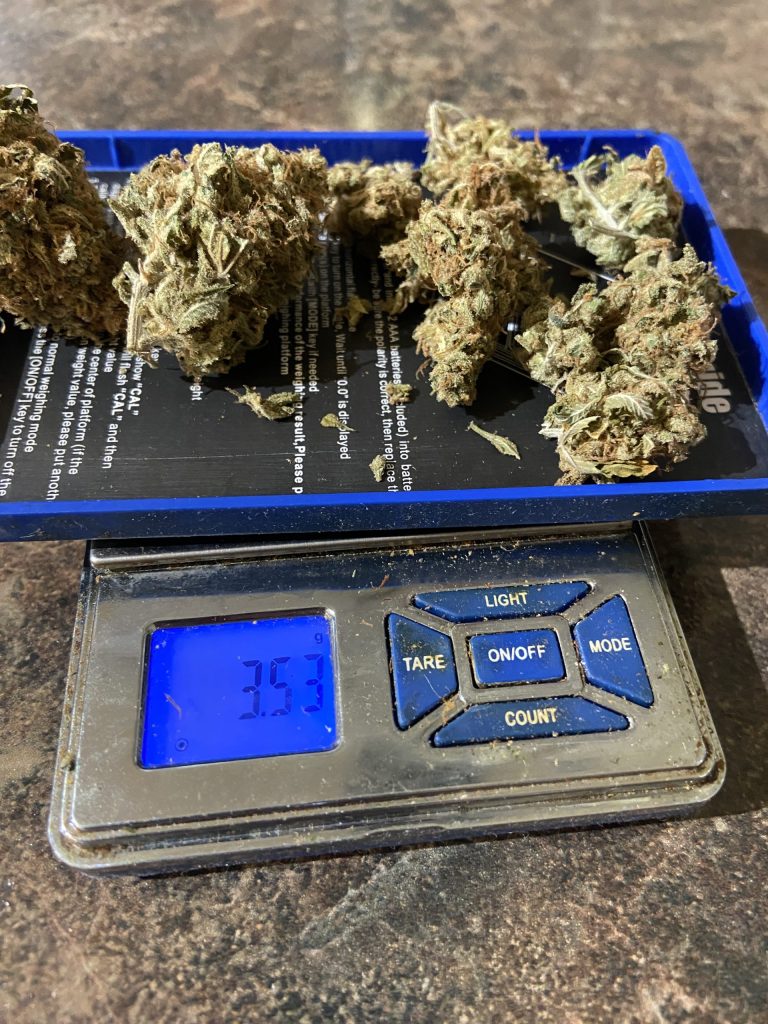
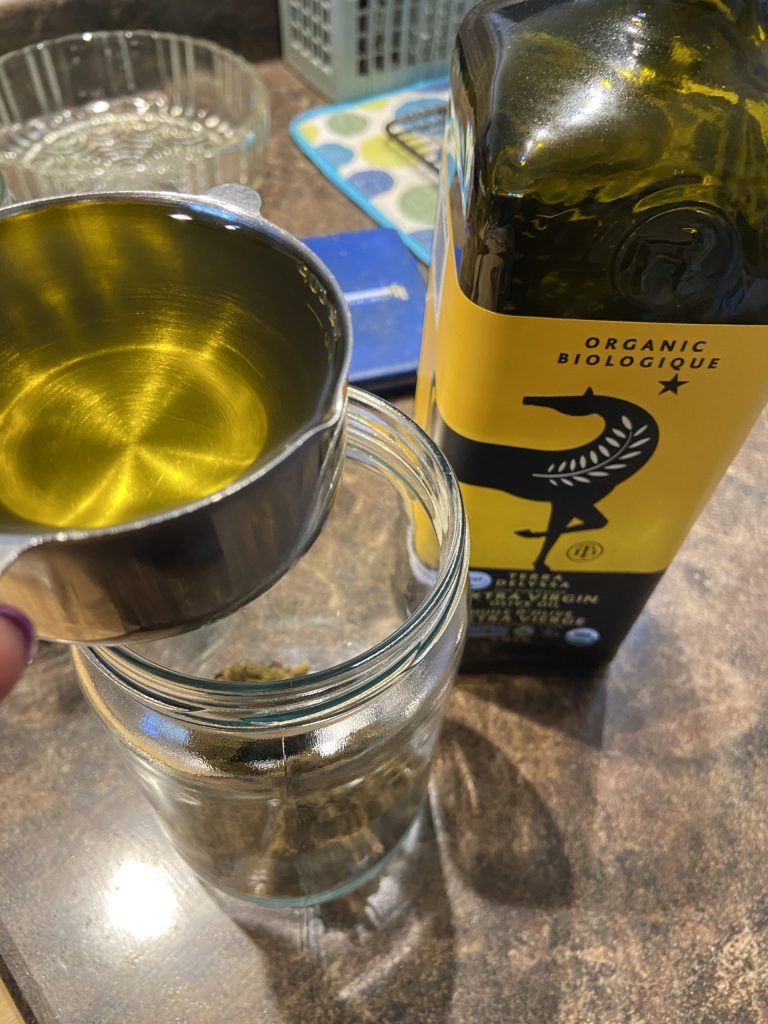
| Extra virgin olive oil, 3.5g cannabis | 30 minutes | 3.5 mg/mL |
| Extra virgin olive oil, 3.5g cannabis | 2 hours | 3.7 mg/mL |
| Butter (CBD Charlotte’s Angel), 7g cannabis | 30 minutes | 3.0 mg/mL |
| Butter (CBD Charlotte’s Angel), 7g cannabis | 2 hours | 3.2 mg/mL |
In both cases, an extra 90 minutes on the stove returned 0.2 mg/mL more. That’s not nothing, but it’s also not a reason to build your schedule around long infusion times. For most home cooks making a batch for personal use, that difference is not meaningful.
The Tincture Exception
Fat infusions and alcohol infusions behave differently. In my tincture experiment, a 10-minute extraction yielded 2.6 mg/mL. A 24-hour soak almost doubled that, at 5.3 mg/mL. So if you’re making alcohol-based tinctures and want maximum extraction, time does matter there. A quick 10-minute tincture is still useful if you need something fast, but longer is legitimately better for alcohol.
Why Infusion Times Actually Matters for How You Cook
The practical benefits of a 30-minute infusion are real, and not just about saving time, though that’s significant too if you make edibles regularly.
Better flavor. Longer infusions pull more chlorophyll and plant compounds into your fat, which is what gives infused butter that green, grassy taste. A shorter infusion can produce a cleaner-tasting fat that doesn’t overpower your recipes.
Less cannabinoid degradation. THC degrades when exposed to heat over extended periods. A shorter infusion reduces that exposure.
More consistent results. Fewer variables and a shorter process tend to produce more repeatable outcomes from batch to batch.
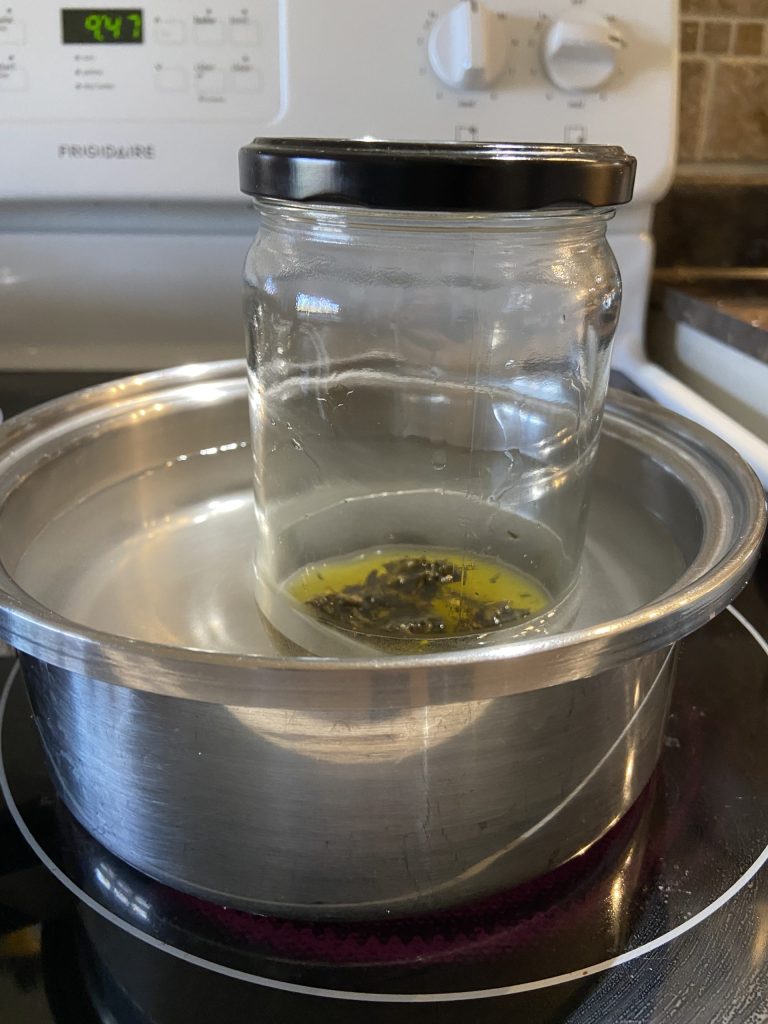
No specialized equipment required. If the myth of long infusion times made you feel like you needed to buy a dedicated infusion machine to make great edibles, this is your permission to reconsider. A pot of water, a clean glass jar, a thermometer, and 30 minutes is a complete setup.
I still use my infusion devices and I genuinely love them. But I don’t want the idea that you need one to be a barrier to making edibles at home. Your kitchen is the best dispensary you’ll ever have.
Pro Tip: The Second Wash
If you want to be thorough without spending extra time, consider a second wash. Use the same fat with a fresh portion of decarbed cannabis, infused again for 30 minutes. This builds potency efficiently, often more so than simply extending the first infusion.
Related Resources
- Episode: Vanessa Lavorato on How to Eat Weed & Have a Good Time
- Episode: Decarboxylation Is Still Sexy
- Cannabis Infusions: Your Complete Guide
- Free Dosage Calculator
- Ghee as an Infusion Medium
- Olive Oil as an Infusion Medium
The Short Version Of Infusion Times
For fat-based infusions (butter, oil, ghee, tallow), 30 minutes with the right conditions extracts cannabinoids just as effectively as two hours. Decarboxylation, temperature, surface area, agitation, fat choice, and ratio are the variables that matter. Time, past about 30 minutes, is mostly theater. For alcohol tinctures, time does still make a meaningful difference.
That’s it for this week friends. If this changes how you make your infusions, I’d love to hear about it. Please email me any questions, comments, pictures of your creations or anything else, I love hearing from listeners! Direct messages to stayhigh@bitemepodcast.com, or the podcast hotline.
You can also support the show by subscribing, sharing episodes, leaving a review or buying me a cookie! Whatever way you choose, I’m grateful that you’re listening.
Stay high,
Margaret
FAQ For Cannabis Infusion Times
Do I really need to decarboxylate before infusing?
Yes, without exception. Raw cannabis contains THCA, which is not psychoactive. Decarboxylation converts it to THC by removing a carboxyl group through heat. If you skip this step, your infusion will have very little effect regardless of how long you infuse. Oven at 240°F (115°C), 30 to 40 minutes, before the fat ever gets involved.
What temperature should my fat be during infusion?
A gentle simmer between 160°F and 180°F (71°C to 82°C) is the sweet spot. Hot enough to facilitate extraction, cool enough to avoid degrading cannabinoids. The double boiler method (a glass jar in a pot of simmering water) is the easiest way to maintain this range at home without precise equipment.
Does the type of fat I use affect how much THC or CBD I extract?
To some extent. Fats with higher saturated fat content, like coconut oil, butter, ghee, and beef tallow, tend to be efficient extraction mediums. Olive oil and avocado oil also work well. The differences between common culinary fats are not dramatic enough to be your primary decision factor. Use a fat that makes sense for what you’re cooking.
Should I grind my cannabis before infusing?
Breaking it up by hand or with scissors is sufficient. Over-grinding to a fine powder can make straining much harder and can push more chlorophyll into your fat, affecting flavor. Medium-coarse pieces expose enough surface area for efficient extraction.
What if I’ve always infused for several hours and my edibles work great?
Then keep doing it if you enjoy the process. The science says you’re probably not extracting meaningfully more after 30 minutes, but if the ritual of a long slow infusion is part of how you cook, that’s a completely valid reason to continue. Cannabis cooking is both a science and an art. The point of this information is to free you, not prescribe to you.
Does the 30-minute rule apply to alcohol tinctures too?
No. In my own tests, a 10-minute alcohol extraction yielded about 2.6 mg/mL, while a 24-hour soak produced 5.3 mg/mL, nearly double. Alcohol behaves differently than fat as an extraction medium. If you’re making tinctures and want maximum potency, longer is genuinely better. That said, a quick 10-minute tincture is still functional if you need something in a hurry.
How do I know how potent my infusion actually is?
You can estimate potency using the Bite Me Dosage Calculator, which uses the labeled THC percentage of your cannabis along with your fat and cannabis quantities to calculate approximate mg per serving. For more precise results, devices like the tCheck can test actual cannabinoid content in your finished infusion.
Is it worth buying a dedicated cannabis infusion machine?
Not necessarily, especially now that you know a 30-minute stovetop infusion can be just as effective. A pot, a clean glass jar, a thermometer, and your stove is a complete setup. That said, infusion machines do offer convenience and temperature precision, which can matter for consistency if you’re making large or frequent batches. Think of them as a nice upgrade, not a requirement.
Timestamps For Infusion Times Audio
Introduction to Infusion Times (00:00:04)
Margaret introduces the episode, discussing cannabis infusion times and the science behind effective edibles.
Stoner Trivia Question (00:00:58)
Margaret engages listeners with a trivia question about a Quentin Tarantino film featuring Bridget Fonda.
Popcorn Obsession (00:02:17)
Margaret shares her recent love for making popcorn, both infused and non-infused, and its magical qualities.
Upcoming Camp Canna Event (00:03:24)
Margaret talks about her excitement for the upcoming Camp Canna event for cannabis enthusiasts.
Inspiration from Vanessa Lovato (00:05:29)
Margaret credits Vanessa Lovato for inspiring the episode’s topic on cannabis infusion times through her book.
Debunking Long Infusion Times Myths (00:06:32)
Margaret discusses the myth that long infusion times are necessary for maximum potency in cannabis cooking.
Understanding Extraction Science (00:09:36)
Margaret explains the science behind cannabinoid extraction and factors affecting infusion times efficiency.
Research on Extraction Times (00:10:42)
Margaret reviews scientific studies showing that shorter infusion times can be just as effective.
Factors Affecting Infusion Potency (00:12:13)
Margaret outlines key factors like decarboxylation, temperature, and surface area that influence infusion potency.
Benefits of Shorter Infusion Times (00:16:06)
Margaret shares the advantages of infusing cannabis for shorter periods, including time savings and flavor.
Personal Experiment Results (00:18:10)
Margaret presents findings from her own infusion experiments comparing 30-minute and 2-hour infusion times.
Cannabinoid Extraction Time (00:21:49)
Quick extraction of cannabinoids in just ten minutes for efficient cooking.
30-Minute Infusion Effectiveness (00:22:09)
Research shows 30-minute infusions can extract cannabinoids as effectively as longer methods.
Art and Science of Cannabis Cooking (00:22:29)
Combining science and personal creativity in cannabis cooking for enjoyable edibles.
Efficiency in Edible Preparation (00:22:49)
Aim for more efficient and enjoyable edible experiences, saving time in the kitchen.

[…] See this post on the new research on shorter infusion times. […]