Warm, Versatile, and The Best Carrier For THC You’ll Ever Work With.
Welcome, friends, to Episode 285. Today we’re doing a deep dive, a big bite, into one of the most beloved ingredients you can bring into your edibles kitchen.
Chocolate. Cannabis infused chocolate.
February is on my mind, and yeah, Valentine’s Day comes with it. But what if we skipped the hearts-and-flowers for a minute and talked about what people actually love about this time of year? Chocolate doesn’t need a holiday to earn its place. It’s been sacred for centuries, and honestly, the Aztecs were onto something.
So let’s get into it.
Listen to this episode:
Why Chocolate Is the MVP of Edibles
I’ll be real with you: I love chocolate, but it might not even be the very top of my sweetened foods list. Caramel exists, and so does a good spicy dark chocolate that makes you pause mid-bite and just think, yes, that’s exactly right.
But here’s why chocolate earns the MVP title when it comes to infusions:
It’s a fat powerhouse. The cacao butter in chocolate is rich in fats, and THC is fat-soluble. More fat means more efficient cannabinoid absorption. That’s not a marketing claim, it’s chemistry.
It masks cannabis flavor beautifully. That earthy, grassy taste that creeps into so many edibles? Chocolate handles it better than almost any other medium. You taste the chocolate first, last, and everything in between.
It’s shelf-stable. Chocolate is steady at room temperature and has a long shelf life, which makes it a practical choice for home cooks who want to make a batch and actually have it last.
Indulgent, approachable, effective. It really does check every box.
How to Infuse Chocolate with Cannabis
There are two primary approaches, and both work well depending on what you’re going for.
Method 1: Infused Cacao Butter
This is the more hands-on method and gives you the cleanest, most stable result.
- Decarboxylate your cannabis first. You need to activate the THC before it can do anything useful. Oven at 240°F for about 40 minutes on a baking sheet. If you’re unsure how to do this, the Beginner’s Guide to Making Edibles inside the Bite Me Cannabis Club walks you through it from scratch.
- Combine your decarbed cannabis with cacao butter using a double boiler or a glass jar in a pot of water on the stove. I’ve also used the Ardent with an infusion sleeve, which reduces the mess considerably.
- Strain through a fine mesh sieve and cheesecloth to remove all plant material.
What you’re left with is infused cacao butter, ready to go into any chocolate recipe.
Method 2: Tinctures or Concentrates
Faster and simpler. Add a few drops of tincture or concentrate directly to melted chocolate and mix thoroughly.
A heads up: tinctures can slightly alter the flavor, depending on what’s in them. Concentrates like RSO or FECO tend to have less impact on taste. Either way, mix thoroughly so the cannabinoids are evenly distributed.
Do the Math Before You Eat
Chocolate edibles can be deceptively potent. That’s not a scare tactic, it’s just the reality of working with a high-fat carrier. The fat absorbs THC efficiently, which means your dose can hit harder than you expect.
Calculate your dose before you make a batch. You can use my online calculator on the website, where I also show the manual math if you want to understand the process from the ground up. If you’re working with homegrown cannabis and aren’t certain of the potency, give yourself a range, start with a smaller serving, and work up from there.
Start low, go slow. You’ve heard it everywhere because it’s always true.
A Little History Worth Knowing
Chocolate has been adored for centuries, dating back to the Mesoamerican cultures of the Aztecs and Mayans, who revered cacao as a sacred gift from the gods. They consumed it as a bitter, frothy drink mixed with spices, including chili. Nothing like the sweet bar we unwrap today.
When chocolate made its way to Europe in the 16th century, sugar got added, and the rest is history. Today it’s a global obsession: a comfort food, a romantic gesture, a celebratory treat. Pairing it with cannabis feels natural because both are associated with pleasure, relaxation, a touch of indulgence, and real medicinal potential. The Aztecs also considered chocolate medicinal. Again, they weren’t wrong.
Theobromine: The Little Bonus Inside Every Bite
Chocolate contains theobromine, a naturally occurring compound in cacao beans. It’s a mild stimulant and a close chemical relative of caffeine, but much gentler on the nervous system. It provides a subtle mood lift and energy boost that complements the effects of cannabis nicely. Not a jolt, not a buzz, just a quiet lift.
This is also why chocolate is toxic to dogs: they can’t metabolize theobromine the way humans can. And because THC isn’t great for dogs either, please keep your infused creations away from your furry friends entirely. CBD is a separate conversation, but CBD in chocolate form is still a hard no for pets.
See the interview I did with vet Dr. Casara Andre for more on cannabis and pets.
Bean to Bar vs. Commercial: What You’re Actually Buying
When you’re sourcing chocolate for edibles, there are two very different worlds.
Bean to bar chocolate is made by small-scale artisans who control the entire process, from sourcing the cacao beans to the finished product. Single-origin cacao is common here, which means the chocolate carries distinct flavor profiles based on where it was grown, much like wine reflects its terroir. The quality is higher, the transparency is better, and it’s more expensive. Worth it if your budget allows.
For a fun side project: Madame Cannoli (wife of the late great Frenchie Cannoli) developed much of the palate-training coursework for the Ganjier program using single-origin chocolate. The episode I did with her is linked in the show notes, and if you want to develop your own tasting abilities, that is a beautiful place to start.
Commercial chocolate is mass-produced using bulk cacao beans and often contains additives like soy lecithin, extra sugar, and vanilla to standardize flavor and reduce cost. It’s affordable and widely available, but the complexity isn’t there, and the sourcing practices are often murky.
For everyday baking and infusions? Commercial chocolate gets the job done. For a special batch or a tasting project, reach for something better.
Which Chocolate Works Best for Edibles?
Not all chocolate is equal when it comes to infusing. Here’s how the main types break down:
Dark chocolate (50 to 100% cacao): This is your workhorse. High fat content, robust flavor, and the best capacity for masking cannabis. If you’re just starting, reach for something around 70% cacao and work from there.
Milk chocolate: Creamy, sweet, and undeniably delicious. But the added milk can dilute the potency of your infusion. It’s not off the table, and I’ve used it, but go in knowing it’s less efficient.
White chocolate: Made from cacao butter, sugar, and milk solids, with no cacao solids at all. I didn’t actually know that until I dug into this episode. It works for edibles, but it’s mild in flavor and lacks the depth of dark chocolate.
Cacao butter: Pure fat extracted from cacao beans, 100% fat, no competing flavors. It’s an incredibly efficient carrier for THC and other cannabinoids, and it’s what I use for topicals too. My lower back thanks me regularly for a cacao butter lotion bar infused with cannabis, based on a recipe from topicals expert Amanda Breeze.
Sourcing Ethically Matters
I’ll get briefly up on my soapbox, because I do think about this when I’m shopping for ingredients.
The chocolate industry has a troubling history of child labor and unsustainable farming practices, particularly in cacao-producing regions of West Africa. When you’re buying commercial chocolate from large companies, you’re often buying into that system.
When you can, choose chocolate certified by Fair Trade, Rainforest Alliance, or Direct Trade programs. Fair Trade ensures fair wages and safe conditions for farmers. Rainforest Alliance promotes sustainable practices. Direct Trade builds relationships between farmers and chocolate makers. Bean to bar producers often have these values built into their model.
I also buy Fair Trade coffee, and I shop my local farmers market. Farmers feed the world, and I want to support companies that don’t do things cheaply at the expense of the people who grew the food. That’s how I feel about it.
Tempering Chocolate: Do You Need To?
Tempering is the process of carefully melting and cooling chocolate to stabilize its crystals, resulting in a glossy finish, crisp snap, and smooth texture. You know that satisfying sound when you break a good chocolate bar? That’s tempered chocolate.
I’ll be honest with you: I have never actually tempered chocolate myself. When you’re making edibles for your own consumption, a dull finish or slightly soft texture usually doesn’t matter. If you’re making something for other people, or you care about presentation, it matters more.
The basic process: melt your chocolate to about 115°F for dark chocolate, let it cool to around 82°F, then gently bring it back up to 88 to 90°F. That temperature cycling stabilizes the cocoa butter crystals and gives you that professional finish.
Beyond Brownies: Creative Ways to Use Cannabis Infused Chocolate
Brownies are great. I have brownie recipes on the website and I’ll never talk anyone out of making them. But chocolate is way more versatile than that.
Sweet applications:
- Chocolate-dipped strawberries or pretzels
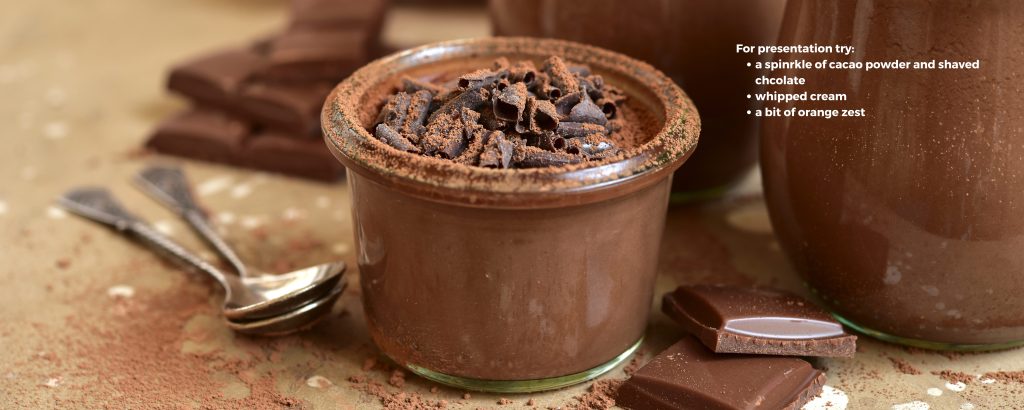
- Chocolate mousse
- Chocolate chip cookies
- Chocolate coffee torte (a recipe from Chef Lucas, a fellow Ganjier out of Berlin, and one of the best things I’ve made)
Savory applications, because yes, really:
- Mole: A rich, complex Mexican sauce made with chilies, spices, nuts, seeds, and chocolate. Served over turkey or chicken, the chocolate adds depth and richness without sweetness. Infuse the oil or fat in the recipe with cannabis and you have a genuinely extraordinary edible.
- Chocolate dry rub for steak: Cacao powder, smoked paprika, chili powder, garlic powder, salt, and pepper, rubbed generously onto a steak before grilling. The cacao creates a deep, earthy crust that pairs beautifully with the richness of the meat. I hadn’t thought about what infused sauce to pair alongside this until I was recording the episode, so that’s on my list to figure out.
Drinks and self-care:
- Cannabis-infused hot chocolate (I made a Mexican hot chocolate for Bite Me, linked on the episode page)
- Chocolate martinis
- A DIY cannabis-infused chocolate face mask, for antioxidants and relaxation at the same time. Ancient Aztec energy.
Pro Tips and Common Mistakes
Don’t overheat your chocolate. Chocolate is delicate. High heat ruins the texture and can degrade your infusion. Use a thermometer.
Store properly. Keep infused chocolate in a cool, dark place to prevent melting and preserve both freshness and potency. If you didn’t temper it, the fridge is your friend.
Label everything. I will say this forever and I mean it. Label your infused creations clearly, especially if other people live with you or might be in your kitchen. Cannabis-specific molds with a leaf imprint are a great added signal on top of a labeled container.
Experiment. Chocolate pairs beautifully with chili, sea salt, orange, caramel, and plenty of things you haven’t tried yet. Your kitchen is the best dispensary you’ll ever have. Use it.
That’s it for this week friends. If you’ve made some cannabis infused chocolate you want to show off or anything else, I’d love to see! Direct messages to stayhigh@bitemepodcast.com or the podcast hotline.
You can also support the show by subscribing, sharing episodes, leaving a review or buying me a cookie! Whatever way you choose, I’m grateful that you’re listening.
Stay high,
Margaret
FAQ: Cannabis Infused Chocolate
What type of chocolate is best for infusing with cannabis? Dark chocolate with at least 70% cacao is your best starting point. The high fat content makes it an efficient carrier for THC, and the robust flavor does the best job of masking the taste of cannabis. Milk chocolate works too, but the added milk dilutes potency somewhat. White chocolate functions fine but lacks depth. If you’re new to infusing chocolate, start dark.
Do I need to decarboxylate before infusing chocolate? Yes, always. THC in raw cannabis is in its acidic form (THCA), which doesn’t produce psychoactive effects. Decarboxylation, usually done in an oven at 240°F for about 40 minutes, converts THCA into active THC. Skipping this step means your edibles won’t do what you made them to do.
Can I use a tincture instead of infused cacao butter? You can. Adding tincture or concentrate directly to melted chocolate is faster and simpler than making infused cacao butter from scratch. Concentrates like RSO or FECO tend to have the least impact on flavor. Tinctures may alter the taste slightly depending on what’s in them. Either way, mix thoroughly so your dose is distributed evenly.
Why are chocolate edibles so potent compared to other infusions? Because of fat. THC is fat-soluble, meaning it binds to fat and is absorbed more efficiently when consumed with it. Cacao butter is very high in fat, making chocolate one of the most effective carriers for cannabinoids. This is a feature, not a flaw, but it does mean you should calculate your dose carefully and start with less than you think you need.
Is there a risk of accidental dosing with chocolate edibles? Yes, and it’s worth taking seriously. Because cannabis-infused chocolate looks exactly like regular chocolate, it’s easy for someone to consume it without realizing it’s infused. Always label your containers clearly. Cannabis-specific molds with a leaf imprint add a visual cue on top of the label. If you live with other people or frequently have guests, store infused items separately and never leave them unlabeled.
Does dark chocolate really mask the taste of cannabis? Better than most other things, yes. The bold, complex flavor of dark chocolate tends to overpower the earthy, grassy notes of cannabis. That said, the quality of your infusion matters too. Infused cacao butter tends to produce a cleaner-tasting result than a tincture added to melted chocolate. The better your technique, the less you’ll taste the plant.
Can I use cacao butter for things other than edibles? Absolutely. Infused cacao butter is wonderful in topicals too. It absorbs well, smells naturally good, and creates a smooth, skin-friendly product. I use a cacao butter lotion bar on my lower back regularly. Amanda Breeze’s topicals cookbook has a cacao lotion bar recipe I recommend if you want to try it yourself.
What is theobromine and does it affect my high? Theobromine is a naturally occurring compound in cacao beans and a mild stimulant, chemically related to caffeine but much gentler. It provides a subtle mood lift and energy boost that many people find complements cannabis effects nicely. It won’t dramatically change your experience, but it’s part of why chocolate-based edibles often feel a little different than other formats.
Is bean to bar chocolate worth the extra cost for edibles? It depends what you’re making. For everyday batches, commercial chocolate gets the job done. For a special batch, a tasting experiment, or anything you’re giving to people you want to impress, bean to bar offers noticeably better flavor and usually better sourcing practices. If you want to start developing your own tasting palate, single-origin chocolate is a genuinely interesting project.
How should I store cannabis-infused chocolate? In a cool, dark place away from heat and light, both of which can degrade cannabinoids and affect texture. If you didn’t temper the chocolate, the fridge is a safer bet to prevent melting. Always store in a sealed, clearly labeled container.
Timestamps For Cannabis Infused Chocolate Audio
Welcome to Episode 285 Cannabis Infused Chocolate (00:00:05)
Introduction to the podcast episode, focusing on cannabis infused chocolate and its significance in edibles.
Listener Predictions for 2025 (00:02:08)
Margaret shares listener insights on trends in cannabis edibles for the upcoming year.
Microdosing and Responsible Dosing (00:03:04)
Discussion on the importance of microdosing for new cannabis users and seniors.
Making More Edibles in 2025 (00:05:14)
Listeners express intentions to create more edibles, including lip balm.
Listener Engagement for Best Snacks and Recipes (00:06:18)
Margaret invites listeners to share their favorite snacks and recipes for an upcoming episode.
Chocolate as the MVP of Edibles (00:07:28)
Exploring why chocolate is ideal for cannabis infusions due to its properties.
Cultural Significance of Chocolate (00:08:35)
Chocolate’s historical reverence and transformation from bitter drink to sweet treat.
Theobromine and Its Effects (00:10:55)
Explanation of theobromine’s mild stimulant properties and its interaction with cannabis.
Sourcing Chocolate: Bean to Bar vs. Commercial (00:12:04)
Differences between high-quality bean to bar chocolate and mass-produced commercial chocolate.
Types of Chocolate for Edibles (00:14:39)
Comparison of dark, milk, and white chocolate for making cannabis infused edibles.
Benefits of Cacao Butter (00:16:58)
Cacao butter as an efficient carrier for THC, ideal for infusions and topicals.
Ethical Sourcing of Chocolate (00:19:08)
Discussion on child labor and sustainability issues in chocolate production.
Certifications for Ethical Chocolate (00:20:14)
Importance of fair trade and sustainable practices in chocolate sourcing.
Tempering Chocolate (00:21:14)
Explanation of tempering chocolate and its importance for texture and presentation.
Infusing Chocolate (00:23:12)
Margaret discusses methods for infusing chocolate, including using cacao butter and tinctures.
Calculating Dosage (00:25:09)
Importance of calculating the potency of cannabis infused chocolate edibles and available resources for assistance.
Creative Uses for Cannabis Infused Chocolate (00:26:51)
Exploring various recipes beyond brownies, including savory options like mole and chocolate-rubbed steak.
Chocolate in Culinary Pairings (00:28:00)
Ideas for pairing cannabis infused chocolate with meats and other dishes for unique flavor experiences.
Chocolate Drinks and Self-Care (00:30:22)
Suggestions for cannabis infused drinks and beauty products, highlighting versatility in chocolate applications.
Cannabis Infused Chocolate Storage and Labeling Tips (00:31:16)
Advice on proper storage, labeling edibles, and avoiding common mistakes in chocolate preparation.
Encouragement for Experimentation (00:32:14)
Margaret encourages listeners to experiment with cannabis infused chocolate combinations and share their creations.
Margaret 00:00:05 Welcome friends to episode 285 and today we are doing an ingredient deep dive. A big bite into chocolate. Welcome to Bite Me, the show about edibles where I help you take control of your high life. I'm your host and Certified Ganjier Margaret and I love helping cooks make safe and effective edibles at home. I'm so glad you're here. And greeting friends. Welcome back to another wonderful episode of Bite Me. I am so glad to be here. It feels like it feels like it's been a minute. And that's because I did record and prepare a few episodes in advance, because I was going to be away for a week in the sunny South, and I didn't really have anything prepared for when I got back. So it's just nice to get back into my recording space so I can sit down and join all of you. And if you're tuning in for the first time, this will be a fun episode. We are going to be talking about chocolate, seeing as it's already February at the time of this recording.
Margaret 00:01:01 And of course, February often brings to mind Valentine's Day. But what if we just ignored Valentine's Day a little bit and just focused on the things that people really love about Valentine's? And one of those things is chocolate. So we're going to be doing a deep dive, a big bite into chocolate, if you will. And if you're if you've been around for a while, I really appreciate it. I'm so glad that you're here. It's folks like you that really keep the show going. So let's get into it. Before I do this big bite, though, I just wanted to share a few things. And recently I did an episode on 2025 Trends in Edibles and Cannabis. And that was a really fun episode to put together, because I reached out to a lot of folks who were working actively in the cannabis community, and they all had their own thoughts around what they thought we would see for this year. But I did ask you. What do you think? I was not disappointed. There is a number of you that replied, and I have compiled a few of these answers so I can share them with you.
Margaret 00:02:08 So thank you for those who took the time to reach out and let me know what they think might we might see for 2025. So first of all, we have a listener who said I think edibles edibles use will increase in 2025. More brands and options. And that listener wrote in from Watertown, New York, via fan mail. I hope you're right, because I would love to see that more brands and options. And I really do think that the edibles space is expanding quite a bit, because a lot of folks, if you listen to that episode, if you haven't listened to it, you should go back and check it out, because it wasn't just me making predictions, it was people who are involved in the cannabis space and a lot of different capacities, and some of them are actively involved in the commercial cannabis space, and they're creating products for the market. And I think that as cannabis becomes more legal and more jurisdictions, a lot of people are becoming more curious about it more and more and more.
Margaret 00:03:04 And one of the easy ways that people are finding their entry into cannabis is through food, which means we're wanting to see some new and exciting things, because those of us who have been around for a while, we would like to see something a little bit different. So I totally agree with that sentiment. So thank you for sharing that. Next, we have a comment that says other than seeing our products on every shelf, we would love to see more people talking about microdosing and responsible dosing for a big demographic of users that are new to cannabis or as supplemental use for seniors, people switching from alcohol, etc. we could talk about it for days and that came from social sessions. Chocolate via Instagram so you can find them at social sessions, chocolate and continue the conversation with them over there. And I do think that microdosing and responsible dosing Finding that minimum effective dose is definitely a smart way to approach cannabis, especially for those who are new. For seniors, people are wanting to eschew alcohol, and I'm here for that because of course, there's always going to be people who love those big, heavy doses or require them if it's going to help them feel better because they're using it medicinally.
Margaret 00:04:13 The beautiful thing about cannabis is that it can really be tailored to each individual out there. And I'm not saying cannabis is a panacea by any means. We're all so different. It just doesn't suit some people. Some people don't like the way it makes them feel. But for many folks out there, maybe the big dose doesn't work. But a micro dose is what helps them feel better in their body. And I think responsible dosing is always worth talking about, so I really appreciate that comment. Social sessions. Chocolate. Thank you for sharing. And last but not least, I predict myself making more edibles in 2025. I will also try my hand at making lip balm and that came from being switched to a via the Bite Me Cannabis Club and I to predict myself making more edibles in 2025. But I love to hear when folks are saying that they're going to try and make an effort to make more edibles in their life. And making lip balm is a wonderful way to include edibles in your world, even though you're not going to get high from that.
Margaret 00:05:14 I was actually recently at a small event in my city, and a fellow there had made a whole bunch of CBD lip balms, and he gave them out. And they are so nice. I just find in the winter time I'm in Canada. If you didn't know, and it's cold and my skin gets so dry, which is a complaint that you hear many people talk about because just that cold wind and air in the wintertime is very drying and the heat we use to warmer houses. So something like a CBD infused lip balm is a real a real treat when things are really dry. So making edibles doesn't necessarily have to mean making more things you'll eat. It can be making more things that you'll rub on your body. And I love cannabis topicals so much I can really get behind that too. Thank you for all those listener predictions. I really appreciated it. And of course, you can still share what you think we might be seeing in 2025. It's still early yet. We're only just a month in, and I'll share them on the show for another upcoming episode that I would love to do.
Margaret 00:06:18 I would like to compile a list of listener best snacks and recipes and suggestions for an upcoming episode, so those could be things that you love to eat when you're elevated. Or they could be specific recipes that you really enjoy to get elevated. Either one. I would love to hear them, and you can let me know a few different ways you can email me. You can send me a voice message via the podcast hotline. You can send a fan mail, however is easiest for you. I'm also reachable on Instagram and that's the social platform I tend to be most active on. However, you want to get back to me and let me know because I think it would be a fun episode. It's all fine and dandy for me to talk about the recipes that I want to make and share them with you all, but sometimes I want to hear about what snacks and recipes you're actually using in your everyday lives. Consider sharing those with me. Now let's get into the subject of chocolate. Chocolate isn't just a treat.
Margaret 00:07:28 If you ask me, it is a vehicle for greatness. So today I'm bite me. We're going to be taking a big bite into why chocolate is the MVP of edibles. How do you use it? Like a pro and some mind blowing ways to take your cannabis infused creations to the next level. And we're going to cover a few different things today. We're going to cover sourcing, trade practices, cooking tips, and some surprising uses you may not have thought of. Without further ado, let's get into everyone's favorite ingredient chocolate. Now, I do have to say I realize maybe not everybody is totally as in love with chocolate as I am. And as much as I love chocolate, it's probably not even the top thing that I love to eat that is sweetened. Surprisingly enough, there is a reason why chocolate is the best for edibles. The fat content in cacao butter makes it an ideal carrier for THC and other cannabinoids. It can mask the flavor of cannabis of cannabis better than many other mediums, and it has a long shelf life in a stable at room temperature.
Margaret 00:08:35 So for a lot of those reasons, chocolate really checks all the boxes when it comes to something that you might want to infuse. There's a cultural love affair with chocolate. It's universally loved. Pairing it with cannabis feels like a match made in heaven. It's indulgent, it's comforting. It's versatile. It's no wonder why people reach for chocolate. And I will say, one of my favorite ways to consume chocolate. I do like dark chocolate, but I love spicy dark chocolate. I find the mix of spice and chocolate is just one of my favorite things. Chef's kiss Noir I also love the pairing of chocolate and caramel. So who am I kidding? I really do actually like chocolate. Now that I think about it. But chocolate has been adored for centuries. I like chocolate, you like chocolate, but it dates back to the Mesoamerican cultures, like the Aztecs and the Mayans, who revered cacao as a sacred gift from the gods. And I don't think they are wrong, and they consumed it as a bitter, frothy drink mixed with spices like chili.
Margaret 00:09:36 And far from the sweet treat that we're familiar with today. And as we all know, if you take some some unsweetened baker's chocolate, it tastes very different than the stuff that we add sugar to. Of course, when chocolate made its way to Europe in the 16th century, it was transformed into the creamy, sweet confection that we'd love, becoming a symbol of luxury and indulgence. And today, chocolate is a global obsession. It's a comfort food, a romantic gesture, a celebratory treat. And pairing it with cannabis feels natural because both are associated with pleasure, pleasure, relaxation, a touch of indulgence, and maybe even a little medical relief. Because chocolate was used in a whole lot of ways and was seen to be medicinal in some cultures a long time ago. And chocolate's universal appeal makes it the perfect medium for edibles. It's familiar, approachable, and downright irresistible, and I have over the years made plenty of chocolate infused recipes of various sorts. And there's a reason why. Because it's wonderful. Now, chocolate also contains Teens feel bromine, which is a mild stimulant that complements the effects of cannabis, and theobromine is a naturally occurring compound found in cacao beans cacao beans.
Margaret 00:10:55 It's a mild stimulant and a close chemical relative of caffeine, though it's much gentler on the nervous system and theobromine. If I'm saying that correctly, of course, provides a subtle energy boost and mood lift, which complements the effects of cannabis. So the difference between theobromine and caffeine is you're probably not going to get that. It's not going to feel like the caffeine boost that you get in the morning, but it's a lot gentler. And for that reason, more people can enjoy it. I know people who have to be very cautious about consuming caffeine, but chocolate is a different story. Now, theobromine is also the reason why chocolate is toxic to dogs. They can't metabolize it like humans can. So keep your cannabis infused chocolates away from your furry friends. I also understand that THC is not great for dogs, so that's a double whammy if that is the case. Chocolate and cannabis are not great for dogs now, actually. Apologies. I should reiterate chocolate and THC specifically because you can give CBD to your dogs, but you don't want to give CBD to your dogs in chocolate form.
Margaret 00:12:04 Keep that for yourself. Now, what about sourcing chocolate? There's a couple of differences between your bean to bar varieties and your commercial chocolate. And what's the difference? And why does it matter for edibles? I think what you're going to find is bean to bar chocolate offers higher quality and better flavor, but it can be pricier. So bean to bar chocolate is going to typically be made by small scale artisans, who control the entire process, from sourcing the cacao beans to crafting the final product. The focus is on the quality, the flavor, and ethical practices in harvesting that chocolate. It often uses single origin cacao beans. Cacao beans, which highlight the unique flavor profiles. If you didn't know, chocolate can have different flavor profiles depending on where it's grown, where it's from, and it's more expensive but offers a superior taste and texture. And I did an episode a little while ago now with Madame Cannoli, and she is the wife of the late great Frenchie Cannoli, the master Keshishian, but she in her own right, has a very developed palate, and she wrote a lot of the course the course work for the Ganjier program around using your palate, developing it, and learning how to taste.
Margaret 00:13:29 And we cover that pretty extensively in the episode that I did with her. So I'll link to it in the show notes so you can find it. Because a lot of the things she a lot of the ways that she works on developing palate and and taste is through single origin chocolate, so that can be a fun project for you to try if you want to sort of experiment with taste and flavors. Now, being a bar chocolate can obviously be more expensive, but offers a superior taste and texture. Alternatively, commercial chocolate is mass produced by large companies using bulk cacao beans. Cacao beans. I'm having trouble saying that today. It often contains additives like soy lecithin, vanilla, extra sugar to standardize the flavor and to reduce costs. There's also less transparency in sourcing and production practices, and that can often be very problematic and affordable. But it is affordable and widely available, but lacks the complexity of a bean to bar chocolate. I do recall also Madam Cannoli talking about things like lecithin and looking on the ingredient list to try and avoid those.
Margaret 00:14:39 If you're looking to buy chocolate for tasting as well. Now of course you have the different we have the different cacao percentages. You go to the store and not only do you have to think bean to bar or commercial chocolate options, but there's dark chocolate, milk chocolate, white chocolate. What's the best for edibles? Now, right off the bat. Dark chocolate 70% cacao. Cacao is ideal for infusions due to its robust flavor and high fat content. But let's look at them all. So dark chocolate is usually between 50 and 100% of cacao solids. So that's your cacao and your cacao butter. It's bitter rich and intense and flavor. And it's ideal for edibles due to its high fat content and robust flavor, which masks the cannabis as well. And because THC is fat soluble. You want the high fat content, because it's going to take in more of that cannabinoid that we are all looking to get elevated with. Then you have milk chocolate and that can also contains cacao solids. Milk powder and sugar is usually creamy sweet with a mild flavor.
Margaret 00:15:54 It's less ideal for edibles because the milk can dilute the potency of the cannabis infusions. Having said that, I have used milk chocolate on occasion. It's delicious, of course, because it has that extra milk and sugar in it, so you can still do it, of course. And then there's white chocolate and that is made from cacao butter, sugar and milk solids, but no cacao solids. That's actually something I didn't know until I started working on this episode. It's got a sweet, buttery and mild flavor, and it works for edibles as well, but it lacks the depth of flavor, and the dark chocolate provides why cacao butter is better for infusions. Cacao butter is the pure fat extracted from cacao beans. It's ideal for infusions because it's 100% fat, making it a highly efficient carrier for THC and other cannabinoids. It has a neutral flavor that won't compete with the chocolate. It creates a smoother, more stable product compared to using tinctures. And I do recall when my daughter had her vegan, gluten free restaurant.
Margaret 00:16:58 Cacao butter was used pretty regularly in a lot of the desserts that they were making, and they were delicious. You never would have guessed that they were vegan at all. But I mean, maybe you don't need to when you have that much chocolate going around. So and I also have infused cacao butter actually to make topicals too. And Amanda Breeze's book, I had her on the show a little while ago, not too long ago, actually, to talk about topicals and a few other subjects as well, but she is a true expert in the realm of topicals. And in her cookbook, her topicals cookbook that she put out there is a cacao lotion bar, and you infuse the cacao butter. And I use that pretty regularly on my lower back because one, it's nice because it's also easy to transport. If I have to go somewhere, I just have to put it in a little jar or container of some kind. But then it warms in your hands and you just rub it on your sore spots.
Margaret 00:17:52 For me, that's my lower back and it's lovely and it smells fantastic to cacao butter has a lovely smell, so it naturally smells good. So there's a lot of ways that you can use cacao butter for things other than just eating. Now of course, chocolate does have a bit of a dark side, and I would be remiss if I didn't talk about the ethical sourcing of chocolate. It's something that I do think about often when I am shopping for ingredients, when I'm making edibles, and when I'm just trying to feed myself. The dark side of chocolate is that child labor and unsustainable farming practices are pretty prevalent, especially as you move closer to the commercial side of of chocolate when you're buying commercial chocolate from huge companies. And so if you can. Choosing fair trade and ethically sourced chocolate can really help make a difference. The chocolate industry really does have a troubling history of exploitative labor practices, including using child labor and unsustainable farming in the cacao producing regions like West Africa. I often try to buy Fairtrade whenever possible, because I really hate the idea of the farmers at the other end in far flung areas of the world, not being able to even make a living doing the farming so that I can have chocolate over here.
Margaret 00:19:08 I also buy Fairtrade coffee as well, because I also go to my local farmers market, and I like to talk to the farmers that are growing the food that I buy at the farmers market. And I really do feel that farmers feed the world, whether they're making, you know, growing the local root vegetables that I'm enjoying in the wintertime or the coffee and the chocolate that I'm consuming. I drink coffee every day and chocolate's more of a treat. But farmers feed families, and I want to support companies that are not trying to do things cheaply so that they can make more money, because at the end of the day, the consumer still pays. Its the large companies that end up making all the money at the expense of the people who are growing the food with which their product would not be possible. So I'll get off my soapbox a little bit there, but that's how I feel about that. You can look for certifications when you're buying chocolate, and if you do find brands that are using certifications like Fair Trade, Rainforest Alliance and Direct Trade, then that means they've been vetted for these practices.
Margaret 00:20:14 Fair trade ensures fair wages and safe working conditions for the people growing the chocolate or whatever else it is that they're producing. The Rainforest Alliance promotes sustainable farming practices so that those people can continue farming in the way that they've known for as long as possible. They can maintain their their lifestyle and direct. Trade builds relationships between farmers and the chocolate makers. So you can also do this by supporting small brands. The bean to bar chocolate makers often prioritize ethical sourcing and transparency, because that's how they're getting a better practice and do your research. Now you can find brands that are known for their commitment to ethical practices relatively easily. It also depends on where you shop sometimes, but I find a lot of these brands are often available at larger grocery stores. You don't necessarily have to go to a specialty store to find them. So just something to keep in mind. I know sometimes they can be a bit more expensive, and we all have to make decisions as to whether that's something that can fit into our budget or not.
Margaret 00:21:14 It's something that I like to do, and I encourage others to do it whenever possible. But we all have to do what's right for ourselves. Now, cooking and baking with chocolate, there is a term called tempering chocolate. And we're going to talk about why it's important for edibles, and I'll talk quickly about how to do it at home. And then I'll find. I'll be sure to include a video in the show notes on the website on how to do it. Admittedly, I've never actually tempered chocolate myself, but when I was reading this, I was like, I can see why it would be important because it. Tempering is the process of carefully melting and cooling chocolate to stabilize its crystals, giving it a glossy finish, crisp snap and smooth texture. So I think you can probably imagine when you take a chocolate bar, especially that bean to bar stuff, or I guess, anything commercially made as well. And you and you break it and you hear that snap that's tempered chocolate Untempered chocolate can look dull, feel grainy, and melt too easily.
Margaret 00:22:15 Now, depending on your application, this may not matter too much. And this is probably why I've never actually tempered chocolate. I have met chocolate makers in the past who obviously have to temper their chocolate because the presentation of their chocolate is part of why we buy. You go into a chocolate shop. There's a couple of beautiful actually one just closed. Sadly, a chocolate shop in my town closed, and he had beautiful chocolate. And of course, that was likely all tempered because that that visual presentation of his creations and they were almost they were art tempts you to buy. But if you're making something for yourself, maybe you know, the chocolate looking a little dull, grainy and melting too easily isn't as big of a concern, especially if you're making it yourself. If you're making it for somebody else, that might change a little bit as well, but it's easier for me to keep something in the fridge because I might take I'm not transporting it anywhere. And if I make a batch of something, you know, I'm going to be eating it.
Margaret 00:23:12 It's infused. It's something I enjoy, and the presentation may not matter quite as much as it would otherwise. But in case you want to know how to temper chocolate, I'll include it in the show notes. just so you have an idea of how to do it. Because basically you're melting down the chocolate, you're breaking your chocolate down, you're melting it, and you're bringing it to a certain temperature, and then you're testing a small amount on parchment paper to get a glossy finish. So yes, I'll include something in the show notes around that if you're interested, because it can be an important step that you might want to take next. How do you infuse chocolate? There's a couple of different ways that you can do this. The one way is to infuse your cacao butter so you would carb your cannabis. And if you're unsure of how to do that, I have episodes and you can find information on my website, or I have The Beginner's Guide to Making Edibles over at the Bite Me Cannabis Club that is free for anybody to take.
Margaret 00:24:09 It's just a quick course on making edibles, but you're going to carb your cannabis and you're going to combine your cannabis with the cacao butter. You can do it in a double broiler. You can also do it in a glass jar in a pot of water. That's a method that I use very often. I actually admittedly used a device last time I did it in the ardent in an infusion sleeve to reduce the mass. So there's a bunch of different ways you can do it, but the double broiler or in a jar in a pot on the stove are obviously two ways you can do it without fancy equipment, and then you're going to strain it through a fine mesh sieve and some cheesecloth to remove the plant material. And then you have infused cacao butter to make chocolate and other recipes. And of course, you can also use a tincture method, which is where you would add a few drops of tincture or concentrate. I think concentrates would also work very well here. Think your rows, your feet, those that kind of thing, and you're going to add it to the melted chocolate and mix it really thoroughly.
Margaret 00:25:09 And this method is quicker. But depending if you're using a tincture, it might adjust the flavor just a little bit. You're probably going to run into that less if you're using a concentrate like an ISO or a Fico, but there's just something to be aware of. And of course you're going to want to calculate the dose of whatever it is that you're making per piece, so that you have a good idea of how potent these things are, at least a framework. And there's a lot of different ways to accomplish that as well. You can do the good old fashioned math, which is most people feel really intimidated by. But if you go to my website, I do have also an online calculator that you can plug some numbers into and figure it out that way. And if you scroll to the very bottom of that page, I do include the actual math. So if you want to try it out with the, you know, good old fashioned pen and paper, and then maybe you can use the calculator as well to see how they compare.
Margaret 00:25:59 Sometimes this is a bit of a guessing game, because if you started with plant material that you grew yourself, you may not be entirely sure of how strong the plant material is. You're kind of guessing, but I still think it's really important to give yourself a benchmark or some context for how strong these are, because even if you're guessing a little bit, you're going to have a range. You can always start low and go slow, which is always the recommended advice. And you'll hear that everywhere. And there's a reason for that. Chocolate edibles can be deceivingly potent, and that's because they are such a good carrier with the fat content for THC, so they might hit you a little bit harder. So if you make something and even if you figure out how potent they are, but you're using, you know, some figures that you're kind of having to guess a little bit, then don't be afraid to sort of take that serving and just reduce it by half or something, just to give yourself an idea, because we don't want you to have a bad time next.
Margaret 00:26:51 The last thing I want to talk about is some surprising uses for chocolate and edibles. Because of course, when you think of recipe ideas for chocolate, we think of brownies, which I love, and I do have some brownie recipes on the website. I do believe I've done some episodes around brownies, if I recall now that I'm getting five years into this and I've done so many recipes, sometimes I do tend to forget what I've already done. You could do chocolate dipped strawberries or pretzels. You can do chocolate mousses. You can do chocolate chip cookies. There's like, oh, there's so many wonderful things you can make with chocolate. One of my favorite recipes actually on the website is a chocolate coffee tort. That was a recipe that was given to me by Chef Lucas, a fellow Ganjier out of Berlin, Germany. Germany. And I love that cake. It's so good and I might have to make that again because it was delicious. So lots of wonderful ways to infuse chocolate. But what if you're not really a sweets person? Or what if you're kind of just tired of the old tropes of like, oh, the pot brownie? Well, what if you tried a mole? A mole is a rich, complex sauce from Mexican cuisine made with a blend of chilies, spices, nuts, seeds and, yes, chocolate.
Margaret 00:28:00 And it's often served over meats like turkey or chicken. And the chocolate adds depth and richness without making the sauce sweet. And often. Chocolate is used quite a bit in some of those Mexican cuisines, so it's sort of an interesting way to try incorporating chocolate without doing the traditional stuff. And I think I'm going to have to try it again. I have enjoyed Mole in Mexico before and it is definitely different and as rich as they say. And of course anything with chilies and spices in it is something that I'm going to say yes to. And as far as the cannabis infused mole, you infuse the oil or fat used in the recipe with cannabis for a unique savory, edible experience. Now, here's another idea for you what about chocolate and steak? Yes, chocolate and steak are a match made in culinary heaven. Cacao powder and a dry rub adds a deep, earthy flavor that complements the richness of the meat. So what you could do is try mixing cacao powder, smoked paprika, chili powder, garlic powder, salt and pepper and rub it generously onto a steak before grilling or searing, and the cacao can enhance the flavors and create a delicious crust.
Margaret 00:29:14 Now, that's not necessarily infused in that particular instance, you would might want to find a barbecue sauce of some kind or some kind of sauce that would pair nicely with a chocolate rub steak. And that's something I didn't really think about before I did this episode, actually, until right now. So maybe I'll have to find something for the episode web page again. Something that would pair beautifully with a chocolate rubbed steak, because I've not tried that before. But I love rubs and I make them often and have them on hand for when I want to do some grilling. I do barbecue a lot in the summertime because I don't want to be inside, but pretty much from June until September I'm outside cooking, so I'm definitely going to be trying this. Of course, you can also explore chocolate drinks. There are cannabis hot chocolates. I know I've done a Mexican hot chocolate for Bite Me. You could try chocolate martinis. You could try beauty and self-care products, like maybe a DIY cannabis infused chocolate face mask, which sounds lovely And because that will include antioxidants and relaxation together, there's so many things that you can do.
Margaret 00:30:22 Fun fact for you. The ancient Aztecs used chocolate as a currency and believed it had magical properties. I don't think they are wrong. So here's a few pro tips and common mistakes you may want to avoid. First of all, you don't want to overheat. Chocolate. Chocolate is delicate and overheating can ruin the texture and potency of your infusion. So this is a good time to make sure you have a thermometer on hand, just to make sure if you need it, you can make sure that you're keeping your chocolate at the correct temperature for whatever recipe it is that you're following. Storage tips you want to keep your edibles in a cool, dark place to prevent melting and to preserve freshness. And this is going to be important, especially if you didn't temper your your chocolate, which, as I said, I have never tempered chocolate before, so this would apply to myself as well. As always, labeling is super important. I will say this until My last dying breath. Label. Label. Label.
Margaret 00:31:16 You want to avoid accidental consumption. And if you label, then hopefully that won't happen. And of course, depending on what you're making, if it's something that's going into a mold, using cannabis specific molds can be really helpful. I really like the molds that might have a little imprint of a cannabis leaf or something like that, because that just indicates to the person, additionally that it's infused as well as the label that you put on your container. And last experiment, don't be afraid to mix chocolate with other flavors like chili, sea salt, orange, my favorite caramel. I mean, all those things are wonderful, but I'm mixing chocolate with other flavors. It pairs so beautifully with so many things that you can really get creative and experiment in the kitchen. Chocolate is the ultimate edible medium. It's versatile. It's delicious. It's perfect for infusions. So if you try making your own cannabis chocolate at home, I would love it if you would tag me in your creations. If you post them on Instagram or let me know you can send me.
Margaret 00:32:14 You get Ahold of me or however you want to. I love to see what people are making and love to hear people experimenting. If you know somebody who is into chocolate, please consider sharing this episode with them because they might learn something along with you. You can, as I said, always talk to me at the email. At the email, talk to me via email, the podcast hotline, fan mail, DMs on Instagram. There's lots of ways to get Ahold of me. Some of those. If you scroll down to the bottom of the episode web page, you will find the email and the link to the podcast hotline there. Valentine's day can be sort of a mixed bag. It can really generate a lot of emotions and a lot of different people. It is quite a commercial holiday. I have mixed feelings about it myself. But you know what won't be disappointing on Valentine's Day? The products and services on the Margaret Recommends page, so check those out as well before you pick up something that might help you on your edibles journey.
Margaret 00:33:05 I think that's it for this week, my friends. I am your host, Margaret. And until next time, stay chocolaty and stay high.
Sign up to receive email updates
Enter your name and email address below and I'll send you periodic updates about the podcast.

[…] Ingredient Big Bite: Chocolate episode […]