What happens when an artisan edibles maker turns his infusion skills into the art of soap making? You get something genuinely worth paying attention to.
Most people hear “cannabis topical” and picture a salve in a small brown jar. Maybe a lotion. Possibly a balm that smells like a pine tree and costs too much.
Nobody pictures soap.
That’s exactly why I wanted to have Manny from Bud and Lather on the show. He’s an artisan soap maker who has been infusing his bars with cannabis from day one, and in the episode he shared things I genuinely had not heard before. The root infusion technique alone is worth your time. I’ve been making edibles for over 10 years and this was new to me.
Here’s what we covered, including the recipe Manny shared so you can try the root ball infusion at home.
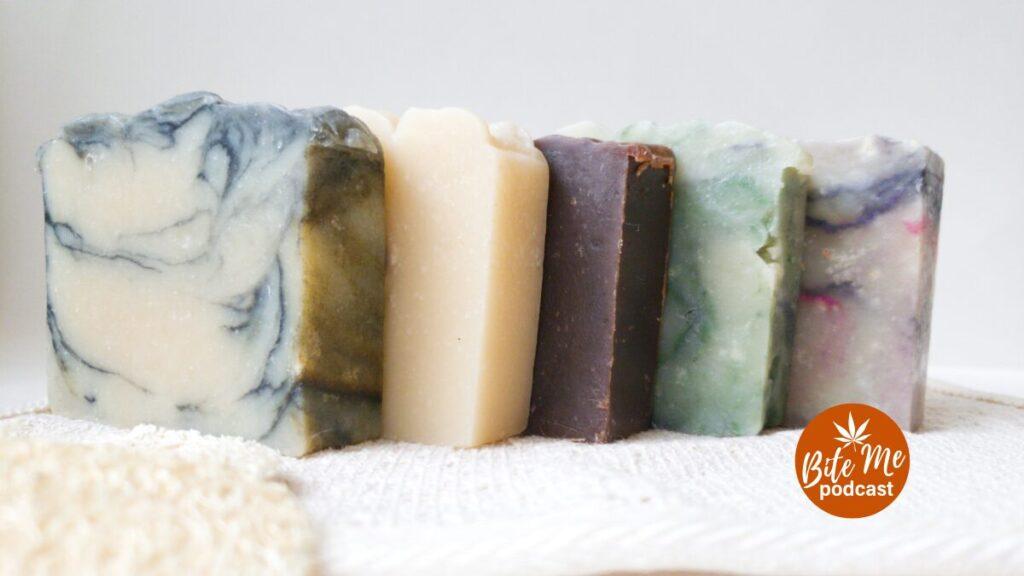
Listen to this episode:
Cannabis Root Ball Infusion (Manny’s Method)
This is the root ball infusion technique Manny shared on the episode. Cannabis roots are rich in CBG and have been used in traditional medicine for centuries. This infusion is best used for topicals and soaps. Manny recommends keeping it external use only, due to the difficulty of fully removing all soil matter from the root mass.
Total Time: 16 to 20 hours (can be split over two days)
Method: Crock pot / slow cooker
Best Use: Topicals and soap only
What You Need
- Cannabis roots and stalks, harvested after pulling your plants
- Coconut oil (Manny’s preferred carrier for this infusion) or any cooking-grade oil
- A large crock pot or turkey roaster with adjustable temperature settings and a stainless steel basin (avoids cracking issues you can get with ceramic over long infusions)
Steps
- Clean the root mass thoroughly. This is the most difficult part of the process. Let the roots sit for a few days so the soil dries, then shake off the loose dirt and rinse with water. You want to remove as much soil matter as possible without soaking the roots for too long (standing water goes stagnant).
- Chop or break up the roots and stalks if you can. For thick stalks, peel back the outer layer of bark first. If a stock is the size of your forearm, do what you can with what you have. You don’t need perfectly uniform pieces.
- No decarboxylation needed. Unlike flower infusions for edibles, you do not decarb the root mass before infusing. Add the cleaned roots and stalks directly to the crock pot with your oil.
- Simmer low and long. Infuse for 16 to 20 hours on a low setting. Alternatively, infuse for 8 to 10 hours on day one, let it cool, and infuse again for another 8 to 10 hours on day two. Both methods work well.
- Strain and store. Strain out all root material, let the infused oil cool, and store for use in your topical or soap recipe.
Note: Manny has had this infusion tested and found it to be significantly high in CBG relative to other cannabinoids. CBG is well-suited for topical applications. Use the free Bite Me Dosage Calculator if you want to track potency across your batches.
How Manny Got Into Soap Making
Manny has been using cannabis medically for most of his life. He was diagnosed with a rare form of muscular dystrophy called centronuclear myopathy, also known as myotubular myopathy, and also lives with severe arthritis and congestive heart failure. Cannabis has been part of his medical toolkit since he was 15 or 16 years old.
He made his first batch of soap as a Mother’s Day gift for his wife and mom, and he thought it would be interesting to infuse it with cannabis while he was at it. He researched safety, watched YouTube tutorials, and started working with online soap calculators to build out his own recipes.
When he posted pictures, someone commented: “When are these for sale?”
That was the light bulb moment. Bud and Lather was born.
What really struck me about Manny’s story is that soap making wasn’t something he backed into gradually. He has never made a single batch of soap without cannabis in it. From the very start, the infusion was the point.
Real Soap vs. Body Wash: There’s Actually a Difference
One of the things I did not know going into this conversation: a lot of what’s sitting on store shelves right now can’t legally be called soap.
There was a court ruling that determined a product can only be labeled “soap” if it’s traditionally made with oils and lye. A lot of major brands had to rebrand their products as “beauty bars,” “body bars,” or “body wash” because they’re actually synthetic detergents. The word soap is no longer on the label because it doesn’t qualify.
This isn’t just a labeling thing. Manny explained that traditionally made soap tends to be more effective at managing bacteria on the skin’s surface, including strep, staph, and MRSA strains that synthetic detergents may not address as well. He had a personal experience with this after dealing with infected tattoos despite washing several times a day with a popular liquid soap. An ER doctor told him it wasn’t going to do much for the infection and pointed him toward traditional soap instead.
He was clear that soap’s purpose is to get you clean, and that he can’t make medical claims. But the science of what ends up in traditionally made soap versus a synthetic body wash is not the same, and it’s worth knowing.
Good to Know
Different oil ratios in handmade soap create different results. High olive oil content tends to be more moisturizing. High coconut oil content creates a harder bar with more lather. If you have dry or sensitive skin, the formula matters. Look for soap makers who can tell you what’s actually in their recipe.
Why Cannabis in a Bar of Soap
Manny talks about the skin as the body’s largest organ. There are cannabinoid receptors throughout the skin, and the surface we live in is constantly absorbing things from everything it contacts. For Manny, infusing his soap was a way to interact with the endocannabinoid system through a product people use every single day.
He also shared something more personal. For a long time, he was angry at his body. Frustrated with the pain, the limitations, the ways his muscles and joints weren’t cooperating. That frustration had a way of turning inward. Soap making and topical cannabis became part of how he started learning to take better care of himself, one step at a time. Healing the physical and the emotional at the same time.
I’m not going to oversell what a bar of soap can do. But I do think there’s something worth considering in the idea that what you clean yourself with every morning is not a neutral act.
How to Use a Cannabis Infused Soap for Best Results
Manny calls this the water conservation shower technique. The idea is to give the soap actual contact time with your skin instead of just rinsing it off the second it lathers.
- Start with hot water to open up your pores, similar to what happens in a sauna or hot tub.
- Turn the water off. Using a washcloth or exfoliating gloves, cover your entire body in lather.
- Let the lather sit for 10 to 20 seconds with the water off. If you leave the water running, it rinses the bubbles away before they have any contact time with your skin.
- Turn the water back on and rinse thoroughly. Use water as hot as you comfortably can. Don’t let the lather sit too long due to the lye content; 15 to 20 seconds is the target.
If You Want to Make Your Own Cannabis Infused Soap
Manny shared a basic oil ratio framework that he works within. This isn’t his exact recipe, but it’s a solid starting neighborhood for a first batch.
- Coconut oil: 20% to 25%
- Shea butter: 10% to 15%
- Cocoa butter: 5% to 8%
- Olive oil: 40% to 45%
Run these through a soap calculator before you mix anything. SoapCalc.net is Manny’s preferred tool. It’s free, and it will tell you the expected qualities of your soap before you’ve committed a drop of oil, including how bubbly the lather will be, how hard the bar will be, and how long it will last.
If you’re working with essential oils or fragrances, run them through a safe usage rate calculator first. Manny uses eocalc.com for this. Over-adding fragrance is one of the most common beginner mistakes, and some fragrance oils behave badly in soap, causing seizing, ricing, or discoloration.
Before You Start: Manny’s Starter Advice
- Watch at least 10 soap making videos on YouTube before you make your first batch. Royalty Soaps, Lovin’ Soap Studios, and the HSCG (Handcrafted Soap and Cosmetics Guild) all have solid educational content.
- Start with a one to two pound batch. If something goes wrong, you’re not out 20 pounds of oils.
- Always wear eye protection. Cheap safety goggles work fine. Lye water in your eyes is not a recoverable situation.
- Respect the curing time. Four weeks is the industry minimum. Some batches, like a 100% olive oil Castile soap, benefit from up to a year. If you skip the cure, you’ll have a beautiful bar that disintegrates in two days.
Common Beginner Mistakes
- Over-mixing or under-mixing the batter
- Not mixing at the right temperature
- Not letting the lye water cool long enough before combining
- Choosing fragrance oils that don’t behave well in soap
- Selling or using soap before it has fully cured
- Thinking you can skip the soap calculator and eyeball it
A Note on Palm Oil
This came up in our conversation and I thought it was worth including here. Palm oil is used in a lot of soap recipes and a lot of processed food. The environmental cost of mass-producing it is significant: rainforest land cleared at scale, and supply chains that often don’t hold up to scrutiny on labor practices. Manny skips it entirely.
The same scrutiny applies to essential oils. Some are produced in ways that are neither sustainable nor ethical, and Manny had to step back and reconsider a few favorites when he looked more closely at how they were sourced. He still uses some, tea tree, eucalyptus, and sweet orange among them, because they’re relatively straightforward to produce cleanly. Others he cut.
You don’t have to build a whole ethics framework around buying soap. But it’s worth knowing what’s in it.
What Bud and Lather Has Actually Been Like
Manny started the company about a year before we recorded this episode. It actually began as a wheelchair fundraiser, money raised to purchase the all-terrain power wheelchair he uses, the one with the tank treads that can handle snow and mud and beach terrain.
The fundraiser worked. The business kept going. And along the way there have been the kinds of challenges that come with being a disabled business owner in a still-fragile cannabis industry: naysayers, people who dismissed cannabis soap as a gimmick, suppliers who didn’t deliver, and a few situations where someone took advantage of what they saw as a vulnerability.
He also took an $800 loss on a bale of hemp that arrived with mold. He composted the whole thing because he wasn’t going to give bad medicine to anyone. Two weeks later, a farmer called him up and donated twice as much hemp that was in good shape because he loved what Manny was doing.
He entered the Emerald Cup, walked away without a win, went home, and made the best batch of soap he’d ever made.
That attitude is a big part of why I think Bud and Lather has a real future.
That’s it for this week friends. Please email me any questions, comments, pictures of your creations or anything else, I love hearing from listeners! Direct messages to bitemepodcast@fastmail.com or leave me a voice message.
You can also support the show by subscribing, sharing episodes, leaving a review or buying me a cookie! Whatever way you choose, I’m grateful that you’re listening.
Stay high,
Margaret
FAQ On The Art Of Soap Making and Root Ball Infusion
Does cannabis survive the saponification process? Does it actually work?
This is one of the most common doubts Manny hears from other soap makers. The short answer from his experience: yes, when you do a proper full-flower or root infusion first, the cannabinoids survive. Simply sprinkling in CBD isolate at the end is a different thing entirely and will not give you the same result. The infusion method matters.
Will cannabis soap get you high?
No. Topical cannabis products, including cannabis infused soap, do not produce psychoactive effects. The cannabinoids interact with receptors in the skin but do not reach the bloodstream in a way that causes intoxication. This is true for all topicals unless specifically formulated as a transdermal product designed to penetrate the skin barrier.
Can I use the root ball infusion in edibles?
Manny recommends keeping root infusions for external use only. The root mass holds onto soil particles at a microscopic level that are difficult to fully remove, regardless of how thoroughly you clean it. This is the same logic that applies to using cannabis from an unknown source in edibles: if you’re not certain about what’s been applied to the plant or the growing medium, topical use is the safer route.
What oil works best for a root ball infusion?
Manny prefers coconut oil for root infusions specifically because the root material doesn’t absorb and “gunk up” the coconut oil the way flower and trim tend to. You lose less oil in the process. That said, any cooking-grade oil will work for the infusion itself.
Do I need to decarboxylate the roots before infusing?
No. Unlike a flower infusion intended for edibles, you do not decarb the root mass. Add it directly to your oil in the crock pot and infuse low and slow.
How long does homemade soap need to cure?
Four weeks minimum is the industry standard. Some soaps, particularly a Castile soap made with 100% olive oil, benefit from curing up to a year. The longer the cure, the harder and longer-lasting the bar. If you use a bar that hasn’t cured properly, it will soften and fall apart in the shower within a day or two.
Is making cannabis infused soap at home safe for beginners?
Yes, with the right preparation. The main safety concern is lye (sodium hydroxide), which is caustic and can cause serious burns or eye damage if mishandled. Eye protection is non-negotiable. Watch multiple instructional videos before your first batch, start small (one to two pounds), and use a soap calculator so your lye amount is accurate. Manny’s top resources: SoapCalc.net for oil and lye ratios, and eocalc.com for safe usage rates on essential oils and fragrances.
Can I use the cannabis infused oil I already make for edibles to make soap?
Yes. Manny got into soap making partly because he recognized the cooking oils he was already infusing were the same ones used in soap recipes. Infused coconut oil, olive oil, and similar carrier oils can go directly into a soap recipe. Use your soap calculator to work out the correct ratios and lye amounts based on the specific oils and quantities you’re using.
Where can I listen to the full interview with Manny?
The full conversation is available as an episode of Bite Me The Show About Edibles or your favourite podcast player. You can find all episodes at bitemepodcast.com or wherever you listen to podcasts.
(0:00:00) I talk about the Bite Me edibles journal on the show and in the edibles tracking episode that I just did. And that's the physical book that you can get on Amazon. And if you're like me, I love a physical book. But I also have a free digital tracker that you can download right now. It's five entries, it's a fillable PDF, and it's completely free. And it's a good way to start the habit before you commit to anything.
(0:00:21) You can find the link in the show notes. And if you want the full version, 40 consumption entries plus 20 batch log pages, also a fillable PDF, that's there too. Both are at bitemepodcast.com. Start tracking friends. It really changes everything. In this week's episode, I sit down with Manny from Bud and Lather, an artisanal soap maker who infuses his soaps with love and cannabis.
(0:00:50) Welcome to Bite Me, the show about edibles, where I help you take control of your high life. I'm your host and certified Ganger Marge, and I love helping cooks make safe and effective edibles at home. I'm so glad you're here and thank you for joining me today.
(0:01:06) We cover a lot of ground in this episode, and I think you're going to learn something new. I probably say that all the time, but there were things that I learned in this episode that I'd never heard before, and I'm definitely going to be experimenting with myself. So without further ado, please enjoy this conversation with Manny from Bud and Lather.
(0:01:24) All right, everybody. Today, I am joined by Manny of Bud and Lather. And we met recently, actually, on the show of a mutual acquaintance, not that long ago. I think it was the Friendly Cannabis Show by Chad Westport, the Future Cannabis Project. So I'll link to that in the show notes. But that's where we first met. And I was pretty interested to learn more about your story. So that's why I'm having you on today. Bite Me, the show about edibles. And I would love for you to just to start out and tell us about yourself, Manny, and...
(0:01:52) your story and how you got into soap making. Excellent. Well, thank you so much, Marge, uh, first and foremost for inviting me onto your show. I'm really happy to be here and honored to be invited onto a show about edibles. Um, it's one of my first podcast appearances. Thank you everyone who's joining us. Uh, my name is Manny and I am the artisan for bud and lather soap. Um,
(0:02:20) I have been using cannabis medically for most of my life since I was about 15 or 16, and I'm 40 years old now. I have muscular dystrophy, a kind of rare form of muscular dystrophy. It's called concentronuclear myopathy, also known as myotubular myopathy. I also have severe arthritis in my knees, congestive heart failure. Wow.
(0:02:50) Yes. And I got into soap making. Kind of funny story. Originally, the first batch of soap that I made was just it was like a Mother's Day present for my wife and my mom. And I thought it'd be cool to make a cannabis infused batch of soap. So I did some research, watched a bunch of YouTube videos on safety tips and just the basics on how to make soap.
(0:03:17) And started to kind of formulate my own recipes using some of the online soap calculators that they have online. And then I really kind of enjoyed the process. And then when I posted pics online, somebody made a comment underneath like, oh, those look great. When are they going to be for sale? Yeah.
(0:03:42) And that was like the little light bulb moment. Right. That's always the best when somebody's asking you, like, where do I buy? How do I give you money to buy what you're offering? Which is pretty cool. So you, right from the very beginning, then you were infusing the soap. Like it wasn't just you were making soap and then you decide to infuse it later. This was something you started right at the very beginning. Right.
(0:04:04) I don't think I have ever made a batch of soap that was not cannabis infused. Right. I love it. I love it. What was it about soap that you found? Because I'd say that soap is kind of an unusual thing to infuse. Most people think when they think of soap or like topicals, that's what people think of when they think of infusing topical salves and lotions and that kind of thing. I would say soap is probably a little more unusual. So what gave you the idea to infuse it?
(0:04:35) uh i thought that it would be kind of a funny creative kind of thing to do but if i look back on like to be honest um i've seen cannabis infused soap before the very first time that i've ever seen cannabis infused soap um
(0:04:56) was when I went to Amsterdam back in 2009, 2010, we went for a cannabis cup, um, our little smoke shop, our crew of people that worked at the smoke shop. And it was a really cool experience. And one of my friends bought cannabis soap for his mom to bring back thinking, Oh, it's cool. It's soap. I can bring it back. And he got stopped at, um, TSA and customs and like they cut off part of the bar and kept it and let him take back the other half. And I didn't,
(0:05:23) But that was when I first kind of realized that it could even be done. And then, yeah, you know what I mean? Like I've been making edibles and stuff just for personal use for at least 15 years or so before that. And I don't know why I chose to do the soaps. But then when I looked up the recipes, they were using cooking oils that I was already familiar with infusing.
(0:05:49) Right. Okay. So you're already doing the infusions, like infused coconut oil and stuff like that. And it lends itself to soap making. Was there anything particularly appealing about making soap versus say like body butters or things like that? Like the more traditional topicals? Oh yes. Yes. Uh, you know, I mean, part of it was kind of wanting to challenge myself as a cannabis creator. And part of it was just, um,
(0:06:18) tapping into my creative and artistic side. I really, really, that's what made me fall in love with soap making and kind of just put everything else to the side as far as other topicals and other edibles. And that kind of thing was when I really realized how creative you can be when it comes to soap making, um,
(0:06:37) adding vegetables and fruits and purees and making your own pumices and things as exfoliants and all the different scent combinations that you can do. And then when the soap started turning purple, I was really kind of amused by that. I really liked the cool colors that I was working with. That's a, that was something that kind of, that kind of dawned on me too. I mean, you can't really put,
(0:07:07) fresh avocados and banana puree or carrot juice and fresh juiced apples into like a lotion or a body butter. It doesn't really perform the same way.
(0:07:17) right yeah no that's very true and as personally as someone who's used bar soap for a long time now i have seen really beautiful like you said artisan folks out there making some pretty creative creative stuff like you said and your bars of soap are no exception so um people should definitely check out your website which i'll link to in the what in the show notes of course but what is something that you think that most people don't know about soap making
(0:07:44) I think that a lot of people don't realize how many products are out there that don't even qualify as soap. You know what I mean? Recently, I guess a couple of years ago, there was some kind of court case where they had a ruling where you could no longer label your product as soap if it wasn't traditionally made with oils and lye.
(0:08:09) And so there were a lot of companies, like big major companies that had to rebrand and repackage. And now they're calling their products like a body wash or a body bar or a body scrub or some other name on it or lotion bar, beauty bar or something. But it doesn't have the word soap on the label anymore because it's what's called a synthetic detergent.
(0:08:33) Okay. So I didn't realize that, that I could go to the drugstore, for instance, and see a bar of soap on the shelf and think it's like a traditionally made bar of soap, but it's a body bar. You're saying that's what they're putting on the label to circumvent the fact that they're using synthetic ingredients, I guess. Yeah.
(0:08:52) Yeah, so a lot of the things that you grew up using that you traditionally recognized as soap, I mean, I don't want to call out any particular brands. You're probably pretty safe to do it here, though. I don't know if Procter & Gamble is paying attention too much about what I'm doing.
(0:09:08) But yeah, now if you go to the grocery store or the supermarket, if you look on the shelves now, a lot of these things, they can't use the word soap anymore in their labeling or their packaging because they're not traditionally made soaps. Right. I didn't realize that. So I'll certainly look for that. Not that I'm usually buying soap at the grocery store now anyway because I do prefer traditionally made bar soap. Yeah.
(0:09:31) A lot of people are probably familiar with body wash because that seems to be a pretty popular product category. But why would it be better for someone to use a bar of soap, a traditionally made bar of soap versus a body wash or a body bar for that matter? You know, I can't really make any medical claims about my soap or any other soap. I mean, the purpose of soap is to make you clean and to get you clean. But, you know, when it comes down to the science of it, there's
(0:10:00) There are bacteria and virus that live everywhere on the surfaces of our skins. And a lot of times these are what cause major infections. If you're not using a traditional soap, the product that you're using might not be as effective in keeping these bacteria under control and preventing infection. So, I mean, the major ones that live everywhere and on our skin are like the strep.
(0:10:30) the staff, the MRSA. And now we're seeing a lot more appearance of these like super bugs. People can't keep them under control. Like they're taking antibiotics to kill. Right. Comes back as staff. They take the antibiotics to kill the staff. It's not completely effective. And it comes back as MRSA and they're getting all these like super bugs that are causing major infections and stuff. And yeah,
(0:10:52) You know what I mean? Like, I've had a whole lot of tattoo work and stuff done, dealt with open wounds. I mean, I've had infected tattoos and infected wounds and stuff because – and I was washing myself three or four times a day with, like, liquid dial soap. And I, like, went into the emergency room and the doctor was like, oh, yeah, well, you know, that's not –
(0:11:09) I was like, oh, yeah, I'm washing myself three or four times of soap a day with like taking multiple showers. And I'm using this liquid dial. And he's like, that's not going to do anything to prevent the infection to actually kill the bacteria that's causing you harm. You need a traditional soap. And it doesn't necessarily have to be mine.
(0:11:27) If you want to buy mine, by all means, buy my soap. Yeah, that's interesting. Yeah, sorry. It's interesting you talk about that because, I mean, these skin conditions, like you said, can be very serious and hard to deal with. And to think that your usual stuff that you go buy at the store doesn't work. Now, would traditional soaps also help keep balance with like the skin has its own microbiome too, from what I understand. Would it also help that to continue to do its thing?
(0:11:57) yes but you know like something that I've learned in soap making is that they're different people some people have kind of different skin types and some people's skin tend to be a little bit more dry right and some people's skin tend to be a little bit more oily and different kinds of soap and different with different
(0:12:24) Oil ratios and acid profiles can either tend to be more moisturizing or more drying, depending on the ratios of these oils that you use. So I would recommend finding the soap that works best for your particular skin type.
(0:12:43) Right, as you should for anything, really, because it's just going to perform better if you're using a soap designed for dry skin and you have dry skin. Yeah, that makes a lot of sense for sure. Now, why cannabis and soap? I know you said that right from the beginning that you have always infused your soap with cannabis, but what do you find makes it so great? You know, the skin is the body's largest organ. Mm-hmm.
(0:13:09) And there are an endless amount of pores that cover the entire surface of your body and multiple receptors. And so our skin is really our first surface. I mean, it's how we interact with everything, with the entire world. It's one of our major senses. And a lot of people don't really take into account
(0:13:34) how much our skin absorbs from the world around us and the things that we're, um, coming into contact with and, um, allowing our bodies to, to, to intake. Uh, I think that it's, it's, it's really kind of important to, to keep our bodies clean and to, I mean, not only is it just like a good detox to, to take away other toxins and things. Um, it's, it's another way to, um,
(0:14:04) I don't know. I mean, it's kind of crazy. It's like a thin line that you got to walk. I mean, I can tell about all of these stories of people trying my products. Oh, yeah, it did this for me. It did that for me. But I can't really make any medical claims. So some guy tries a topical and he has shoulder reconstructive surgery. And he uses it on one side. Six months after he's had shoulder reconstructive surgery on the other side when he didn't have surgery.
(0:14:32) uh, access to, to cannabis topicals. And so, I mean, it's like a side by side comparison on the, on the same patient and the side that they use is the cannabis topicals. Um, the, the scars look like they're years in advance, um, like the, that they've made years in progress as far as the scar tissue and the body's, um, ability to regenerate its own skin and repair itself. Mm hmm.
(0:15:01) I don't know. I think part of it's, you know what I mean? Part of it's also a process in my own kind of journey of self-improvement and self-healing and stuff. For a long time, I was really kind of angry at my body and the condition that my body was in. I was so frustrated with the pain that my muscles and my joints were experiencing.
(0:15:27) experiencing that i would take it out on my own skin you know i mean self-sabotage and form in just as to vent my frustration um so now it was like kind of a a way to try to re reteach my myself self-care and try to take care of myself better one step at a time that's been my kind of slow form of improvement trying to heal up those scars physical and emotional at the same time
(0:15:55) Yeah. Yeah. That's beautiful. Honestly. I mean, it seems like you're getting a lot out of this whole process. Not only are you creating a successful business for yourself, but you're improving your own mental state and your physical wellbeing. So if somebody wants to try something like a cannabis infused soap, because it's a little different from a topical that you would put on your skin and you would leave it on, do you have any tricks that would maximize the effectiveness of a cannabis infused soap?
(0:16:23) Oh, absolutely. If you're going to use a cannabis infused soap, there's kind of a technique to it. I call it the water saving water conservation shower technique that you kind of learn in Hawaii or places that you have limited resources and like water available to you. So you want to first off, like take a shower instead of a bath. I mean, a soaking nice comforting bath is always nice, but
(0:16:46) I'm not really sure if it's what you want to do for this particular application. So you want to start off with really, really hot water to rinse yourself off and that will open up all of your pores. Kind of like the way it does in a hot tub or a sauna.
(0:17:01) And then you want to turn off the water. Use like a washcloth or a wash rag or one of those scrubby exfoliating gloves and cover your entire body with lather. Lather up completely and let those bubbles sit on your body for at least 15 to 20 seconds with the water off. Because if you keep the water on, it's going to be like washing the bubbles and the lather off as soon as they come in contact with your body and you don't really have as much time to absorb it. So once you're completely lathered up from head to toe,
(0:17:32) and it's been there for at least 10 to 15 seconds, then turn the water back on. Don't let the lather sit on your body for too long because of the, the light content and it'll get kind of itchy or raw. Um, but yeah, 10, 15 seconds is good. Wash and rinse off again with a really, really hot, but safe, um, water temperature. Definitely don't burn yourself or Scott, uh, scald yourself. Try not to use your own, um, use your own,
(0:18:01) judgment as far as your your body sensitivity to heat and the the water temperatures but as as hot as you feel comfortable with okay so you're just trying to open up the pores and then you let it sit on your skin for a few seconds like you said about 10 to 20 seconds and then rinse it off and that'll help the cannabinoids that are in the soap to impact or get into your your skin
(0:18:24) And hopefully do their magic, work their magic. Yeah. Yeah. Okay. Well, that sounds actually quite therapeutic, to be honest. Now, I heard you talking, when we were talking on the show with Chad, you did mention the different types of pain that people often experience, like muscle versus bone pain versus tissue. And would something like a soap like this help for all types? Or is it just going to really depend on each individual person? Yeah.
(0:18:51) It is definitely going to depend on each individual person. And I recommend that people experiment with different media and cannabinoid products and see what works best for them with their own specific sensitivities and tolerance levels and just self-care regimens.
(0:19:13) As always, I have to preface this with it. I can't make any medical claims or say that it relieves pain or anything like that. I can just share my own personal experiences that it seems to work well for me. I like,
(0:19:27) Yeah, no, that makes sense. I mean, you probably have a lot of customers as well that have, you know, said that it's helped them significantly too. So I'm sure you can talk about that when you're talking to people. But I do understand you can't make direct medical claims. Now, you did mention that you're an edibles maker, which I love. Do you prefer edibles versus smoking? What do you love about edibles specifically? Yeah.
(0:19:52) I love the relief that edibles provides when my body's kind of exhausted. Definitely pain relief.
(0:20:00) And sleep assistance, it really helps my body to get the rest that it needs and kind of recharge through the night.
(0:20:06) When it comes to edibles versus smoking, I kind of like to use the two in conjunction with each other. I find that they complement each other beautifully. Yeah, I do too. I think that the edibles make the smoking high just a little bit better. And I think that the smoking or vaping helps to make the edibles pain relief last a little bit longer.
(0:20:33) I'm not sure if that's just more of the entourage effect with all of the different cannabinoids that you can get by both ways working together synergistically. No, I really enjoy that too. And you mentioned vaping and myself as an edibles maker, I love to use a dry herb vaporizer because I can keep all that already vaped cannabis and use it. It's already decarbed as we know, and you can just use it in your infusions. Do you have a dry herb vape that you like to use and recommend to people?
(0:21:03) It's a little bit higher on the budget scale, but I prefer using a volcano vaporizer. They're a little bit spendy. They cost $400 or $500, but I find them to be worth it. The first volcano that I owned lasted us about 10 years.
(0:21:22) Right. Yeah, that's a pretty solid investment if you're going to buy something that expensive. And those are the tabletop ones, right? So would that – do those work for just an individual if it's just you? Or do you have to – is it better used with multiple people? Oh, I use it all the time just for myself. I'm a daily – that's my daily driver. Okay. And definitely my – the old faithful classic. But you know what I mean? It's great for multiple people too. Definitely –
(0:21:50) Like that one. You know, what I've also discovered is that if you're working with a budget, but you still want one of a kind of similar experience with the dry herb vaporizers, you can get the Volcano bag kit separately. You can buy that separately, just a bag kit and replacement parts. Okay. And the size, the diameter of the bag kit,
(0:22:18) fits, uh, fits perfectly to most heat guns. Oh, okay. So you, and there's some pretty decent heat guns that they have out there. Um, that if you go to like your local hardware store and check out their paint section, I know the, the DeWalt black and yellow one is a pretty nice one. It's got like a few different heats, uh, fan settings and
(0:22:43) and four or five different specific heat settings. So if you kind of play with them towards some of the lower heat settings and find your nice, good, golden temperature, heat pressure area, then you can fill up some pretty good volcano bags with just a heat gun for...
(0:23:04) less than half of the price of buying the entire volcano. That's so interesting. I love that. It's like a little, a little vapors hack right there. Yeah. So if you don't want to spend it or you can't afford it right now, then there's, this is sort of a, an affordable way to achieve the same end until you can't afford one. So I love that. That's great. Now,
(0:23:25) I've been really excited to ask you about this, because when we were talking with Chad, once again, you were talking about how you can use the roots from a cannabis plant to make infusions. And you had mentioned that they're high in CBG, which was good for making topicals, I'm sure good for making soap.
(0:23:41) Can you talk about using roots to infuse? Because I've, I'd never heard about this until we spoke that day. And I find that very, very interesting. I have a lot of listeners that do like to grow. So they're going to have, you know, roots available, I guess, when the plants all harvested. How do you go about doing that? What's the process? Okay, so yeah, after you harvest your plants, or anytime you pull them up, you can save the roots, just like the entire root and stalk.
(0:24:10) And you want to, you know, I've kind of experimented with different methods. You want to make sure that you thoroughly clean out your root mass. That's probably the most difficult part of the process. I've tried drying it out and then shaking the dust dry and then like soaking it in water, you know, rinsing it in water. You don't really want to soak it in water for too long because then like the water just kind of gets stagnant and stinky. Like I found the easiest method is just letting it sit and get the,
(0:24:39) the dirt kind of dry on its own for like a few days and then kind of shaking it off like a dust and then washing it real well with water and stuff but whatever method you can use to get rid of all of the actual dirt and soil matter off of the roots and then you want to you just want to like simmer the roots and root stalks in your selected oil
(0:25:09) in a crock pot for, um, I, I find that, uh, because it's such tough, thick fibrous material, I will soak that material for a bit longer than I would my use the like popcorn and trim leaf and sugar, sugar leaf and nugs. Those are kind of a slow, short infusion, but, um,
(0:25:33) you know what I mean? 16 to 20 hours is not unusual for a root infusion. And sometimes I'll do it in elements. I go infuse it for eight to 10 hours one day, let it cool. And then infuse it for eight to 10 hours on the second day. And that'll be another good, real good infusion too. I like to use coconut oil for those infusions just because it's so difficult to use coconut oil for like the flour and nug infusions and
(0:25:59) sugar wax and trim and popcorn because you lose so much of the coconut oil in the process. You really don't, it really doesn't get gunked up in the, in the material with the root infusions. So those are, but pretty much any, any oil that any cooking grade oil that you want to infuse the cannabis roots with. And it's, it's just a real simple crock pot simmer. I mean, you could do a double boiler on the stove pot, but,
(0:26:29) But that'll do it for you. And I've had this stuff tested too. And it seems to be pretty high, like significantly high in CBG in relation to all of the other cannabinoids. There's a bunch of CBG in the roots and the stalks.
(0:26:43) so interesting now would you cut the roots up a little bit before you put them into a crock pot or some kind of vessel or would you just i mean because some of these root masses could probably be pretty big depending on the size of your plant i'm doing more micro grows right now so the root mass would probably be pretty small but for some people if you've got like an outdoor grow and you have huge plants would you chop them up or in that before you put them in with the oil um if you can yeah chop them up if you can but
(0:27:12) I mean, I use like the big turkey roaster crock pot. That's my preferred simmering method just because it's one of the few crock pots that's got like, instead of having just the two settings, you can just got like, it's got the adjustable temperature setting, which is more than just like the high and low and
(0:27:31) it's one of the few that I've found that has a stainless steel basin. So it's not gonna, you don't run the risk of cracking it just like some of the ceramic crock pot bases can do on you after. Okay. Do you have like a brand that you like that you find works particularly well? Uh,
(0:27:51) You want me to. Oh, no, it's OK. I just wondered if there was one in particular that you liked, but I'll look for something on Amazon so I can post to the show notes because you're saying it's like a turkey baster crock pot, but not not the ceramic with a ceramic bowl like a lot of them have.
(0:28:10) Yeah. I'm pretty sure mine has a ceramic bowl. Yeah. It's like a big, I've got a big 22 quart turkey roaster crock pot and it, the entire base that you roast the turkey in is, uh, it's stainless steel. Okay. I'll look for one of those. Now, would you, you wouldn't decarb the, this root mass first? No, no.
(0:28:33) Okay. And you've also mentioned as well, you could put some of the stock in. Do you just throw the stock in too? Do you have to like prepare the stock in any way? I usually just peel the outer layer of bark off a little bit. Okay. And I mean like, but some of the stocks are, I mean like if it's a small stock, the size of like,
(0:28:54) Your thumb or your finger, you can break that up and stuff. But some of those stocks that I threw in last season were like the size of my forearm. You know what I mean? The size of your ass.
(0:29:04) yeah we got a beer we got like beer can size plants plant stocks and stuff you can only hack them up so much without busting out an axe but right yeah i mean if if they can fit in there and you can soak them you'll get something out of them okay so yeah i find that so so fascinating and you were mentioning how like topicals and soaps high in cbg were particularly good too right
(0:29:29) Oh yeah. Um, you know, I'm not a medical expert, but from what I've read in different articles, um, the topical products are definitely a great, uh, use of product of cannabinoids like CBG. Yes. The body loves it. Could you ever use this type of infusion in any of your like regular edibles that you might be making? Like, have you ever done that?
(0:29:57) Or do you typically just keep that for your topicals?
(0:30:00) your soap um if it's you know to be true to tell you the truth i i try to work within my limitations and if it was i mean if it's been in the dirt in the soil that long there's just sometimes there's just little specks and stuff on a microscopic level that you're not going to be able to
(0:30:23) to get loose from the, from the roots. So, I mean, like the root infusion stuff, I prefer to just use it for skincare. Right. You can use your own discretion. I mean, it's up to you what you want to put inside your body, but just because of the way that the roots cling on to everything in the soil and the rhizomes and the rhizosphere, I mean, it's just so tightly held little particles and stuff.
(0:30:47) I prefer to use that stuff strictly for external use. Okay. Well, that makes sense. That's one of the reasons why I asked. You're the expert in this case when it comes to making root infusions. So, yeah, I'm glad you mentioned that because that does make sense to me. Well, I mean, it's the same thing for flower infusions from an unknown source. If I don't know who the person was that...
(0:31:11) that grew that and I don't, and I'm not sure what they sprayed on it, you know what I mean? That I haven't had it tested. I mean, then maybe it should be better for topical use before I like juice it up and eat it. Or, you know, people can get sick from that, from the pesticides that people spray on their plants and stuff. So definitely try and be cautious and be wary and use your own discretion. I think that some of the regulations are there for good reason.
(0:31:38) No, absolutely. So that's our PSA for the day. Just know your sourcing whenever you can and take the appropriate steps after that. Now, if somebody wanted to get into making soap, what would be something that they should consider before getting started? I would say before you make your first batch of soap, definitely watch at least 10 soap making videos on YouTube.
(0:32:06) It just explained the basics. I mean, there's some really, really talented soap makers on YouTube that just really explain the basics very well. Royalty Soaps is a really good one. Lovin' Soap Studios, they're really, really educational. The HSCG, the homemade soapers and crafting...
(0:32:29) or HSCG is their acronym. They've got some really good educational videos. Definitely just watch a few videos to get the basics of it. Start small with a one to two pound batch. So if you make a mistake, you're not wasting 20 pounds of oils. It's an easy mistake to recoup the losses from. Definitely always, always, always get some kind of eyewear, eye protection.
(0:32:59) And I mean, like latex gloves or kitchen gloves, that's up to your own, use your own judgment, but always, always, always, even if it's just like a cheap two or $3 pair of safety goggles or,
(0:33:10) You do not want to get the lye water into your eyes or the soap batter into your eyes. Learn the basics of safety, of, of safely making soap before you try to make soap. That's, that's my PSA for the day. If you want to do it, that's awesome. Oh, sorry. No worries. Should have put the phone on silent before. Yeah. Learn the basics of safety and,
(0:33:37) safely making soap before you try and make your own soap. That's
(0:33:41) That would be your top recommendation. That makes a lot of sense. And I will link to those sources that you mentioned in the show notes as well. And you're suggesting to start small, which also makes sense because the cost of some of the, you know, a quality fat, like a coconut oil or whatever is costly and things aren't getting any cheaper right now. So small batches and always use eye protection, which also makes sense because I don't know what would happen if you got live water in your eye, but I'm sure it's unpleasant. Yeah.
(0:34:11) No, you could, um, there's a high likelihood that you'll go blind. Right. Right. So, right. So eye protection is extremely important as it should be for a lot of the things that we do, but sometimes we don't want to look silly, but if you're at home and you're in your own kitchen doing this, then you're only looking silly to yourself. So we're the eye protection people.
(0:34:31) Are there common mistakes that people make when they're first starting out? Like aside from the starting out with too big of a batch and then it getting messed up and then, you know, you've wasted a lot of product. What are the common mistakes that you see people making? Oh, there's all kinds of mistakes that people make with soap making. Over mixing, not mixing at the right temperature, not letting your live water cool for long enough. Mixing fragrances that don't play well with soap.
(0:35:01) adding too much fragrance or essential oil by not looking up the safe usage rates online, not doing due diligence of checking the proper usage amounts. Like sometimes people will read an old traditional soap recipe out of a cookbook that's decades old or somewhere online, but they won't run that recipe through a soap calculator. Yeah.
(0:35:29) Okay. And so it might not be as precise. So there's soap calculators out there that people can use to help them figure out the proper ratios of things that they're supposed to be making. Right. Okay. Yeah. My, my favorite one that I like to use is, um, soap calc.net and it's a free resource. You can just go online and plug in what kind of lie you want to use, whether you want to use, make liquid soap or a bar soap. Um,
(0:35:53) how much you want your super fat to be, what specific oils you want to use. And it's a really good resource because it will tell you the qualities of your soap before you mix those oils together and make them into a soap. So you'll plug in the oils that you want to use and kind of the ratios of how much of each amount. And it'll tell you before you mix it, whether that will be like a really bubbly lather, really creamy lather, a hard, long lasting bar.
(0:36:23) Okay, that does sound like a really good resource. I have written that down. And I'll be sure to include that as well. Because I know I've, I've personally experimented a little bit with making body butters, and body scrubs, not really much beyond that, because I know that there's a lot of science behind all this stuff. And like you said, some of the ratios and mixing certain things together, it can really impact the outcome of what you're doing. So having good resources like that is great. Are there any common questions that you get when it comes to soap making?
(0:36:54) Once that, you know, people you seem to hear over and over again. Um,
(0:36:59) People want to know like, oh, how do you do it? What made you want to get into why cannabis and soap? Even from other soap makers, I get a lot of other soap makers that have always just been told by others, oh, well, the cannabinoids won't survive saponification. So it's a useless effort and it's a waste of money. You better just make body butter or lotion or something else instead. There's a lot of doubt in there or people think that it might cost too much to do it.
(0:37:27) And then there's other people that kind of want to take shortcuts instead of doing like a full flower infusion like we do as edible makers. There's some people that just want to make a batch that are already soap makers that just want to take some CBD isolate and sprinkle that in there and think that it'll be the same thing.
(0:37:47) you're not going to get the same thing. It was that easy for a lot of things, right? If you just sprinkle some stuff on whatever, and there you go. It's an edible or a topical. Yeah. I'll sprinkle it on anything and it becomes whatever I want. Right.
(0:38:03) It seems to me too that soap making is definitely one of those artistic endeavors that it's hard to shortcut. Like you can't really shortcut it and have something decent turn out at the end. So I guess what you're also saying is there are no shortcuts when it comes to making good soap.
(0:38:20) Oh, absolutely. Absolutely. You can make a beautiful bar of soap, but then let's say you want to sell it a week after you've made it and you're not giving it the proper curing time. Yeah, it's only going to be a beautiful bar of soap that lasts for a day or two in the shower before it just disintegrates because you haven't let it properly cure. Right. So that brings me perhaps to my next question, which was like, what's something that people don't know about the art of soap making? And personally, I understand that you have to let soaps cure.
(0:38:50) but why and for how long typically, or does it depend? Uh, it kind of depends this, this industry standard for letting a bar of soap cure is four weeks minimum, but some people will let certain batches cure for up to a year. Like say if it's a, um,
(0:39:11) a specific Castile soap that's made 100% exclusively from olive oil, those ones need to cure for at least a year to really, really get good usage out of them. Okay. So the cure time sort of dictates how long that bar of soap will last in your shower. Yes. Yes. The longer the cure time, the better and longer lasting bar it will be.
(0:39:35) Okay. Yeah. I didn't realize that, that that was the case until you mentioned that if you don't let it cure, it's going to disintegrate in two days. And that would be so disappointing because some of those bars of soaps are, you know, they're not inexpensive. So to see it disintegrate would be pretty disappointing, but is there something else? Is there anything else that you find that people don't know about the art of soap making? Yeah. Yeah.
(0:40:00) Um, just, there's so many different things that you can do with the soap. Um, but also all the different things that people put it in. I mean, I, I prefer to tend to, I tend to use like all natural exfoliants, all natural ingredients, like dried carrot puree into a pumice or dried apple puree into a pumice, coconut milk, apple juice, carrot juice. But sometimes people can put things in their soaps that aren't really the best
(0:40:28) for you or for the environment so to say and there's really um a lot is just kind of swept under the rug right palm oil is used a lot in soaps but the environmental impact of using palm oil is not um it's it's not really a good thing i mean there's so many
(0:40:50) feet of rainforests that are just being demolished for like mass production of palm oil. David Attenborough really talks about it a lot in some of his documentaries, like a life on this planet. That's an excellent documentary too. Yeah. And a lot of folks, some soap makers will claim that they've got responsibly sourced palm oil to that. I say that.
(0:41:14) you've got a paper that says you have responsibly sourced palm oil, but there's no such thing as responsibly sourced palm oil. Okay. Um,
(0:41:25) I didn't realize that. And also responsibly sourced also doesn't necessarily mean fair trade. And I'm not sure who's harvesting these kinds of products, but a lot of them are probably not really paid a living wage. So there's that to consider as well. So the environmental impact and just how people are treated in the process of harvesting a palm oil, which is used in a lot of things too. I think palm oil is used in a lot of like snack foods and other things we like to buy. Yeah.
(0:41:50) Yeah, and I had to take a step back for myself too. And I was like, oh, I want to do all these cool fancy scents and all natural essential oils and this and that. And then I kind of started to look into how some of these essential oils are made. Right. And some of these essential oils...
(0:42:06) are not really made in such sustainable and responsible or ethical methods. So even I had to kind of take a step back and look at myself and kind of get creative, like, all right, well, how can I make a soap that's inspired by terpenes without using a bunch of different
(0:42:24) essential oils that are not sourced ethically and stuff so i mean i've got a couple essential oils that we still use like tea tree or eucalyptus or sweet orange that are kind of pretty easy to produce sustainably and ethically but some of them we just had to completely cut out because it was it's not the right thing to do
(0:42:42) Right. I really like that you're talking about this because it's obviously clear that you're using the best quality ingredients that you can and you consider like the environmental impact and the sustainability and everything in the ingredients you're putting into your soap. So it sounds like you're doing things right in my mind, but what has been the best thing about starting bud and lather? The best thing about starting bud and lather, uh,
(0:43:10) was the community support i feel like everyone's cheering me on i've had so much support and well wishes from friends i've made friends um i've made so many new friends on this soap making journey and um in the cannabis industry it's so hard to make it right now for so many people but i found like i've
(0:43:33) I feel like I found my own specific particular niche that's kind of unique to me. And I don't feel like I'm,
(0:43:41) I feel like I'm not competing with anyone. I'm not competing with any of my friends and all of these people that I really look up to as mentors and heroes in the cannabis industry. They're all helping me with resources and cheering me on. It's crazy just to see how we're able to accomplish these goals that we've set so quickly and how far we've come in such a short amount of time. When did you start the company?
(0:44:10) We started the company about a year ago and we actually started as a wheelchair fundraiser. We were just trying to
(0:44:19) to get the funds together to buy my awesome all-terrain power wheelchair unit that I've got. Right. It's such an awesome wheelchair. It's got, like, tank tracks and stuff. So, I mean, it can go through the mud, through the snow, on the beach. Oh, that's awesome. So it sounds like the fundraiser was clearly a success because you're sitting here talking to me a year later, talking about the community support. I also did see that you posted – you were featured in a magazine recently –
(0:44:46) magazine article featured you I believe so I'll make sure I'd link to that in the show notes because I'm sure that gives more details about your story as well but I'm sure starting a business like that also hasn't come without its challenges what's been some of the biggest challenges that you've had to overcome
(0:45:02) Oh, there have definitely been some challenges along the way. There's been a lot of naysayers and other soap makers. I mean, I've had mixed results from other soap makers, a lot of people giving tips and tricks and helping me with honing my craft. And a lot of people saying that I was wasting money and that it was a futile effort and that it was just
(0:45:27) for label appeal, that it was just a gimmick. There have been people that have kind of let me down that, I mean, I've tried to invest in other businesses and sometimes it's really turned out well. And sometimes I've kind of been given the shaft, you know what I mean? As a disabled business owner and artisan, some people will go out of their way to help you out and go the extra mile. And some people will see you as weaker and see that as an opportunity to take advantage of you. And yeah,
(0:45:56) kind of rip you off so to say so there's mixed results on that end too right um i think but some of these are just opportunities to kind of as a litmus test to see where i am and how i respond to these things how am i growing as a person as a business um as a businessman as an artisan and as a human being how do i respond to these mistreatments of others i mean
(0:46:21) I, you know what I mean? I really, really am sitting in a place of privilege. There's so many disabled folks that don't have the opportunities and the resources that I have. There's so many other individuals that don't have the opportunities and the resources that I have. So I'm truly blessed and I try to stay conscious and aware of that. And I try to do right by others and have ethical business practices. I mean, I've taken major, major losses. I mean, spend 800 bucks on a bale of hemp
(0:46:50) And you open it up and there's mold. All right. Well, what are you going to do? Right. We're going to take it to the dump and we're going to dump that out because we're not giving moldy medicine to people. You know what I mean? What did I gain from that? I gained a lesson. You know what I mean? Like that person didn't intentionally give me bad material. I mean, it just comes. You know what I mean? It's a struggling business. And so it was an opportunity for me to see what was I going to do? I was going to take that and dump it.
(0:47:19) Because, all right, if I got to take that big $800 loss, all right, it's what it cost me to do the right thing and be able to keep looking at myself in the mirror that I know I did the right thing when no one else was watching. Next thing you know, two weeks later, some other farmer calls me up and he's got twice as much hemp that's in good condition and he donates it to us for free. Oh, wow. Yeah, he calls us to come pick it up. He's like, hey, man, I love what you're doing. Come pick up all this material because if you don't pick it up, it's going to the compost heap.
(0:47:48) Right. You know what I mean? Like so much material around and a lot of people, they couldn't sell a thousand pounds of hemp for a dollar a pound because there weren't, there was just so much product floating around and there are not enough buyers. Well, I really like your attitude about all that though. Cause obviously when you're doing anything in life, you do run into people that aren't necessarily going to support what you're doing or they have, you know, shitty business practices or whatever, but your positive attitude and outlook on everything is,
(0:48:18) clearly comes back to you when you have that, you know, that hemp farmer calling you up being like, look what I can donate to you for, for your business. So it's, uh, it was really nice to see. And I can, I understand that you're always going to have challenges. We're all going to have challenges, but oftentimes it's how we look at things and our perspective and attitude that can really make a difference in the end. So.
(0:48:39) I really like that. Now, where can people find your soaps? I know you have a website, which I'll be linking to, of course. But are you in stores? Like, are you selling other places as well? We are in a few stores. Right now, the number of stores that we're in is kind of limited. Moving forward in the future, the number of stores that you'll find us in will continue to be limited. Loyalty means a lot to us. And the people that helped us out to get to where we're at
(0:49:08) Those are the first people that have the opportunities to carry our products. And I like to give one store exclusivity in their region. So here in Eugene, the most prominent grow shop in the area and the most respected grow shop in the area, Oregon's Constant Gardener, they hold our soaps. They've always done right by us and given us great deals as medical patients. And they were one of the first shops in the area to be willing to give us a shot.
(0:49:37) And to carry our soaps. So I like to reward that loyalty with loyalty. There is a smoke shop in Beaverton called Porched Illusions. I think they've got four or five locations. And they've got exclusivity for the Portland metro area because they've always done right by us. And they gave us an opportunity when no one else would.
(0:50:00) There are a few tattoo shops in Hawaii that carry our products. 434 Tattoo in Waikiki. Tattoo Adams got it. Street Felt Tattoo in Honolulu. And there's a couple other ones. We've got another sponsored artist that's out in Utah that specializes in Polynesian traditional tattoos.
(0:50:24) my wife's cousin, family first, we're loyalty to, loyalty to family is important to us too. But yeah, right now for the time being, those are, it's mainly through a couple of grow shops and a handful of tattoo artists and tattoo shops. Okay. Well, I'll make sure that I link to some of those. If somebody lives at, like I said, any of my listeners are living in that area, but otherwise I know people can go to your website and find everything there too. And you ship within the States and also internationally as well. Is that correct? Right.
(0:50:54) That is correct. We ship our soap internationally. But for the time being, the free cannabis seed packs that come with the soap orders, those are just within the United States. Okay, right. So you are doing free seed packs with the sale of a bar of soap within the United States. Right.
(0:51:16) That's correct. Right. Okay. That's a pretty awesome little additional prize, I guess, or whatever you want to say to go with the soap. I really like that. Now, what are your future plans for yourself and for Bud and Lather? Oh, all kinds of great things. All kinds of great things. We want to continue to contribute to the community that gave us so much. So we want to be able to donate to...
(0:51:43) good causes that support and uplift marginalized people groups. We are going to start competing in some of the upcoming cups and events and competitions. Well, that's exciting. Yeah, I'm looking forward to that. We submitted an entry for the Emerald Cup in this past year, and we were able to participate in that.
(0:52:07) And it really gave us a good gauge of areas that we needed to improve on. It was a good litmus test to see where I stand among my colleagues. I was pretty depressed and disappointed when I walked away empty-handed and I went home empty-handed. I should say I rolled away empty-handed.
(0:52:27) But the week following that, I got back in the lab and I made the best batches of soaps that I had ever made. I just used that as motivation and like, where can I get better? How can I get better? So you can look forward to better soaps and you can look forward to even more
(0:52:49) rare and exotic genetics that we're going to be giving away this season. My entire medical garden is being used to breed. Um, and probably next season in the following season too, if I'm still around, hopefully I'll be around for a, for a lot longer, but yeah, I've spent thousands of dollars over the past few years. I'm collecting some really awesome, rare and exotic genetics that
(0:53:13) And right now I'm going to try and do what I can to share those with everyone else. I spent a fortune so you won't have to. Right. That's beautiful. Honestly, the, I love you. I love your attitude because when you talk about going to something like the Emerald cup, which is like an iconic cannabis cup in California, um,
(0:53:33) To be disappointed, you know, if you put your heart and soul into something and be disappointed, that's one thing. But to then go and turn that experience into something that, you know, you made your best batch of soap after that. Like, I just love that you take these, what you might see as a setback and turn it into something even better. And I think that you bring that attitude in everything that you do. And that's why Bud and Lather has been successful. Yeah.
(0:53:57) So I really encourage all my listeners of Bite Me The Show About Edibles to check out your website and see what you're doing. And I'll link to everything that we talked about in the show notes because you've given us lots to think about and lots to work with and some new tricks to try with the infusing of the roots and everything. Are there any final thoughts that you'd like to share with the listeners before we end our conversation today, Manny?
(0:54:22) Yeah, I'd like to just maybe give a couple hints and resources if you're looking to make your own batch of soap and your own topicals. Definitely use a soap calculator. Soapcalc.net is my favorite one. If you're going to be using any essential oils or scents or fragrances, definitely run them through a safe usage rate calculator. My favorite one is www.eocalc.
(0:54:49) Okay. I'll try and send you an email with the proper links for these sites and stuff too. Okay. Try and look up some good ratios. I can try and share a basic of the soap recipe that I work with. Just not the exact recipe, but a good kind of in the neighborhood. For coconut oil, you want around 20 to 25%. Okay. Shea butter and cocoa butter.
(0:55:18) Probably 5% to 8% of the cocoa butter, 10% to 15% of the shea butter. It costs a little less, and they've both got really good redeeming qualities. I use 40% to 45% olive oil. Okay.
(0:55:35) Yeah. I like olive oil too. I use that in my body butters as well. So yeah, those are some really great tips. And like I said, I'll be linking to everything in the show notes because there was a lot that we covered here today, but I really appreciate your time, Manny. And I'll be watching what you're up to and following along. You are on Instagram as well. Are you on any other social platforms? I am on Instagram and the Facebook page.
(0:56:00) I have a TikTok and a Twitter, but I'm not really too active on those. My TikTok videos always get reported and banned. Do they? Oh, yeah, multiple bans and stuff. Because you talk about cannabis in them? Yeah, because I guess so. I think it's being – I'm not sure if it's just the algorithm or if I'm being reported by competitors that want to get their stuff out to market. Yeah, you see me, though. I'm on Instagram, a little bit of Facebook. I have the other two as well, but I barely ever check them, so –
(0:56:28) Yeah. So Instagram, I've definitely seen that you're pretty active on Instagram. So people can check you out there and on Facebook. And this has been really great, Manny. I really appreciate your time and coming on here to talk about your story and your business and what you're doing and giving the listeners like tips and tricks so that they want to try it on their own, that they can do it safely and, you know, not have to try and do too many experimental batches. So, so yeah, I really appreciate it.
(0:56:56) Thank you so much for having me join you on your show, Bite Me, the podcast about edibles. Bite Me, the show about edibles has really, really been a pleasurable experience and I'm really honored to be here joining you. Awesome. Thanks, Manny. Thank you. And that's it, my friends. I hope you enjoyed that conversation with Manny. You learned something new and you're inspired to try something different.
(0:57:20) One of the things I really appreciate about Manny is his positive outlook despite challenges and setbacks and his gratefulness for the cannabis community that has supported him. Because Manny is so awesome, he's decided to do a giveaway with me to the first two lucky listeners that sent me an email after listening to this episode. So don't wait, send me an email. And if you are one of the first or second people to email me, I'll hook you up with Manny for a free bar of soap.
(0:57:47) Now, of course, as always, if you enjoyed this episode, please consider sharing it with somebody that might also enjoy it because that really helps spread the word about the podcast and consider rating or reviewing it online as well. And until next week, my friends, stay high.
(0:58:05) Hey, friends. I've been making edibles for over 10 years now, and I still got questions I've never heard before. And that's what I love about this community and doing this show. You keep me on my toes, really. So here's what's happening. In a couple months, I'm doing a listener Q&A episode, and I want your questions. I haven't done a Q&A in about three years.
(0:58:25) The weird ones, the basic ones, the ones you've been too embarrassed to ask, the ones you've googled three times and you still don't really have a clear answer, all of it is fair game. Maybe you've been trying to nail your dosing and it's just not clicking. Maybe you've got a batch that went sideways and you want to know why. Maybe you're just curious about something you've heard on the show and you want to go deeper. Maybe you're curious about Bite Me itself.
(0:58:49) ask me. You can send a voice message if you want to hear your own voice on the show, or just drop your question in writing. Either way works. The link to submit is in the show notes, and I appreciate you for listening and for being a part of this community, and I really appreciate you trusting me with your questions. Stay curious and stay high, friends. Now let's get into today's episode.
Sign up to receive email updates
Enter your name and email address below and I'll send you periodic updates about the podcast.

Thank u for sharing, I want to use every single thing from my ladies. I have 25 hydroponically grown root balls frozen I have been waiting and searching for this very episode. Yay. My job is labor intensive and my the joints in my hands and feet get really inflamed. I know that the root balls help w that.
I’m so glad you found what you needed. I know a few people who really benefit from root ball topicals!