Cannabis Infused Chocolate from Scratch (Using Cocao Butter)
Sometimes the world feels like a dumpster fire and the only appropriate response is to make something beautiful with your hands.
That’s where this chocolate comes in.
Here’s the thing most people don’t realize: cocao butter is a fat, and cannabis is fat-soluble. That’s the whole reason this works. They pair together beautifully. Once you understand that, the rest of this recipe is just basic cooking.
By the time you’re done reading you’ll know what cocao butter actually is, how it’s different from every other fat you’ve used for infusions, how to infuse cocao butter, how to turn it into real chocolate with three ingredients, and how to figure out exactly what’s in each piece you eat.
Your kitchen is the best dispensary you’ll ever have. Now let’s make it a chocolate factory.
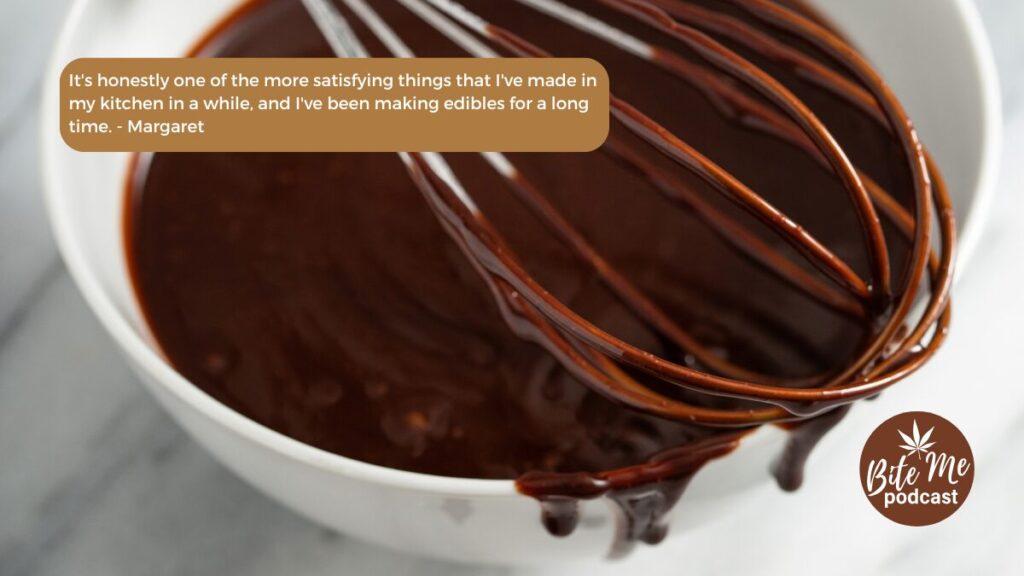
The Recipe: Homemade Cannabis Infused Chocolate From Scratch
Step 1: Infuse Your Cocao Butter
What you need:
- 1 cup cocao butter
- Your cannabis flower or concentrate (see dosing notes below)
- Fine mesh strainer or cheesecloth
- Heat-safe bowl or mason jar
- Pot for the double boiler
- Thermometer (optional but helpful)
Method:
- Decarboxylate your cannabis first. If you’re using flower or most concentrates, this step is not optional. Decarb activates the THC so it actually does something when you eat it. Skip this step and you’ve made very pretty, very useless chocolate. The only exception is FECO (full extract cannabis oil), which is already decarboxylated in the extraction process.
- Set up your double boiler. Fill a pot with a few inches of water and bring it to a gentle simmer. Place a heat-safe bowl on top, making sure the bottom of the bowl isn’t touching the water. Alternatively, use a mason jar set directly in the simmering water. Both work.
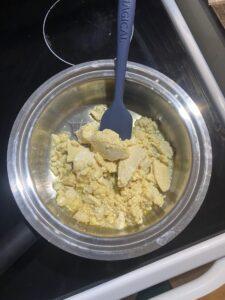
- Add your cocao butter to the bowl or jar and let it melt into a clear golden liquid.
- Add your cannabis material and keep the heat low and consistent. Low and slow is the rule. You want gentle, steady heat that moves the cannabinoids from the plant material into the fat. You do not want a rolling boil under that bowl.
- Infuse for 30 minutes, stirring occasionally. Thirty minutes is enough time to extract most of the cannabinoids from your plant material. You can go longer if you want, but 30 minutes will get you there.
- Strain through a fine mesh strainer or cheesecloth into a clean container. If you’re moving directly to making the chocolate, you don’t need to let it cool completely. You want the infused cocao butter warm and liquid for the next step.
See this post on the new research on shorter infusion times.
Step 2: Make the Cannabis Infused Chocolate
Recipe adapted from The Saucy Kitchen.
Ingredients:
- 1 cup infused cocao butter (warm and liquid)
- 1 cup cocoa powder (or cacao powder, your choice)
- 1/4 to 1/2 cup maple syrup (or honey, or agave)
- Pinch of flaky sea salt
Instructions:
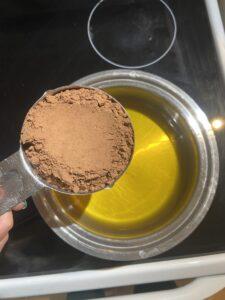
- With your infused cocao butter already melted and warm, whisk in the cocoa powder a little at a time until smooth. No lumps. Otherwise, melt your infused cocao butter first before adding in the cocao powder.
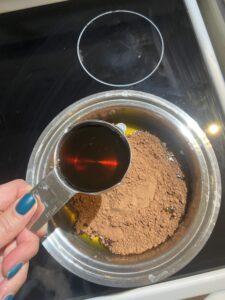
- Add your maple syrup. I use a quarter cup because I like a darker, less sweet chocolate. Half a cup makes it noticeably sweeter. Start at a quarter and taste from there.
- Whisk until completely combined and glossy.
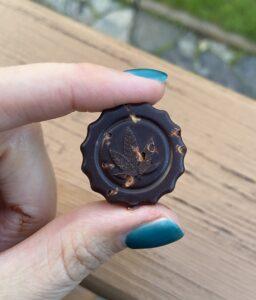
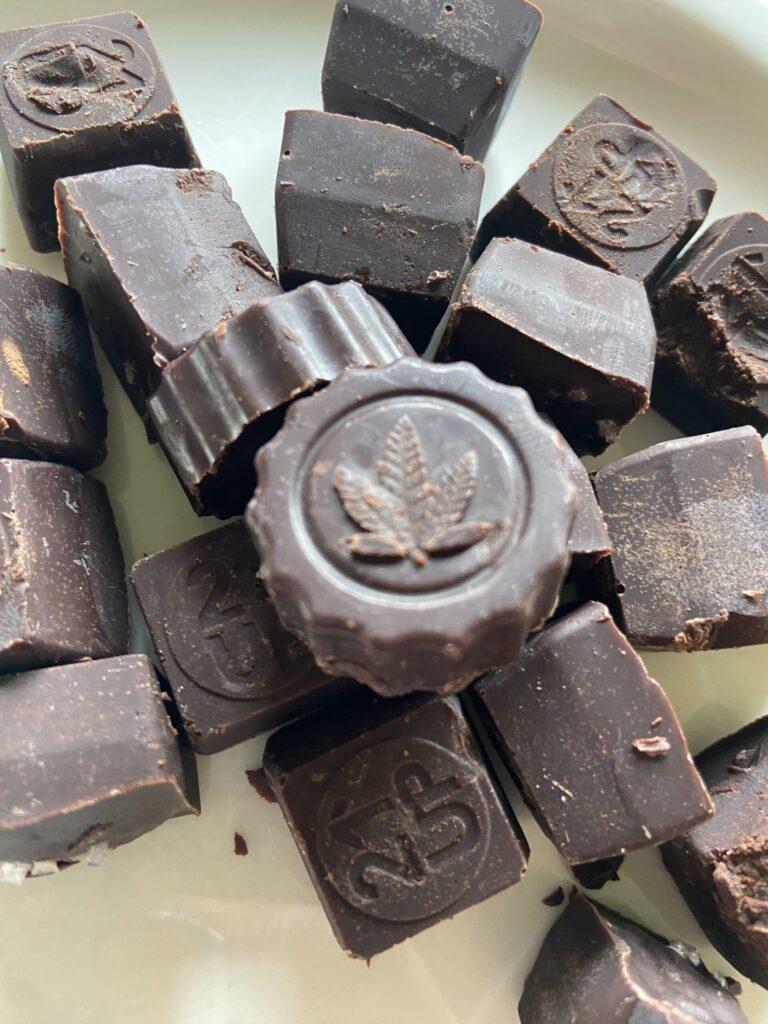
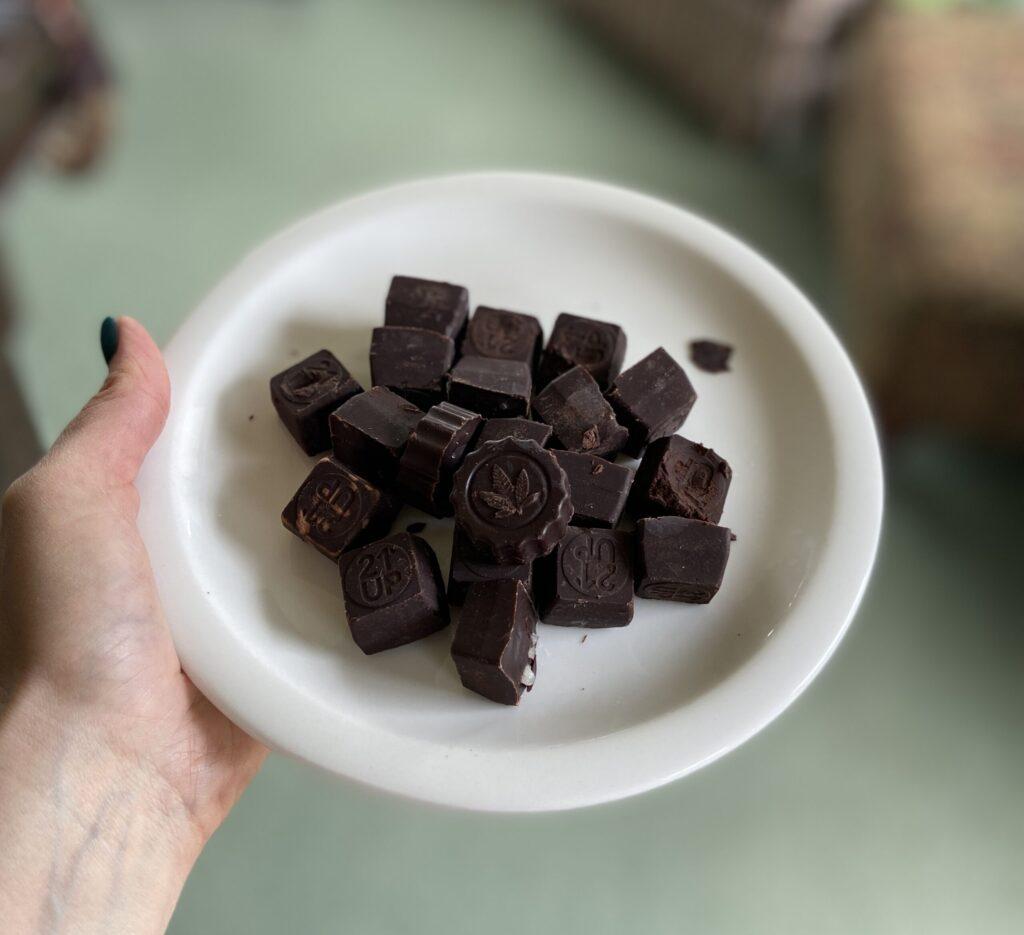
- Pour into silicone molds or lined muffin cups.
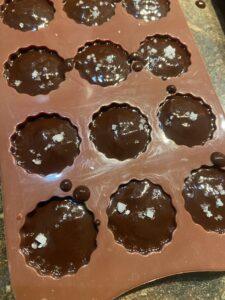
- Add a pinch of flaky sea salt to the top of each piece, or any other toppings you want (see tips below).
- Refrigerate for at least 30 minutes until set.
That’s it. I’m not oversimplifying. This cannabis infused chocolate really is that fast.
Find more recipe inspiration.
Listen to this episode:
Sweetener notes:
Maple syrup gives you a subtle, almost caramel undertone that works beautifully with dark chocolate. Honey is the most reliable from a texture standpoint because of its low water content. Agave also works well and makes this completely vegan, which is a nice thing to know if you’re making this as a gift. Liquid sweeteners are what you want to use for this recipe.
On texture:
This cannabis infused chocolate will not snap like a store-bought bar. Store chocolate has been tempered, a specific heating and cooling process that stabilizes the cocao butter crystals and gives you that clean break. We’re not doing that. What you get instead is a softer, firm-from-the-fridge bite that melts on your tongue. I keep mine in the fridge because I love that coolness when I first pop a piece in my mouth. If you want it firmer, the fridge is your friend.
What Is Cocao Butter, Exactly?
Cocao butter is the edible fat extracted from cocao beans. That’s it. Despite the name, there is no dairy in it. It’s completely vegan. The word ‘butter’ describes the texture, not the source.
It’s sold in a solid block, pale and waxy looking, and you’ll know it immediately by the smell. It’s white chocolate and cocoa all at once. When you melt it, it becomes a beautiful golden liquid. This is the ingredient that makes your homemade cannabis infused chocolate taste like actual chocolate rather than cocoa powder stirred into coconut oil.
You can find it at health food stores, bulk stores, and online. Fair warning: it’s not cheap. Expect to pay somewhere between $15 and $30 for a block depending on where you live and which brand you buy. I want to name that honestly because I don’t love recommending ingredients that surprise people at checkout. A little goes a long way, and the end result is so far above anything you’d buy that it’s worth it. Sometimes investing in your kitchen means spending money on the right ingredients.
Cacao vs. Cocoa Powder: Which One Do You Use?
Both come from the same plant. The difference is processing.
Cacao is minimally processed, cold-pressed at lower temperatures. It’s more bitter and has higher antioxidant content. Cocoa has been roasted at higher heat. It’s a little sweeter and slightly less nutritionally dense.
For this recipe, use either one. It’s genuinely a taste preference call. I used cocoa powder and loved the result. If you want to go the raw route with cacao powder, that works equally well. The recipe is forgiving.
Why Cocao Butter Works So Well for Infusions
The short answer: it’s a fat and cannabis is fat-soluble. This is the same reason cannabutter and cannabis coconut oil work. Cocao butter is just a more elegant, more chocolatey version of that principle.
The longer answer is that cocao butter has a strong, dominant flavor of its own, and that flavor does you a real favor. It masks a lot of the cannabis taste in a way that coconut oil doesn’t quite manage. If you’ve made infused coconut oil and thought ‘this is good but it tastes green,’ you’re going to notice a difference here. The cocao butter is doing double duty as both infusion base and flavor carrier.
It’s also solid at room temperature, unlike coconut oil or butter, which means your finished cannabis infused chocolate holds its shape. The melting point of cocao butter is just below body temperature, which is part of why good chocolate melts on your tongue rather than in your hand. Unless it gets too warm. Don’t leave this in a hot car.
The Dosing Math (The Part That Actually Matters)
Here’s the part I think is genuinely underappreciated about making cannabis infused chocolate this way.
Because you’re building from scratch, you know every gram of every ingredient. That means you can calculate your dose precisely. Not approximately. Not hopefully. Precisely.
Here’s the math. You know how much infused cocao butter went into the batch. You know the potency of the flower you used and how much you used. That tells you the total milligrams of THC in your cocao butter. From there, divide by the number of pieces. That’s your dose per piece.
THC per serving (mg) = (Cannabis weight in grams) × (THC percentage as decimal) × 1000 mg/g × (Extraction efficiency) ÷ (Number of servings)
If you need help with the math, there’s a free dosage calculator. I recently updated it to be more user-friendly. Feedback always welcome.
Use the Bite Me Dosage Calculator.
Also see the post on Easy Edibles Dosing, How To Calculate Potency Like A Pro.
If you don’t know the exact potency of your flower because you grew it yourself or got it from a friend without lab results, do your best estimate based on what you know about the cultivar. An estimate is still better than nothing, and you can always start with less and work up from there. For a first piece from a new batch, I’d recommend going smaller and waiting before going back for more.
This is what taking control of your high life looks like. Knowing what you made, knowing what you’re eating, and making informed choices about your own body.
Tips, Add-Ons, and What Not to Do
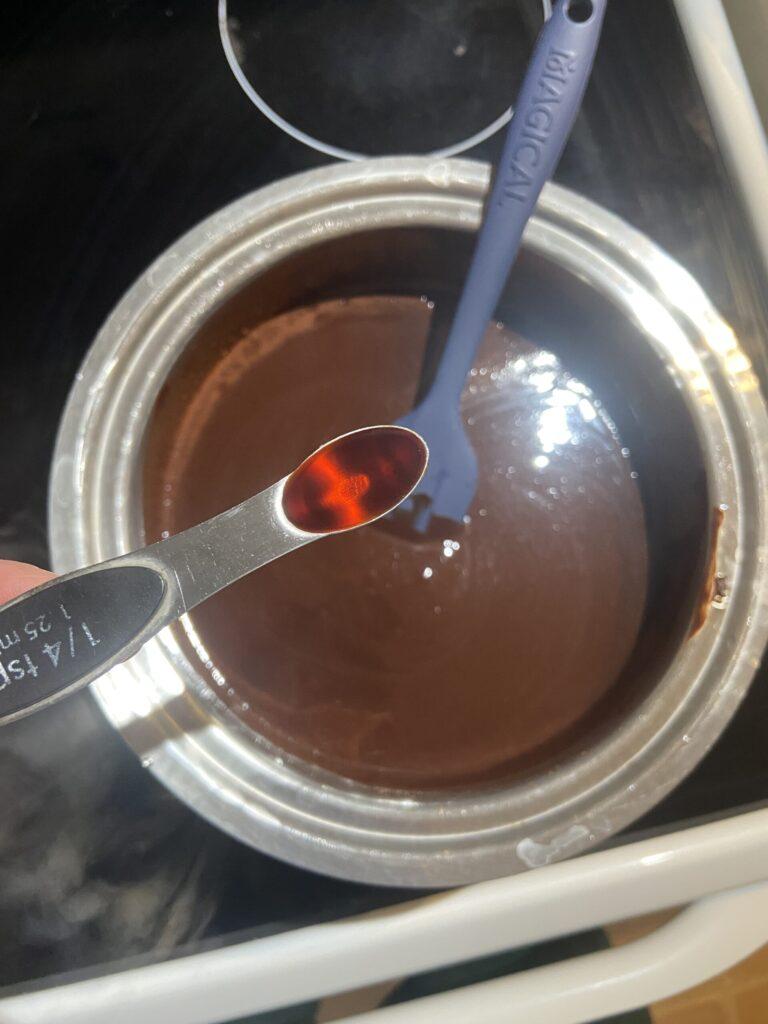
Do not add vanilla extract.
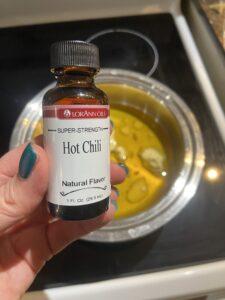
Most extracts contain water. Water and melted chocolate do not get along. The second water hits your chocolate mixture it seizes, going from a smooth liquid to a gluey, grainy mess with no recovery. If you want to add flavor, use food-grade oils. Mint, orange, coffee, and cinnamon are all great. A few drops is all you need.
Add-ons and toppings.
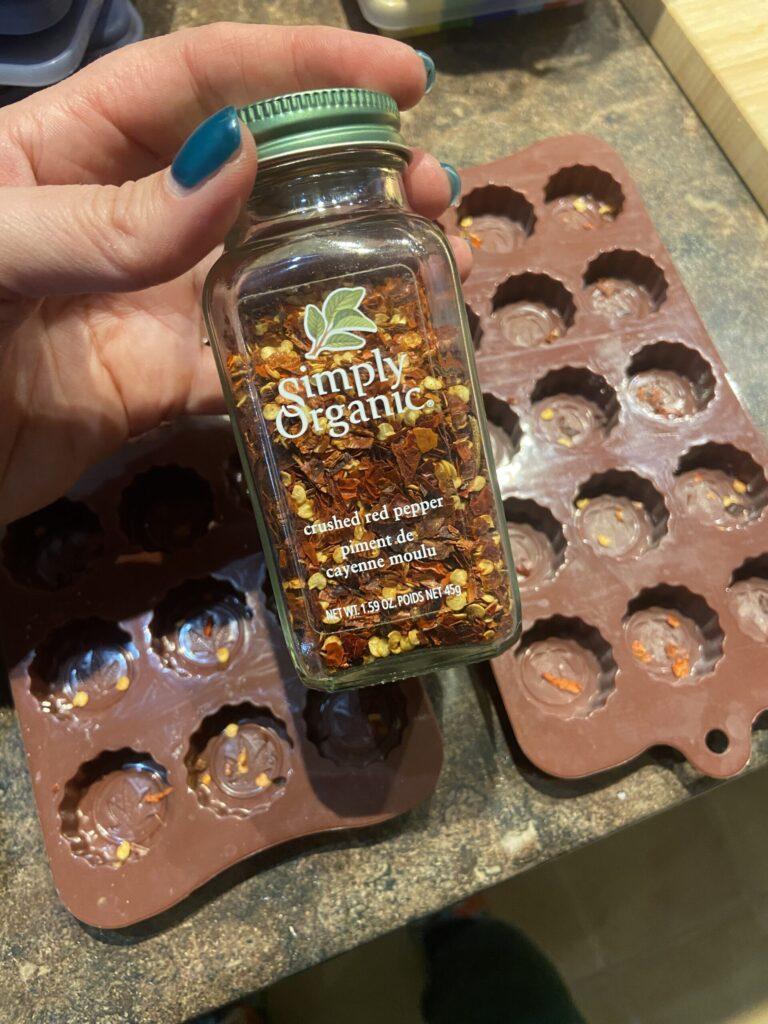
This recipe is a canvas. Once you’ve poured into the molds, add your toppings before it sets. Flaky sea salt is a classic for good reason. From there: crushed nuts, dried cherries or cranberries, espresso powder, a pinch of chili flakes, coconut flakes. Make it yours.
Storing your chocolate.
Keep it in an airtight container in the fridge if you want that firmer texture, or at room temperature away from heat and moisture if you prefer. This is not a chocolate you’re taking to a summer outdoor event unwrapped. It will melt. Plan accordingly.
Label it.
Always. Even if it’s in your own fridge. My dad is 94 years old and has a longstanding weakness for anything sweet. The jar now clearly says ‘contains weed’ and he knows what that means. Do not skip the label. It should be obvious from the label that it’s cannabis infused chocolate!

Track Your Batches
Every time you make a new batch, the variables change. Different flower, different potency, different ratios, different number of pieces. Writing it down means you build a reference you can actually use. What worked. What you’d change. How it hit and when.
The Bite Me Edibles Journal is built exactly for this. It’s a physical journal available on Amazon worldwide, and this kind of recipe is exactly what it’s designed to track.
That’s it for this week friends. Please reach to me, I love hearing from listeners! Let me know how your cannabis infused chocolate turned out. Direct messages to stayhigh@bitemepodcast.com, or leave a voice message on the podcast hotline.
Support the show by subscribing, sharing, leaving a review or buying me a cookie! Whatever way you choose, I’m grateful that you’re listening.
Stay high,
Margaret
FAQ on Making Cannabis Infused Chocolate From Scratch
Do I have to use cocao butter, or can I substitute something else?
You can make a version of this with coconut oil or cannabutter, but it won’t behave the same way. Those fats stay softer or meltier at room temperature than cacao butter does. If you substitute, your cannabis infused chocolate will need to stay refrigerated and won’t hold its shape as well. The cocao butter is also doing flavor work here, so substituting changes the taste significantly. If you have access to cacao butter, use it.
Cacao butter vs. cocoa butter. Are these the same thing?
Yes. They are the same ingredient. ‘Cacao butter’ and ‘cocoa butter’ are used interchangeably depending on the brand and processing level. You’ll find both terms on packaging. Either works for this recipe.
What’s the difference between using flower and using FECO?
If you use flower or most concentrates, you need to decarboxylate first to activate the THC. FECO (full extract cannabis oil) is already decarboxylated during the extraction process, so you can skip that step and add it directly to your melted cocao butter. FECO also doesn’t require straining, which is a nice bonus. Both methods work well. FECO is a bit more precise from a dosing standpoint if you know the concentration.
Why didn’t my chocolate set properly?
A few possible culprits. First, check your sweetener. Liquid sweeteners with higher water content can interfere with setting. Honey is the most reliable. Second, if you accidentally got any water into the mixture, it can prevent proper setting. Third, room temperature matters. If your kitchen is warm, your chocolate will stay softer. Put it in the fridge and give it longer. If it’s still not setting, something with higher water content likely got into the batch.
Can I use this as a base for other recipes?
Yes, and it’s a great idea. Once you learn how to infuse cocao butter, it can go into anything that calls for cocao butter or even regular butter. Hot chocolate, truffles, ganache, baked goods. The cannabis infsued chocolate recipe in this post is a jumping-off point, not a ceiling.
How long does homemade cannabis infused chocolate last?
Stored properly in an airtight container in the fridge, a few weeks. In the freezer, significantly longer if sealed well. The cocao butter is shelf-stable, so it’s really the other ingredients and moisture exposure that determine shelf life. When in doubt, use your senses. If it smells off, it is.
My chocolate seized up mid-mixing. Can I fix it?
Probably not, unfortunately. Seized chocolate happens when water gets in, and there’s no reversing it once it starts. The batch is likely done. Pour it into something where the texture doesn’t matter, like a mug of warm milk for cannabis hot chocolate, and start over with dry equipment. Learn from the batch and move on.
Go Make Some Cannabis Infused Chocolate From Scratch
You now know how to make real cannabis infused chocolate from scratch, with a fat you infused yourself, at a dose you can calculate down to the milligram, with add-ons and flavors you chose.
That’s not something you’ll find wrapped in foil at the dispensary with a vague label and a price that makes you wince. That’s yours. Made in your kitchen, with your hands, exactly the way you want it.
Timestamps for Cannabis Infused Chocolate Audio
Introduction to Homemade Cannabis Infused Chocolate (00:00:05) The host introduces the episode’s topic: making homemade cannabis infused chocolate and the satisfaction of knowing exactly what’s in it.
What is Cocao Butter? (00:02:53) An explanation of ccao butter, its properties, and the difference between cacao and cocoa for use in this recipe.
Where to Find Cocao Butter (00:04:39) Tips on where to purchase cacao butter, a warning about its cost, and a note about avoiding water-based extracts.
The Infusion Process (00:06:16) How to infuse cocao butter with cannabis using various methods, including FECO, flower, and different kitchen tools like a double boiler.
Making the Cannabis Infused Chocolate (00:09:53) A simple, three-ingredient recipe for making the cannabis infused chocolate using infused cocao butter, cacao powder, and a sweetener like maple syrup.
Texture and Sweetener Options (00:12:12) A discussion on the cannabis infused chocolate’s softer texture compared to store-bought bars and alternative sweeteners like honey or agave.
Calculating the Dosing (00:13:35) How to precisely calculate the THC dosage per piece by knowing the ingredients and using an online calculator for help.
Customization and Storage (00:15:48) Ideas for customizing the cannabis infused chocolate with toppings like sea salt or nuts, and tips for proper storage in the fridge.

Leave a Reply