The Art and Science of Gourmet Cannabis Edibles
Hello, friends! Welcome back! If you’re passionate about edibles, you know that the world of cannabis-infused treats is evolving at lightning speed. In a recent episode, I had the pleasure of sitting down with Julian Rose, a master chocolatier, pastry chef, and director of research at Insa in Massachusetts. Julian’s journey from a family bakery in Montreal to the cutting edge of cannabis edibles is as rich and layered as the finest chocolate truffle.
This blog post dives deep into the main themes of our conversation: the pursuit of quality in edibles, the nuances of flavor and formulation, the challenges of savory products, and the science behind fast-acting edibles. What makes gourmet cannabis edibles? Let’s find out!
Listen to this episode:
Start with Quality: Why Ingredients Matter
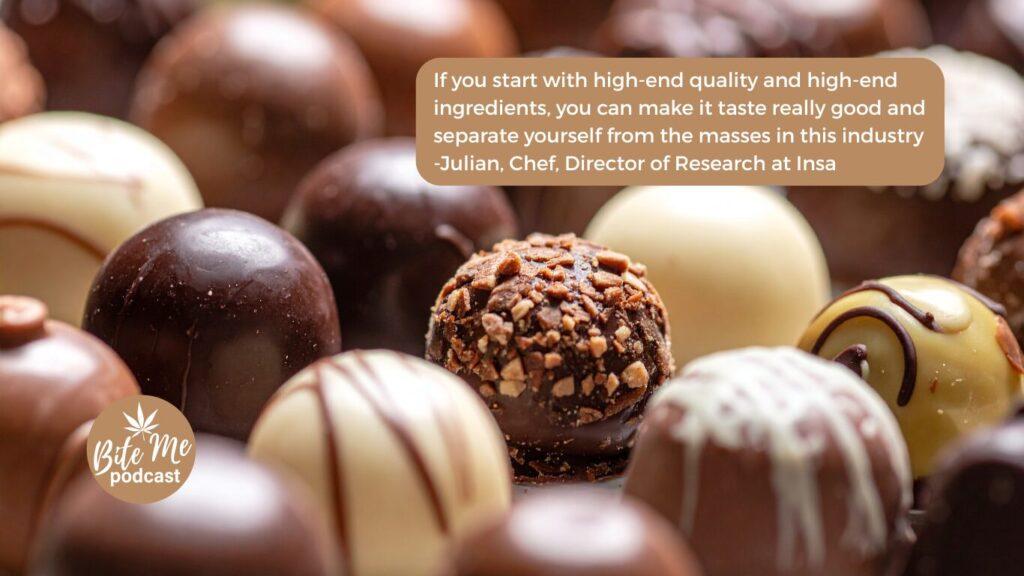
Julian’s philosophy is simple but profound: start at the top with the best ingredients. This isn’t just a chef’s snobbery, it’s the foundation of a memorable edible.
Why does ingredient quality matter so much?
Flavor Integrity: High-quality chocolate, real fruit purees, and premium fats create a product that’s not just a vehicle for THC, but a culinary experience.
Texture and Mouthfeel: Cheap ingredients often lead to waxy, gritty, or artificial textures. Think of the difference between a gas station chocolate bar and a handcrafted bonbon.
Repeat Business: As Julian says, “When you taste something good, you want to come back.” Mediocre edibles might deliver THC, but they don’t inspire loyalty.
Actionable Advice:
If you’re making edibles at home, splurge on the best chocolate, butter, and flavorings you can afford.
Don’t cut corners on the cannabis infusion itself, use well-cured flower or high-quality concentrates.
Industry Insight: Many companies focus solely on THC content, neglecting the edible’s base. Julian’s approach at Insa is to make edibles that could stand alone in a high-end chocolate shop, cannabis or not.
Flavor First: Moving Beyond THC Potency
Let’s be honest: most consumers still shop for edibles based on THC milligrams per dollar. But as the market matures, flavor and craft are starting to matter more.
Key Points from Julian Rose:
THC is Still King: Most buyers want the most THC for their money, but there’s a growing segment seeking a gourmet experience.
Perceived Value: Consumers compare a $5, 5mg chocolate to a $25, 100mg bar and often choose the latter, even if the quality is lower.
Craft Sells…Eventually: As with wine or craft beer, a market for premium, flavor-driven edibles is emerging.
Actionable Advice:
If you’re a consumer, try a side-by-side tasting of a mass-market edible and a craft product. Notice the difference in flavor, texture, and effect.
The Challenge and Promise of Savory Gourmet Cannabis Edibles
Savory edibles are the wild frontier of cannabis cuisine. Why aren’t they more common?
Barriers to Savory Gourmet Cannabis Edibles
- Consumer Conservatism: Most buyers stick to familiar flavors. Spicy or unusual combinations (like chipotle pineapple gummies) can scare people off.
- Regulatory Hurdles: Shelf-stable, sweet products are easier to package, test, and sell. Savory items often require refrigeration or have shorter shelf lives.
- Perceived Value: Small bottles of infused sauces or savory snacks can seem overpriced compared to a big chocolate bar or bag of gummies.
Julian’s Approach:
- Blend the Familiar with the New: Combining sweet and savory (like chocolate with crushed Fritos) makes adventurous flavors more approachable.
- Encourage Savoring: North Americans tend to eat quickly. Slowing down and savoring new flavors helps overcome initial resistance.
Actionable Advice:
If you’re experimenting at home, start with familiar savory snacks and add a twist, think cannabis-infused popcorn with herbs, or a spicy chocolate bark.
Terpenes, Pairings, and the Art of Flavor
Terpenes are the aromatic compounds that give cannabis (and many foods) their distinctive scents and flavors. They’re also key to the “entourage effect,” where cannabinoids and terpenes work together for a unique experience.
Julian Rose’s Flavor Pairing Process
- Start with Inspiration: Seasonal changes, memories, and even the weather can spark new ideas. Pine and apricot on a cold day? Why not!
- Use Tools: Books like The Flavor Bible and websites like foodpairing.com can help you discover unexpected but harmonious combinations.
- Respect the Terpenes: Many terpenes are lost during cannabis oil processing. Adding them back in after infusion can boost both flavor and effect.
Actionable Advice:
When making gourmet cannabis edibles, think about the terpenes in your cannabis and how they might pair with your recipe. Limonene (citrusy) goes well with lemon desserts or fish; myrcene (earthy) pairs with chocolate or berries. Don’t be afraid to experiment, but always taste as you go.
Expert Tip: If you want to geek out, research the dominant terpenes in your cannabis strain and build your recipe around them.
Full Spectrum vs. Distillate: Choosing the Right Cannabis Oil
This is one of the hottest debates in edibles right now. Should you use full spectrum oil (FSO) or distillate?
Full Spectrum Oil
- Contains a broader range of cannabinoids and terpenes.
- Has a distinct “cannabis” flavor, grassy, sometimes funky.
- Often preferred by those seeking the entourage effect.
Distillate
- Highly refined, mostly pure THC.
- Neutral flavor, easier to mask in recipes.
- Some say it delivers a more “heady” high.
Julian’s Take:
About half of consumers prefer FSO, half prefer distillate.
FSO is best paired with strong flavors (like mint) to balance the cannabis taste.
Distillate is ideal for delicate flavors or when you want the cannabis to be invisible.
Actionable Advice:
For home cooks, try both and see which you prefer. If you dislike the taste of cannabis, distillate is your friend. If you want a more holistic effect, seek out or make edibles with FSO.
Navigating Regulations and Real Ingredients
The cannabis industry is a regulatory minefield, and rules can sometimes clash with culinary best practices.
Common Regulatory Challenges
- Color Restrictions: Some states ban added colors, even natural ones. This can make products less visually appealing or alter perceived flavor.
- Ingredient Bans: Certain fruits, nuts, or additives may be prohibited.
- Labeling and Testing: Every batch must be tested for potency and contaminants, which is easier with shelf-stable products.
Julian’s Experience:
In Florida, even natural strawberry puree was banned due to its color. Regulations are often written by people unfamiliar with food science or cannabis, leading to confusion and frustration.
Actionable Advice:
If you’re making edibles at home, you have more freedom, but always label your products clearly and keep them away from children and pets.
The Science of Fast-Acting Edibles
Fast-acting edibles are the next big thing, promising effects in 15-20 minutes instead of the usual 30-60.
How Do They Work?
- Surfactants: These help cannabis oil disperse in water, speeding absorption. The downside? They can be bitter.
- Emulsions: Advanced techniques like sonic homogenization break oil into tiny droplets
that your body can absorb more quickly, bypassing some of the usual digestive delays.
Julian’s Perspective:
- Fast-acting edibles are a game-changer for both new and experienced consumers who want more predictable onset times.
- The challenge is balancing rapid onset with great taste—some surfactants and emulsifiers can negatively impact flavor or texture.
- At Insa, the team is constantly experimenting with new technologies to find that sweet spot between efficacy and enjoyment.
Actionable Advice:
- If you’re shopping for fast-acting edibles, read the label to understand what technology is being used and what to expect.
- For home makers, creating true fast-acting edibles is tricky without specialized equipment, but you can experiment with lecithin or other emulsifiers to improve absorption.
Expert Tip: Start low and go slow, especially with fast-acting products. The quicker onset can catch even seasoned consumers by surprise!
Expert Tips for Home Edible Makers
Julian Rose and I both believe that anyone can make delicious, effective edibles at home with a little know-how and creativity.
Top Tips:
- Measure Carefully: Accurate dosing is key. Use a scale and do the math to ensure each serving is consistent.
- Infuse Gently: Low and slow is the name of the game, don’t rush your infusion or you’ll risk degrading cannabinoids and terpenes.
- Taste as You Go: Adjust flavors, sweetness, and salt as needed. Remember, cannabis can add bitterness, so balance is important.
- Store Properly: Keep edibles in airtight containers, away from heat and light, and always label them clearly.
- Experiment: Try new flavor combinations, textures, and even savory recipes. The only limit is your imagination (and maybe your tolerance!).
Pro Tip: Keep a batch log with notes on each recipe, including infusion ratios, ingredients, and feedback. This will help you refine your process and replicate your favorites.
See more with the Complete Guide To Great Edibles.
Final Thoughts: The Future of Gourmet Cannabis Edibles
The world of cannabis edibles is evolving rapidly, blending culinary artistry with cutting-edge science. As consumers become more discerning and regulations (hopefully) catch up with innovation, we’ll see even more exciting products on the market, from gourmet truffles to savory snacks and fast-acting confections.
Julian Rose’s journey shows that passion, creativity, and a commitment to quality can elevate gourmet cannabis edibles from simple THC delivery systems to true culinary delights. Whether you’re making treats at home or shopping for the best on the market, remember: great gourmet cannabis edibles start with great ingredients, thoughtful formulation, and a willingness to experiment.
That’s it for this week friends. Please reach to me, I love hearing from listeners! Direct messages to stayhigh@bitemepodcast.com, or leave a voice message on the podcast hotline.
Support the show by subscribing, sharing, leaving a review or buying me a cookie! Whatever way you choose, I’m grateful that you’re listening.
Stay high,
Margaret
FAQ On Gourmet Cannabis Edibles With Julian Rose
Q: Why does ingredient quality matter so much in cannabis edibles? A: Quality ingredients directly affect flavor, texture, and whether consumers come back for more. Cheap ingredients produce waxy or artificial results. High-quality chocolate, real fruit purees, and premium fats turn an edible into a genuine culinary experience, not just a THC delivery mechanism.
Q: Should I use full spectrum oil or distillate in my cannabis edibles? A: It depends on your goal. Full spectrum oil retains more cannabinoids and terpenes, which many believe enhances effects, but it has a distinct grassy cannabis flavor that can overpower delicate recipes. Distillate is nearly flavorless and easier to work with but lacks that broader cannabinoid profile. When in doubt, try both and decide based on taste preference and desired effect.
Q: What are fast-acting edibles and how do they work? A: Fast-acting edibles use emulsification techniques (such as sonic homogenization) or surfactants to break cannabis oil into tiny droplets that absorb more quickly in the body. This can reduce onset time from the typical 30-60 minutes down to 15-20 minutes. The tradeoff is that some of the ingredients used can affect flavor or texture.
Q: Why aren’t savory edibles more widely available? A: Three main reasons: consumers tend to gravitate toward familiar sweet formats, savory products often require refrigeration and have shorter shelf lives (creating regulatory and logistical headaches), and small-format savory items like infused sauces can feel overpriced compared to gummies or chocolate bars.
Q: How do terpenes affect the flavor and experience of edibles? A: Terpenes are aromatic compounds that influence both taste and, potentially, effect through what’s called the entourage effect. Pairing terpenes intentionally with your recipe (citrusy limonene with lemon desserts, earthy myrcene with chocolate) creates more cohesive, flavorful edibles. Many are lost during processing, so reintroducing them after infusion can improve both flavor and effect.
Q: What’s the most important safety tip for home edible makers? A: Accurate, consistent dosing. Weigh your ingredients with a scale, do the math on your infusion ratios, and label everything clearly. Keep edibles away from children and pets, and store them in airtight containers away from heat and light.
Margaret 00:00:05 How does a young Montreal boy grow up to become a master chocolatier, a master pastry chef and the director of research at Insa in Massachusetts? Julian Rose shares his journey and the challenges of creating unexpected flavor combinations in high quality edibles. We talk savory edibles y. A lot of fast acting claims that you see on labels are just marketing, and what the research shows in consumer preferences. When it comes to full spectrum versus distillate, it's not what you'd expect. And welcome back, friends. I'm your host, Margaret, a certified Ganjier and a cannabis educator who believes your kitchen is the best dispensary you'll ever have. And you're listening to Bite Me, the show about edibles. So grab a snack and let's dive into this conversation with Chef Julian Rose. We are recording and we're live. Gillian, I just want to say thank you for joining me today. And the listeners of Bite Me, the show about edibles. I'm really excited to have you here. And you're a master chocolatier and a master pastry chef, as I understand it.
Margaret 00:01:11 And I think we're going to be getting into all those good things in this conversation today. But just to get us started, you're a fellow Canadian, and you grew up in Montreal. You are the son of bakers. And as I mentioned already, you became a master pastry chef and chocolatier, continuing the family tradition. How did growing up in such a family teach you to taste and appreciate food?
Julian Rose 00:01:37 Well, you know, it's it's it was very interesting. My mom was a professional dietician and my dad was a hotelier, professional and, came from Germany, so immigrated to Germany in the 50s, started a family and then also right away started a business, a pastry shop. so, of course, I was around, you know, food and desserts and everything is sweet, you know. And but on the on one side, my mom always had this kind of obsession with balanced diet. And then the European side from my dad, we would be exposed to a lot of European specialties, whether it's cheese and wines and traditions and chocolate and holidays.
Julian Rose 00:02:23 So we're talking now, like when I was younger in the 60s, you know, there was not the availability of foods that we see now. it was very much seasonal. So you'd go to the supermarket, you had strawberries in, you know, June, July. And that was about it. And now, you know, with the global market, you get access to all these things. But I remember my mom, for instance, telling telling us that she went to the supermarket, grabbed some artichokes, and the cashier was like, ma'am, excuse me, what are those? And what do you do with them? You know. So I was exposed to a lot of food. I would say that was not specifically, every day, you know, I remember my mom as well, buying Kiwis when they first came out because she she liked to experiment. She liked to see, like, what's what's different, what's new? you know, now another example. We go to a supermarket. You you can get plantains now, but it a lot of people don't buy plantains because they don't know what to do with them.
Julian Rose 00:03:29 but with more being exposed to restaurants and different cultures. You go to a Mexican restaurant, you eat fried plantains, and you're like, oh, these are actually good. So all of that was kind of my my upbringing. I was exposed to a lot of different things, and we had a shop that specialized in pastry and catering. So food everywhere all the time.
Margaret 00:03:53 Right. It sounds, I guess it might be kind of nice to have a mother that was a dietitian, because then you could never really overindulge, which is probably good when you're enjoying all those fine foods. But I will say, like the global market, like you said, does provide us a lot more access. But there isn't really there's nothing like the smell of strawberries at a farmer's market in the summertime when they're like in the season, there's there's nothing better than that.
Julian Rose 00:04:17 So I do miss a little bit that, you know, that you can get strawberries all year, but then they don't feel so special and they're not very good all year, you know?
Margaret 00:04:26 Yeah, I totally agree with that.
Margaret 00:04:27 Yeah. Because yeah, I.
Julian Rose 00:04:29 I, I remember when, when, you know, it was seasonal when it's so funny because restaurants go like, oh, we compose our menus seasonally with what's available on the market, which is kind of true. But then you should not have celery in December, you know.
Margaret 00:04:45 Oh, 100%. Yeah. Yeah. It's it's nice to put that on a menu or to like market that way. But also, you know, when push comes to shove if you need to serve food, you have to use what's available. So yeah. Now you obviously have a very robust background with food. What drew you to culinary cannabis?
Julian Rose 00:05:06 well, it really kind of was a more or less an accident, if you will. because of what I do in the chocolate world and pastry world. I'm quite well known in North America. for one, one quality, I guess, as I solve a lot of problems. So I started somebody in the cannabis industry on the West Coast asked for consulting.
Julian Rose 00:05:32 So they said, hey, we're we're in the cannabis industry. We want to do chocolate bars. We don't know anything about chocolate. Can you help us? So that's kind of how I got introduced to this industry much, much more as a troubleshooter and to help them get started. Also, equipment wise, like Companies, you know, like investors in this industry. They, they they're typically people that are business people. So they don't necessarily know machinery and implementation and process and tempering and all that stuff. So that's kind of how it happened. by circumstance. I was connected to a company and then another company and then another company and so on. Right. And that's kind of that's how I got connected with Insa. I was living on the West Coast, and they had actually an issue with chocolate and tempering and equipment. So the equipment manufacturer said I'll call this guy. And so I flew over, did my thing solve the problem, went back on the West Coast and then I we kept in good contact.
Julian Rose 00:06:39 So I was coming back every three months or so and as a consultant and then it kind of, they said, hey, would you be interested in joining us in a full time job? and at that point, it was just before Covid. I was on the West Coast. I was like, no, we can just continue as the relationship. But then Covid hit and all the consulting gigs kind of disappeared. so then at that point, I accepted the the offer. So I just packed my things, came over here, and I'm in Massachusetts since.
Margaret 00:07:14 Right. So you left the West Coast during the pandemic for the East Coast?
Julian Rose 00:07:17 Yeah.
Margaret 00:07:17 Yeah, yeah, well, I'm sure. And you're now the the chef and, director of research at Insa, as I understand it.
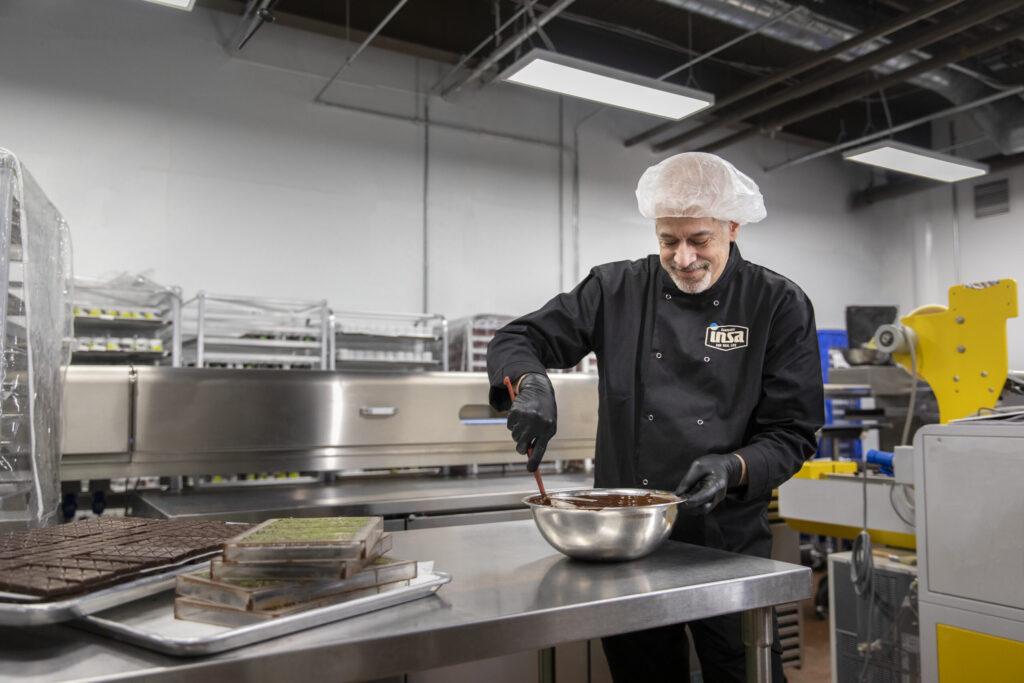
Julian Rose 00:07:24 Yeah. Correct. Yeah. So developing developing all the products and innovating and creating new opportunities and new avenues, I guess. you know, I don't approach it as being like, hey, I'm in. I'm in the cannabis industry, so that's the only thing I do.
Julian Rose 00:07:42 I'm still very much kind of in the chef world of, food and chocolate. So the idea is kind of commingled. They they cross each other. And when I think it's viable, then I try to do something.
Margaret 00:07:58 Right. Well, I think that makes like, edibles sound a lot more interesting when you're coming at it from that perspective. And you've said that you want NSA's edibles to be indistinguishable from what you'd find in a high end chocolate shop, for example. What's the biggest misconception the cannabis industry still has about what quality means?
Julian Rose 00:08:17 Well, I think this was at the point where I did consulting for Enso here on the East Coast. The whole cannabis. Legalization, I would call it started with medical. And then it kind of flipped into recreational. But I proposed to inside. I said we should or you should start at the very top because it's it's easier to start with very high quality. And then if the price gets compressed or if, if you feel that you want to reduce the quality.
Julian Rose 00:08:50 It's easier to go a little down, but when you start with cheap, it's hard to go up. Just just the economics. The economics don't work, right. So if you start with high end quality, high end ingredients, yes, they're a little bit more expensive. But when you break it down to a portion size, especially in cannabis where the portions are not very big, I think my opinion was you can start with super high quality and make it taste really good and separate yourself from the masses in this industry, because what I was seeing as a as a consultant, I was seeing that the companies just were focused on the cannabis and not so much on quality. It was just sell, sell, sell cannabis and it happens to have a gummy in it. Right? So it was kind of it was a little kind of both opposing for me in philosophy, you know, especially like pastry. Like in Montreal, if you're familiar with the food scene is wonderful. There's a lot of bakeries and pastry shops and chocolate shops, and it's probably the best kind of reflection of food in North America.
Julian Rose 00:10:03 so that's what I expect. And then you, you you're almost forced to suppress your, your professionalism, I guess, and go like, cheap, cheap, cheap. And it's like, oh, yeah, anybody can sell sugar and, you know, fat and cheap products. But and then when I, when I would talk to these, entrepreneurs and I'd say, well, are you are you trying to cheapen your flour? They're like, no, no, no. The flour needs to be great. Well then it's like, well, then the edibles need to be great, you know? So, so that's where we started here. And then so we, the owners completely accepted. They're like, yeah, that makes a lot of sense. Let's start up here. And later on, people will have to catch up to us.
Margaret 00:10:48 Yeah, that totally makes sense to me too, because you have like if you have companies that are just saying, well, the THC is going to sell itself and they'll just jam it into whatever and people will buy it, you know, next thing you know, there's a ton of products on the market.
Margaret 00:11:01 They're all just kind of mediocre. And the only yeah, there's no differentiator because they all have a certain amount of THC in them or CBD or whatever the cannabinoid is. So it definitely becomes a different, a differentiator. I think people are looking for that because, you know, if you're going to enjoy a single square of chocolate, for instance, you want that to be an experience instead of just the cheap stuff that you find at a, you know, a regular store, grocery store, dollar store or whatever the case might be.
Julian Rose 00:11:28 So gas station?
Margaret 00:11:29 Yeah. Gas station. Yeah, exactly.
Julian Rose 00:11:31 Now, well, you know, it's funny, I was going to say, you know, when when you taste something good, you're more prone to go back to it. When you taste something average, you're like, hey, I can do something else and it's going to be the same. So I get a lot of comment. People saying like, why is your chocolate bar? Why is your chocolate bar so good? I'm like, no secret.
Julian Rose 00:11:54 I mean, every chef has basically the same availability. You know that in restaurant I've drawn parallels before. It's like, why does a five star restaurant become a five star restaurant? And the little joint next to it is struggling? They have access to the same ingredients. It's a choice. They can buy this. They can buy the same meat. They can buy the same vegetables. They can buy the same cutlery, the glasses. But there's a market for everything. But they the five star restaurant, they choose to be top quality, top professionals, best process, best everything. And the little restaurant, which is, you know, trying their best. They're struggling because if you're like everybody else. It's easy to. It's easy to change.
Margaret 00:12:48 Yeah, exactly. Yeah, I totally agree. And. Yeah. I think people are looking for that special experience when they're when they're buying their edibles. I know, I know, I am. So now the edibles market has of course, as we all know, largely been driven by THC, maybe CBD as well as a selling point.
Margaret 00:13:05 But do you think there's a point where flavor and craft are starting to win over, or is that still? Are people still pretty much going in and buying edibles based on THC potency?
Julian Rose 00:13:19 I would say they are still buying on THC potency. It's it's interesting because, the best example I have, we started, back like five years ago, I guess, making peanut butter cups, a nice little chocolate and, with five milligrams. Because in Massachusetts, for recreational, it's five milligrams per portion, right? So. And I felt like a nice piece. You know, with good peanut butter, great chocolate. But, cost wise, of course, our cost was higher because the piece was quite large and the box had six pieces, so only 30mg at, at, I guess back then I think it was like $30, so it's like $5 each. But now, like if you go in a real nice chocolate shop, 4 to $5 per piece is kind of standard. but imagine now we're like, in the cannabis world, we have cannabis in a top quality product.
Julian Rose 00:14:20 And people quickly started looking. It's like, I can get a chocolate bar for $25 at 100 milligram, and I can get six chocolates for 30mg for $30. So then you could see they loved the piece, but they didn't like the the the equation.
Margaret 00:14:39 Right. Yeah, Yeah.
Julian Rose 00:14:41 So I ended up changing the piece to make it smaller, to put 20 pieces. And I worked backwards to to do the casting correctly so that I can put 100mg in a container and 20 little piece to be a, to compete internally with our chocolate bar. So like now they can buy a chocolate bar or the peanut butter smoosh as we call them, at the same price with the same THC. When I started in this industry, when I started in this industry, I said, why don't you sell the products per milligram? So then if you would have six pieces and there's 30mg, you pick a number. But let's say each milligram is a dollar. So you have 30mg is $30 and you have 100mg. It's $100.
Julian Rose 00:15:33 You know what I mean? It's like when you buy fish or meat, it's by the pound. Right. And in cannabis. This is where it's a little weird because you can have even for us, we have a gummy, for example, that has THC, CBD and CBN five milligrams of each, and then it's the same price as a gummy that is five milligrams of THC. So like the consumer goes like wait a minute I get CBN and CBD on top of it and it's the same price. Sweet. So that is the best selling gummy because it has more cannabinoids beneficial in different ways. But that's where it's a little challenging I guess because to your question it's like yes, people tend to go for the higher THC flowers the same day they come in the store and they say, what's the highest testing flower? And they're like, yeah, this one's 32. Got it. And that's what they go for. I mean, it's changing a little bit, but it's slow. The consumer wants the the best volume of THC for the money.
Margaret 00:16:45 Yeah, and I've seen that too, because I used to work in a dispensary and customers coming in asking for the highest THC flower was pretty prevalent. And they would buy flower regardless of anything else but that number. But when it comes to edibles, it is a little bit different. But do you find that that perception of value changes across different products? Like to me, maybe a gummy would be different than a nice chocolate like because I guess some people might see, you know, the gummy itself not necessarily being as higher quality as a nice chocolate. So do you find that that changes across different product types?
Julian Rose 00:17:24 Only if people don't like gummies, for example, or not like chocolate. Yeah. Because right now, what's happening here in Massachusetts and it's happened before on the West Coast, you know, when when it starts being legalized. The prices are relatively high because there's high demand, low volume. And as the market kind of stabilizes, then the prices start coming down. And so that like a gummy for us, the gummies are priced equally as the chocolate bars.
Julian Rose 00:17:56 So then it becomes really a preference. Do you like gummies? Do you like chocolate? Or do you like other edibles?
Margaret 00:18:04 Right. Okay, I find that interesting just because to me it would seem like the I guess the ingredients would be more expensive. And in chocolate.
Julian Rose 00:18:12 Yes.
Margaret 00:18:12 Yeah.
Julian Rose 00:18:13 Yeah, yeah. So it's but I, I did a, I do in-store tastings sometimes when we launch a product and it's interesting because I'm behind the scenes. But when I go into a store and I present hey, here's, here's the new product, and I offer an infused version because I'm giving you away some, I'm giving them away a, some, like a free piece of chocolate. And I'm like, hey, do you want to taste this new chocolate until like, is it infused? I was like, no, I can't give you infused product. And they're like, oh, never mind that. Yeah. But then, yeah, it's like going to going to Costco and they offer you a piece of, you know, pizza and you're like, oh no, no, no thanks.
Julian Rose 00:18:53 Because it's there's no pepperoni on it. Right.
Margaret 00:18:57 Yeah. So yeah. Who turns up chocolate.
Julian Rose 00:18:59 Yeah. But I've heard sometimes people, a few like very rare. They say like, I don't like chocolate. I was like, oh, that's fine. And that's okay. You know.
Margaret 00:19:08 Yeah, yeah. People have their tastes and preferences. Which sort of brings me to my next question around savory edibles. I mean, that's sort of it still feels like a very untapped frontier. What do you think? Standing in the way of more savory edibles becoming a more mainstream category in the edibles space?
Julian Rose 00:19:27 I would say like, I hear a lot of people, like, out in the streets, if you will. When I talk to people, it's like, well, what kind of food do you like? People go like, oh, I love Mexican food, but I don't like spicy. So it's so they they like they like mainstream, you know, Chipotle, I guess. Or to give an example, they like mainstream.
Julian Rose 00:19:51 They don't like too spicy, they don't like tongue. They don't like things that are too weird or out there. the reason I'm saying this is because I did a really nice pineapple, a spicy pineapple gummy that was, in my sense, outstanding. It was not extremely hot. It was not it was delicious because it had the full pineapple flavor and then a little bit of chipotle. so it's like a little smoky, a little peppery, but you would feel it down your throat, not on your tongue and, and hair and fire. And, and the reaction was because we called it spicy pineapple. People are like, oh, I don't I don't want to try it because they, they, they have a preconceived idea of what spicy is and they don't want to risk it. Right. So I think that's the challenge between the savory because I so actually I just released, just when I did that tasting last week. It's a Fritos chips crushed and mixed into milk chocolate. So I guess this is where it's interesting because people then they relate.
Julian Rose 00:21:06 They're like, oh, I like Fritos and I like chocolate. I'll try it. So it's not too out there. And it has this perfect balance of sweet and salty and a little savory because the corn. So when you eat the piece, the first thing you get is like a little bit of sweetness, because the chocolate is a little bit in percentage, there's more chocolate than chips. And then then you get in your nose like the nice roasted corn flavor or scent and then the saltiness. So then it's all mixed, mixing in your mouth. And you to savor. To savor is, I guess people have to stop a minute and savor because we we eat, we eat food. We just goblet and swallow it. so when you when you really taste it, what I tell people is, like, the first bite is challenging, even if it's good because you have no reference. Reference of it in your brain. You don't know what you're tasting. Are you tasting a sweet or a savory or.
Julian Rose 00:22:15 And then those mixtures together, they're a new flavor for you. So like just talking about like, strawberries or vanilla ice cream. If I say vanilla ice cream in your head, you can taste it. You know, you have a reference in your data bank of that flavor. So you don't do not have a reference of Fritos and chocolate together. So it's going to go in your file of new flavors. So I usually say taste it once and then they're like Interesting. Oh yeah I get it. Salty sweet. And then I say taste another one. And when you taste it, when you taste the other one, you'll see that it has that great blend of flavors that is unexpected.
Margaret 00:23:02 So it's sort of like a way you sort of introduce the savory by introducing a bit of this sweet first, and that makes it approachable to people. And it sounds like you're also showing people how to maybe slow down and take a minute to sort of think about what they're tasting and enjoying it, because I think we have an issue of eating too fast in North America in particular.
Margaret 00:23:22 So yeah. Yeah, that's really interesting. Yes. Yeah. We don't we don't take the time to savor. And I think that's a really nice point that you bring up is that just slow down a little bit can go a long way to sort of really enjoying what you're eating. And I will say, I think it's a shame because I think that spicy pineapple sounds amazing.
Julian Rose 00:23:42 And I've done, you know, spicy chocolates before.
Margaret 00:23:45 And I love spicy chocolate.
Julian Rose 00:23:47 Yeah, I'm going to I'm going to venture to say that the cannabis, consumer typical is a little, vanilla. Very kind of. They want to know what they're buying. So there's of course, you know, the cost is higher than the typical chocolate bar where you buy a chocolate bar and it has coconut, for instance. You taste it like, I don't like coconut, but you spend $2 when you spend 20 or $30, that's a little bit more. they've taken more commitment to it. It's like buying a bottle of wine, you know, like when when you're like, you buy a bottle.
Julian Rose 00:24:23 It's $10 and you see a bottle right next to it at 40 and you're like, is it, Is it really 40? You know what's what's the value?
Margaret 00:24:31 Yeah. I have wondered that myself many times.
Julian Rose 00:24:34 Yeah. And you like what you like at the end? You like what you like?
Margaret 00:24:37 Yes.
Julian Rose 00:24:38 You know, like people can say like, oh, I love this red wine. It's $10, but it's what I love. I love the flavor. I love the the bouquet. I love the smell. It's fine. Nobody's judging you. But I think sometimes it's for standing or you want to impress your friends and you're like, oh, this is a $40 bottle, right?
Margaret 00:24:59 Yeah. Yeah. It's interesting though, because there's so many people that really enjoy savory foods that why aren't we seeing more of them? Unless it's just maybe they're more difficult to develop.
Julian Rose 00:25:10 And also, like, I think it's when we talk savory, we talk about like, cooked products, you know, like sauteed or a steak or something like that.
Julian Rose 00:25:20 And I think that's where it's difficult to incorporate cannabis. And then legally on the legal market. We can't touch that because we need to send it out for testing. That takes like a week. Then we have to package it and then we have to portion it legally. We have to determine what is the portion size like five milligrams. So I could put five milligrams in a tiny gummy, or I could put five milligrams in a giant gummy, but it has to be five milligrams, right? And that's where like. So then suddenly on the savory side, when you have much less shelf life, you have fresher, you know, whether it's meats or all sorts of different products. They're perishable. So unless you sell them frozen, we can't we can't touch that right now.
Margaret 00:26:10 Right. So it's almost just almost like the product format is more difficult. And there's only I mean, I've seen in Canada, they've had like sauces you can buy on the market, but again, we're limited to the THC content in any given package.
Margaret 00:26:23 And I remember the ones that when they first came out, like the bottles were like they were tiny. It was like it was like a one, almost a one time use kind of thing. And it was, I don't know, I could see why. Maybe that wasn't as popular as just buying your gummies or chocolates or or cookies or whatever.
Julian Rose 00:26:39 And I think that's, again, the perception of value. It's like a tiny bottle for like $40. And they say, put two drops of this olive oil in your salad. Yeah. That being said, like, do you put two drops in a big bowl or two drops per serving? So it's it's a little bit too blurry. It's not.
Margaret 00:27:00 Right.
Julian Rose 00:27:02 It's not defined enough I guess.
Margaret 00:27:04 Yeah. Well I guess in a lot of ways to the industry is still relatively new. So maybe it takes some time, some sophistication of the of the buyer at the end of the day to sort of also get used to buying food with wheat in it.
Margaret 00:27:16 Yeah.
Julian Rose 00:27:17 Yeah, yeah.
Margaret 00:27:17 Now can you walk us through a little bit because you're obviously developing a lot of really cool sounding products. They sound delicious. Like, how do you think about the relationship between terpenes, flavor profiles and effects? And where do you start when you're developing something new?
Julian Rose 00:27:33 Yeah, that's a good question because, for me, creativity just happens. You know, I'm influenced by my daily drive in really. Like, I can drive in and it's a cold day and I think about pine, pine trees and then it triggers like, oh, I need to try pine and, you know, apricot, for instance. The secret to pairing pairing well and terpenes are it's funny because Turpin's always existed right there in fruits and vegetables and herbs. what we perceive to limonene is the one that comes to mind. That's easy for people to relate that that smell of lemon. And when you squeeze the zest, that's lemon and that's the oil and the natural oil and that's a terpene. So how do you approach how do you approach? Pairing is what goes well with lemon.
Julian Rose 00:28:32 Well a lot of stuff, you know. So then that's where like I think for the home enthusiast, if they want to do something with cannabis in the savory side, that's how you approach it. You say like, well, a nice piece of soul, a nice white fish just sauteed in the pan. And then I can use the lemon in lemon, to enhance because we know lemon and fish goes well together. So, you know, that's as simple as that. You don't have to be too adventurous or too wild. but of course you need to learn about all the different terpenes that are naturally occurring in, in our foods and plants. And then you approach it that way, you know. because in cannabis, when you have, kind of the plant, it has all these terpenes naturally occurring. And then when we do the process of distillation to do distillate, we strip everything. so and so or so the full spectrum oils, they, they retain a lot of that. But that being said they don't retain a lot because during the process, the heating process those terpenes evaporate.
Julian Rose 00:29:48 They flash off.
Margaret 00:29:49 Yeah. They're too volatile with the heat and.
Julian Rose 00:29:51 It's.
Margaret 00:29:52 Almost.
Julian Rose 00:29:52 It's almost better to add them. Post-processing I guess you would say.
Margaret 00:29:57 Right.
Julian Rose 00:29:58 Yeah. to keep the values or and the, the entourage effect that people describe. you know, the thing that I hope is going to happen if it's ever legalized, especially in the US, as in the country. And so that research can, there's going to be people in companies that are going to invest in the actual research of what actually happens when you have turbines or not. Turbines. Full spectrum oil versus distillate. Because you can actually improve. You could improve the distillate by reintroducing the turbines, but then you still need to be conscious of the heat, the temperature of processing. So like in a gummy we have to boil the, the the gummy slurry, the mixture of fruit and sugar. We have to boil that to like 200, almost 230°F. the turbines, if I would add them, I would add them at the very, very, very last moment.
Julian Rose 00:30:59 And I might I might retain some of the flavor, but some of the, the value has already evaporated.
Margaret 00:31:06 Right. Yeah. That makes a lot of sense. You essentially start with like the flavors and then you kind of work out from there. I have to have you heard of the book called The Flavor Bible?
Julian Rose 00:31:17 I have, yes.
Margaret 00:31:18 Okay. That's what I. Sometimes when I'm putting stuff together at my house, I just pull that book down from the shelf because it literally has, like, all these pairings, you could pick lemon and it would suggest all these things that go amazing with lemon, and it's actually really cool for the home cook to sort of play around with. If you're looking for inspiration. So yeah.
Julian Rose 00:31:36 And as a chef, like there's a system, a web system that's called food pairing. Food pairing. Com and you go, you can go on there and there's like a very free kind of a reduced version of the, the, the system, the food pairing.
Julian Rose 00:31:53 And it this is the same thing. It's like they study it to the, to the, the molecules. So let's say you take lemon. So you'd go in there in the fruit directory and you pick lemon. And then it's going to give you a choice of things that pair well with lemon. So let's say you have lemon here. And then you click on soul the fish. And now you have lemon and sole, and then it gives you another option, a third option of like what goes well with Lemon and Soul.
Margaret 00:32:23 Oh, cool.
Julian Rose 00:32:23 So, so it kind of dominoes, right. And you can compose a menu quite easily with this system. So it's a it's a paid subscription. But online you can get like the free version which gives you a sense of go check it out. It's kind of interesting. It's it's a and companies let's say because I contacted them and I said would you be interested in doing something with cannabis? And then they're like, it's kind of risky. And we don't want to alienate our customers, which are in the food industry.
Julian Rose 00:32:54 So I understood that. But that's where maybe it's going to go eventually where, you know, you can say, well, this this flower has a specific profile, you know, grassy and so on. And then what they do is you send a sample and they analyze it to the molecular level. And when you do a graft on the HPLC. It gives you peaks and valleys, and when you have a high peak, it says, you know, like, oh, this is going to match well with Rosemary, for instance, right?
Margaret 00:33:26 Oh, that's really cool. I will I will check that out. Yeah. That's that's interesting. Now you you mentioned this a second ago about full spectrum oil. And we've mentioned distillate already. And sometimes for some people that's like a real fork in the road when it comes to edibles. How do you approach the decision between using either or. And how does that change your formulation process?
Julian Rose 00:33:47 So it does come down to preference at the at the retail level.
Julian Rose 00:33:53 I don't have a preference either or it's much more. The consumer that is asking that is a little bit more into how they feel with one or the other. So what I've heard and been reported. Like people say, a distillery gives you like a a head high and a FSO gives you a body high. So, and of course, everyone's different and everyone has a different tolerance. But that's kind of the difference is I would say, you know, like black and white, preference, but for, for formulation, it kind of comes down that with an FSO it's going to taste the cannabis profile, it's going to have grassy, hey, write a little funky and I, I can't hide that too much. So that's where you suddenly then you're like, would I take like a delicate like pear? Am I going to pair this fruit with FSO? No, I'm going to take something that's very, very strong. Mint, you know, very strong flavors that can compete with the FSO, but, I mean, of course, the consumer says I want strawberry strawberry gummy with FSL.
Julian Rose 00:35:16 Yeah, we can make it, but it's going to be not as good as the discipline. And some people accept that and they want the cannabis flavor because they enjoy it. But I would say as of now, every time I've tested kind of tested out the market, I get a 5050 result.
Margaret 00:35:39 Oh that's interesting.
Julian Rose 00:35:40 Almost unanimously. Like some like it, some don't. And then when we come, when we compile the results, we're like 49, 51. Right.
Margaret 00:35:50 Which which isn't that helpful, I guess.
Julian Rose 00:35:52 It doesn't give you anything.
Margaret 00:35:54 Yeah. I find that interesting because I prefer personally the full spectrum. I do find I enjoy the high better, but do not find. Or have you had customers say that the distillate can have like a sort of a bitter taste to it?
Julian Rose 00:36:08 Not not, not very often anyways. I mean, I've, I've rarely heard that with this. Too late. you know, we have tricks in the, in the industry also because we I'm going to supplement like, even if I use strawberry strawberry puree, I can it's only a percentage of the recipe, right.
Julian Rose 00:36:29 So it's like if there's 30% fruit, the rest is sugar and glucose and pectin. but when you, when you boil something, you boil a fruit. You boil even if you boil a, you know, broccoli, once you you cook it and cook it, then cook it, then cook it. You lose a lot of flavor. You lose some color. So we always supplement with that for in our case we use natural flavors. But we supplement the strawberry flavor. At the end of the mix we add a certain amount of natural, strawberry flavor. And that typically masks, well, the cannabis. Right. When when you're at five milligrams, like here in Massachusetts, we're at five milligrams per portion per gummy. But like in in Pennsylvania, we have a production facility. And in Pennsylvania, it's medical only. And they can put 20, 25, 30mg per gummy. So then there's no point. It's going to taste bitter and and harsh.
Margaret 00:37:33 Yeah.
Julian Rose 00:37:34 So it depends on the market.
Julian Rose 00:37:35 But I think it's wouldn't you be like fooling yourself if you go to, to buy a cannabis product and you're like, I don't want it to taste cannabis.
Margaret 00:37:45 Yeah, I think so. A little bit.
Julian Rose 00:37:48 And there's a little.
Margaret 00:37:49 Yeah. Yeah. I mean, I maybe have noticed to some of that taste in some of the beverages I've tried. Yeah. Like over time, some of the beverages, maybe it's just harder to hide in that particular product format. And yeah, it's not that nice, but I don't mind a little green taste of my edibles.
Julian Rose 00:38:06 So yeah, it's challenging in beverages are water, basically. So that's the challenge.
Margaret 00:38:13 Yeah. The water holder game. Yeah.
Julian Rose 00:38:15 The water tastes nothing really right. And then you're trying to hide a little bit of material in there. Yeah. So so obviously they put flavor as well. But and then it's right on your taste on your taste buds right away.
Margaret 00:38:31 Right. Yeah. Now this sort of circles right nicely into this next question, which is about you've talked about how you want products to taste as real as possible.
Margaret 00:38:40 for instance, like the strawberry emulsion you're just talking about a second ago. How do you balance that commitment to real ingredients with regulatory and production constraints that, you know, usually push manufacturers to putting out something that's less expensive, which usually means lower quality ingredients?
Julian Rose 00:38:58 Yeah. that's I would say state to state or different countries, different different situations. I think in Canada they legalized across the board. But then each province can still do some variations of what the federal law says in the US. It's state by state, and I deal with that every day because we have facilities in Massachusetts, Pennsylvania and Florida. In Florida, for instance, we can add we cannot add any color. and this was interesting. Yeah. No color added. So it's to make it not appealing, I guess. Okay. So when they the, the, the regulations say you cannot add color. So I said oh perfect. We can add we can use strawberry puree and make the gummy. And then that was refused because they said no color.
Julian Rose 00:39:52 I said I'm not adding any color.
Margaret 00:39:55 Right. It's the product. It's the strawberry.
Julian Rose 00:39:57 The fruit. Yeah. Yeah. This is strawberry. And they're like, no, no color. And I was like, I know I'm not. It's not artificial or natural added color. It's just from the ingredients. So let's say sugar would be green for some reason. They would be like, you know, you can't use sugar.
Margaret 00:40:16 That's that's interesting. Yeah. So how did you get around that?
Julian Rose 00:40:21 Well, we just take the most neutral juice, which is apple juice. And then they allow you to make a strawberry gummy made with apple juice.
Margaret 00:40:32 Okay.
Julian Rose 00:40:33 That's no color. So all the gummies are like, date or tan or like, like, you know, like an oxidized apple juice, like, kind of brownish. So all the gummies are, are brownish, but they taste different. And that's where, like, you eat with your eyes also. Pennsylvania a little bit the same. We, we're doing a what we call a pastel, so it's like a hard candy.
Julian Rose 00:41:00 And initially we checked, we like, we can put color. Yep. No. problem. And at the last, at the 11th hour, they're like, oh, no more color. So then I'm saying it's like when you eat a watermelon candy, you see it red or red ish and you're like, ooh, watermelon. Because you eat with your your reference points. Again, you reference watermelon with red color and lime with green. But if everything is white, it doesn't taste the same.
Margaret 00:41:34 Yeah, I can I can see that. That seems. And that's regulation, it sounds like by people who don't understand food or cannabis maybe. Yeah.
Julian Rose 00:41:44 And and you know, we need to put the cannabis logo warning and the wrapper and the this and the that. So to a point where it's like the responsibility of the buyer. Once you get home, the adults should put their stash in a secure area. Yes. Because kids are kids will explore. So I get. I get that the government tries to, you know, check all the boxes.
Julian Rose 00:42:11 That's fine. But then at the end, the user is like, I mean, I don't want to get in a conversation of guns, but it's the same, you know.
Margaret 00:42:19 Yeah. Well or alcohol, like you want to bring home your alcohol and leave it on the table for the kids to get into. And that comes in all kinds of colors as well. So yeah, to suggest that.
Julian Rose 00:42:30 So we, we manage that the regulations we, we do, according to the rules of each state and maybe even each, each area. and we just, obey the rules, which they. There needs to be rules. It's good. but then they have to be very clear, you know, just saying no color. And I'm not adding color, that's where. So I think they catch themselves also being like, whoops, we should have be more specific. Specific, you know.
Margaret 00:43:02 Right. Yeah. Yeah, that sounds like a fun challenge you probably have to deal with all the time.
Margaret 00:43:07 Yeah. Yeah. Now, can you talk to me a little bit about fast acting edibles? Because that sounds like it's a trend that I see more and more. And from a formulation standpoint, what's the trade off when you're when you're building an edible that has this faster onset or is there a trade off.
Julian Rose 00:43:26 Yes, there is there. I think I would compare it to, you know, when you, you like the imitation meat. Like the.
Margaret 00:43:36 I don't like where this is going.
Julian Rose 00:43:38 Yeah. But I mean it's just like yeah it's funny because like people that are let's say vegan, they say I don't want, I don't want to eat meat, but I want it to look like meat bleeds on.
Margaret 00:43:49 These.
Julian Rose 00:43:49 Cook like meat, brown like meat. But I don't want meat.
Margaret 00:43:53 So. Yes.
Julian Rose 00:43:55 the fast acting you need to put surfactants. Surfactants are, agents that will dissolve the oil faster or disperse it faster. And surfactants are very bitter. so we we resisted, going with fast acting for, for a while because I didn't feel there was anything on the market that was actually true.
Julian Rose 00:44:20 companies out their suppliers would say, like, we have technology for fast acting. And I would say, tell me about it. And they'd be like, it's great. It's like, yes, but but elaborate already, you know, tell me why. Why? It's fast acting. And they're like, it it's it, it mixes really well with cannabis and then it makes it more available. And then I go like, okay, but why? So this conversation was going in circles all the time in the beginning. then it started changing a little bit. And I think it's a Big part of it is a marketing play. So marketers will say, even better than last week. Even bigger. Best color, best washing quality. You know, type, cascade and all that. So they they they tell you what to expect. So marketers, that's what they do. They they pre-sell. They they put out their a statement. So of course everybody was just plastering fast acting. so we did for for a certain amount of time we found especially ingredient actually that was cacao juice.
Julian Rose 00:45:37 Cacao juice is the, the juice extracted from the cacao pod before making chocolate. Before making chocolate.
Margaret 00:45:46 Right.
Julian Rose 00:45:47 so I did a tropical gummy at a few years ago, and we, we got a lot of comments of people saying, wow, these gummies are fast acting. so, like. That's interesting. We didn't do anything specific. We just added this juice and it seems like, this it's a super fruit, if you will. It's a it's very unknown. It's a new product. It's a little bit on the shelves in Europe and in South America, you can buy a bottle of cacao juice. It's very delicious. And and it's full of vitamins. And I think the vitamin, the natural occurring vitamins were enhancing the effect of the gummy.
Margaret 00:46:31 Okay.
Julian Rose 00:46:32 So we we added this juice in every, every reference gummy that we have to make them faster acting you know like this is, this is where you have to, to listen fast or faster. Right. Faster acting or you can, you can have you know words like nano emulsion, micro emulsion, all these things, But I would say to the consumer, ask questions and go like, how do you get your micro emulsion? And then be like, we mix it.
Margaret 00:47:09 Well, you mix everything. Yeah, yeah, yeah. So.
Julian Rose 00:47:13 You know, not to get into deep, but it's like there's a lot of, hearsay in this, in this kind of product. they just marketers are just going to say it's fast acting and it's appealing because people for edibles, it tends to take, you know, half an hour or 45 minutes an hour sometimes. so this got me to kind of do more research. And I partnered with a South American company that is a very, very large oil and fat, company. They produce specialty oils and fats for the industry from pharmaceutical, bakery, Agriculture, all sorts of different avenues where people and products. We we use oil and fats in a lot of product. So I approached this company through contacts and I said, what is the best oral as a carrier to to get the best effect of THC cannabis? And at first it's like, well, we've never been asked that. So we did some they did some research and they came up with a specific blend of oils and fats.
Julian Rose 00:48:32 So the difference between oil and fat oil is always liquid at room temperature. And a fat is typically hard or firm at room temperature. But when you melt all of them they're all oils. Yeah.
Margaret 00:48:47 Yeah. Yeah.
Julian Rose 00:48:48 So so they came up with a blend of different oils and fats. And then they created an emulsion. and an emulsion is always like you. You try to disperse the water droplets between fat droplets to make them as small as possible and as stable as possible. So they they did some some research. They went to your university here in Massachusetts. They partnered with that university. This is where now you have something to bite on. Because it's not just hearsay. It's not just, hey, it's fast acting. and we just just started just last week producing those new gummies that have this technology incorporated in. So what we have to do prior to making the gummy is create this, this tight emulsion of fats, oils, water and THC, and we use a sonic gator. So Sonic Gator is a machine that vibrates at very, very high frequency.
Julian Rose 00:49:50 And when you dip this rod in the mixer, you vibrate it until all the molecules are exploded into their finest and smallest particles. So imagine like a bubble bath. If you when you start, there's like big bubbles, but you mix it at such a high speed that the bubbles are extremely tight and extremely small, which which makes more bioavailability. So you hear this word also?
Margaret 00:50:20 Yes.
Julian Rose 00:50:21 In the in the whole discussion of like fast acting bioavailability. So all of that do is like parts of it that are true. And then but then you need to validate it. That's where it becomes that way. It's become serious or not. Yeah. So, so we're we're validating that right now. But the beta test that we've done this, this works for real because you you disperse the cannabis oil, which is an oil with another oil and you disperse it very, very well before incorporating it into your product. So it makes a lot of sense, right? And that's where like the beverage industry, all of the beverage are they're struggling because you're trying to force the oil to stay in water.
Julian Rose 00:51:09 But you have so little oil in a lot of water that the oil always beads back together. Yeah. And you might have read or heard about it that the oil tends to go to the walls of the can.
Margaret 00:51:23 Yes. Yeah. There's a lot of challenges to making good beverages.
Julian Rose 00:51:27 After six months, you taste it. You're like, I don't know, there's nothing there. Yeah. So yeah.
Margaret 00:51:32 So I've heard that that's a big problem.
Julian Rose 00:51:35 That's where you need to you need to have substance to keep it stable. And stability comes at a cost.
Margaret 00:51:43 Right. Yeah. That's interesting though. You got your ground about. Yeah. It's interesting that you found a workaround with this. And for a fast acting edible, is it? Like how quickly does it typically start to take effect?
Julian Rose 00:51:56 So the beta test we've done, we've had results at 15 minutes.
Margaret 00:52:02 Oh wow. Okay. That is fast. Yeah that's very fast. And that's probably better than some of the claims I've seen on packages of edibles and stuff like that where I live.
Margaret 00:52:10 Like, you know, you pay a little extra for something that kicks in in 20 minutes or half an hour. But yeah, I could eat a fatty snack and still have the same result. Like do the same thing on my own with the regular edibles.
Julian Rose 00:52:21 So yeah. And of course, like I've also heard like people with high tolerance, we've had, you know, we take a nice assortment of, of tasters, people that never eat edibles, some people that are eat sometimes and heavy users, and typically the heavy users don't feel much. They're like, I don't know, it was it faster? But their tolerance is higher, you know? Okay. The goal of so you metabolize in your liver? Yeah. And that's what you want to do, is bypass your stomach and preserve as much of the cannabis oil to not be affected by the acids and go to your liver. And so what what we've seen in our, in our tests is that people not only does it hit faster, but it hits higher and a little longer.
Margaret 00:53:14 Oh, interesting.
Julian Rose 00:53:15 So you feel that that five milligrams feels more like a 8 or 10 milligram.
Margaret 00:53:20 So is that and it and that's it's hitting or kicking in faster because it's bypassing the liver. Does that mean that the.
Julian Rose 00:53:26 Higher the stomach.
Margaret 00:53:28 Oh the stomach okay. Never mind that that already answers my question because I was going to be like is that really a notable high. If it's bypassing the liver, but it would still would be just bypassing the stomach. Okay. Yeah. Yeah, that's really interesting.
Julian Rose 00:53:42 so and that's where like, I think once or a day soon when it's going to be legalized everywhere. And then.
Margaret 00:53:49 Yeah.
Julian Rose 00:53:50 Bigger companies, even pharmaceutical companies are secretly looking into it. And when it's going to happen, they'll be ready, you know.
Margaret 00:53:57 Right. Yeah. Yeah. Just as we wrap up here today, Julian. A couple more questions. Yeah. First, what would surprise people about you?
Julian Rose 00:54:08 I don't do sport.
Margaret 00:54:10 Okay. Do any sports? Well, you're not wrong.
Margaret 00:54:17 Yeah. Yeah.
Julian Rose 00:54:18 All my friends have knee replacements and hip replacements and cracked bones. Yeah. And, I've. Well, I've always worked like a like a crazy man, but. Yeah, in my hands are. My hands are the value.
Margaret 00:54:32 Yeah. Well, you know, you can get your exercise just by walking, so. Yeah. Why? Why put yourself in harm's way? Yeah. Yeah. And finally, where can people find Insa and your amazing sounding edibles?
Julian Rose 00:54:45 So in Massachusetts. This is our home base, basically. the we have our production facility here where we grow, process, distill and make everything so from A to Z, from the seed to the finish. Massachusetts. So we have five stores in Massachusetts, and we sell to other, dispensaries. So you can just go to a dispensary and ask for its products. We are in Pennsylvania, so we have a large grow facility. We process we have a limited amount of, products because of the rules, but we do have gummies and the pastilles that we don't have here.
Julian Rose 00:55:26 So it's like a little bit of, you know, of everything. So we sell wholesale mostly in Pennsylvania. I think we're in about 150 stores in Pennsylvania. And then in Florida, we have ten stores across the state. and then in in Florida, you cannot sell wholesale as of yet, so you have to have your stores to sell what you make. So every brand, every brand has their stores and can only sell what they make, right. So there's ten stores in Florida. And of course, if you travel to Massachusetts, you know, you can stop at one of our stores and test it out. You can probably bring it home if you're put it in your suitcase.
Margaret 00:56:09 Yeah, well, I've done that before, so. Yeah. Karen confirmed they don't usually check the the chocolates, especially if they're, you know, not in a a label that has THC emblazoned all over it. So. Yeah. Yeah. All right. That's really cool. Well thank you, Jillian, I really appreciate your time today.
Julian Rose 00:56:26 And my pleasure.
Margaret 00:56:27 This was great. Well, friends, I hope you enjoyed that conversation as much as I did. And as always, you will find everything in the show notes over on the website at Bite Me podcast. And until next time, my friends. I'm your host, Margaret. Stay curious and stay high.
Sign up to receive email updates
Enter your name and email address below and I'll send you periodic updates about the podcast.

Leave a Reply