The Pantry Staple You Never Knew You Needed: Canna Flour
You’ve got decarbed cannabis sitting in a jar. You want to make bread. Real bread. The kind that’s basically just flour, water, and salt with nowhere to hide an infusion.
This is the problem canna flour was made for.
Most of the time when we think about infusing baked goods, we reach for the infused butter or oil. But what happens when the recipe doesn’t have enough fat to carry a useful dose? Or you’re out of infusion and can’t be bothered to make a fresh batch before dinner? That’s where canna flour steps into the picture.
It is, genuinely, one of the simplest infusion methods I’ve ever tried. No oil. No butter. No double boiler. Just decarbed cannabis, a cup of flour, and a jar with a lid. That’s it.
Listen to this episode:
Canna Flour Recipe
Makes: 1 cup of canna flour Infusion method: Instant edible (whole plant, no extraction loss)
Ingredients:
- 1 cup flour (all-purpose, whole wheat, bread flour, or almond flour all work)
- 1 to 5 grams ground decarbed cannabis (adjust based on your desired potency)
Instructions:
Step 1: Decarb your cannabis
You cannot skip this step. Undecarbed cannabis in flour is just gritty flour. Use your preferred method: oven at a low and slow temperature, an Ardent Nova or FX, or a sous vide immersion circulator. All three work well. If you already have a stash of decarbed material in your pantry, you’re already halfway there.
Step 2: Grind it fine
Once decarbed, grind your cannabis down as finely as you can. A spice grinder works great here. A hand grinder will do the job. A mortar and pestle if you want to go full old school. Pick out any stems before grinding. The finer the grind, the more evenly it will distribute throughout the flour.
Step 3: Combine and shake
Add your ground decarbed cannabis to the cup of flour in a sealable jar. Close the lid and shake until the cannabis is evenly incorporated. It will look a little speckled. That’s exactly what you want.
Step 4: Label it
This one is non-negotiable. Label the jar clearly. Even if you’re going for subtle storage, someone in your house grabbing a handful of flour they didn’t know was infused is not a fun afternoon for anyone.
That’s it. Store in a cool, dry spot and use in place of any cup of flour in your baking.
Use the Bite Me Edible Dosage Calculator to help figure out the potency.
Cannabis Infused Pita Bread
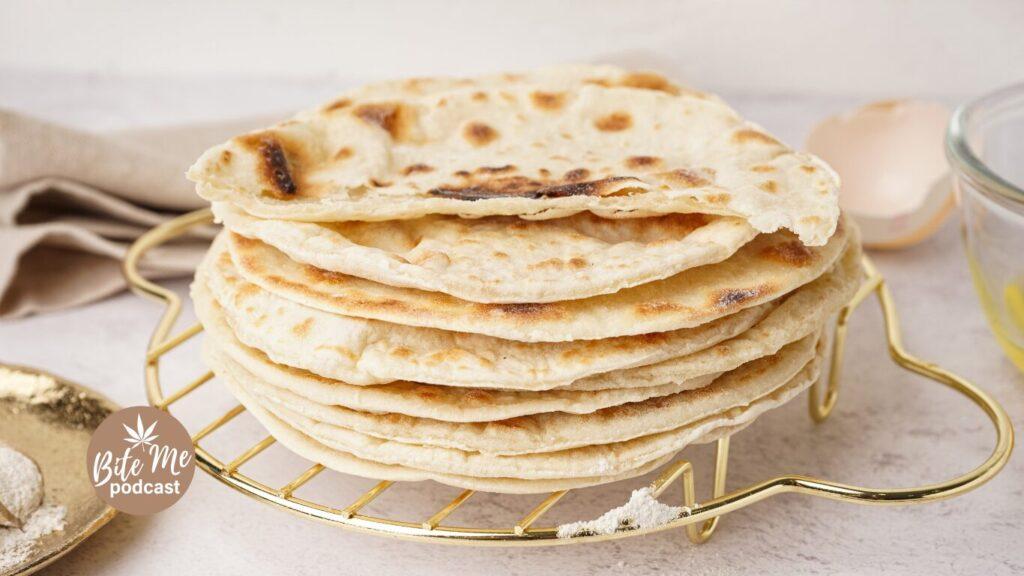
Once you have your canna flour, the infused pita bread from Ardent’s website is the obvious first recipe to try. I had never made pita bread before this and it turns out it’s not nearly as intimidating as it sounds.
Makes: 6 pitas Preheat oven to: 500°F
Ingredients:
- 1 cup all-purpose flour
- 1 cup canna flour
- 1 teaspoon salt (or cannabis-infused salt if you have it)
- 1 teaspoon instant yeast
- 3/4 cup warm water
- 1 tablespoon extra virgin olive oil (infused or uninfused, your call)
Instructions:
- In a bowl, combine both flours, salt, yeast, water, and oil. Mix until the dough comes together shaggy.
- Brush a light coat of oil on each side of the dough. Cover and let rise for 1.5 hours.
- Divide into 6 equal balls. Let rise again for 15 to 20 minutes.
- Roll each ball out flat.
- Let rest another 15 minutes.
- Place your baking sheet in the oven while it preheats so it gets nice and hot.
- Bake 2 pitas at a time for 3 to 5 minutes, watching closely. Ovens vary. You’ll know they’re done when they puff up and get a little color. They should have a pocket inside.
A note on potency: Because the activated cannabis is encapsulated in the dough, the high oven temperature will not burn off your cannabinoids. The internal temp of the bread stays well below the degradation point. Don’t worry about the 500°F.
These are excellent dipped in hummus or used for sandwiches. If you keep the dose lower, they make a solid microdose snack during the day. Go heavier on the canna flour and they become a proper evening situation.
Why This Method Actually Makes Sense
The reason canna flour is worth adding to your rotation isn’t just convenience. It’s efficiency.
When you infuse oil or butter, you heat your cannabis twice: once to decarb, once to infuse. Some cannabinoids are lost in that second heating step. With canna flour, you decarb once and stop there. You’re consuming all of the available cannabinoids from the plant itself with no loss during infusion. There’s nothing left behind in a cheesecloth or strainer.
The fact is, if you already decarb regularly and keep some on hand, canna flour takes about two minutes to make. And it can bump up the potency of any existing recipe that already uses an infusion by subbing in some canna flour for regular flour. Stronger cookies. More potent muffins. A loaf of bread that actually does something.
It is also, as Ardent puts it, pretty discreet in storage. Even in a clear jar, the ultra-fine specks of cannabis tend to disappear into the flour. Still label it. But it doesn’t look suspicious sitting on a pantry shelf.
A Note on Flour Options
All-purpose flour is the easiest place to start and it’s what I used. The speckle is more visible in light flour but honestly it’s not a big deal. Whole wheat flour hides it a little better if that matters to you. Almond flour is a great option for anyone avoiding gluten. Bread flour works too. Turns out the type of flour matters a lot less than you’d think.
Find more recipe ideas.
That’s it for this week friends. Please reach to me, I love hearing from listeners! Direct messages to stayhigh@bitemepodcast.com, or leave a voice message on the podcast hotline.
Support the show by subscribing, sharing, leaving a review or buying me a cookie! Whatever way you choose, I’m grateful that you’re listening.
Stay high,
Margaret
Frequently Asked Questions For How To Make Canna Flour
Do I really have to decarb first?
Yes. Full stop. Cannabis in its raw form contains THCA, not THC. THCA is not psychoactive. Without decarboxylation, your canna flour will not produce any noticeable effect. Grind it up and dump it in flour without decarbing first and you’ve made very expensive regular flour.
How much cannabis should I add per cup of flour?
Ardent suggests 1 to 5 grams per cup. Where you land in that range depends on your tolerance, your strain’s potency, and what you’re making. Start lower if you’re new to edibles or new to this method. You can always go up next batch, and you can’t undo an overly potent batch of pita bread.
Can I use canna flour alongside another infusion in the same recipe?
Yes, and this is actually one of the best uses for it. If you’re making cookies with infused butter, you can swap some of the all-purpose flour for canna flour to increase the total dose. It stacks. Just account for the added potency when you’re calculating your per-serving dose.
What does it taste like?
Milder than you’d expect. I was honestly bracing for a strong cannabis flavor and it really didn’t show up in the pita bread. The baked good flavor dominates. That said, it may vary depending on your strain and how much you add. The 1 to 5 gram range gives you room to experiment.
What types of flour work?
Pretty much any flour you’d use in regular baking. All-purpose, whole wheat, bread flour, almond flour. The method works the same way across all of them. Use whatever you’d normally reach for in that recipe.
How should I store canna flour?
Exactly the same way you’d store regular flour. Cool, dry place. An airtight jar works well. Keep it labeled, keep it away from anyone who shouldn’t be eating it, and use it up within a reasonable timeframe. The decarbed cannabis doesn’t change the shelf life in any meaningful way.
Will the high oven temperature (like 500°F for pita bread) destroy the THC?
No. When cannabis is encapsulated in dough, the internal temperature of the bread doesn’t reach levels that would degrade your cannabinoids. The 500°F is the oven temperature, not the temperature inside your pita. Ardent specifically addresses this and it lines up with what we know about how cannabinoids behave during baking.
Can I use this in savory recipes, not just sweet ones?
Absolutely. The pita bread is a perfect example. Any bread, cracker, pasta dough, pizza dough, or savory baked good that uses flour is fair game. It’s not sweet on its own, so it doesn’t add anything weird to savory applications.

[…] shipping the infusion: Canna Flour episode + Canna Flour Cookies […]