Have you ever picked up a cannabis beverage at the dispensary and wondered what actually goes into making the thing? Not just the THC content on the label, but the months (and sometimes years) of formulation work, sensory sessions, stability testing, and ingredient decisions that happen before that can ever hits a shelf?
That’s exactly what this conversation is about.
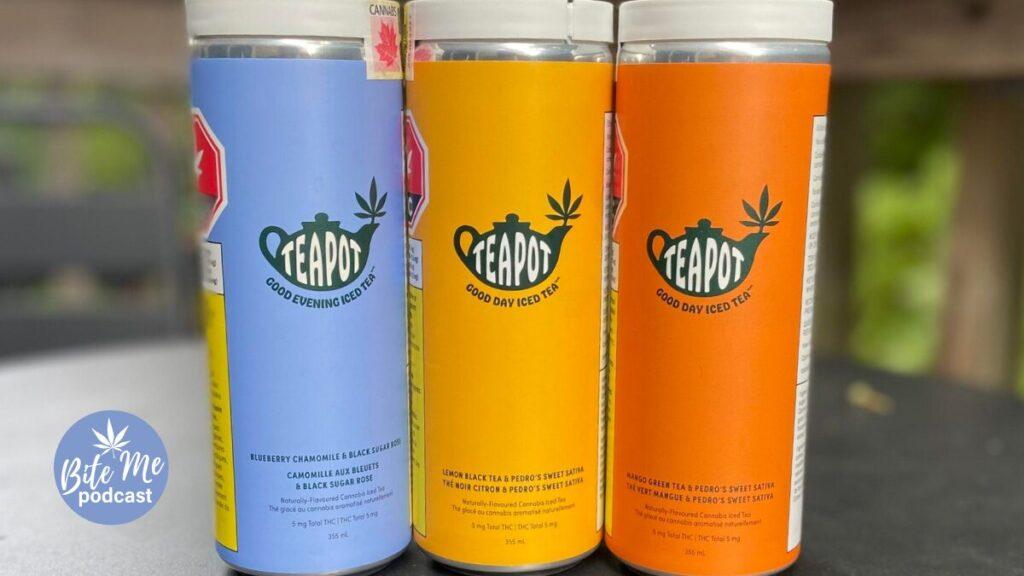
My guest is Daniel Klompstra, cannabis ingredient specialist at the Boston Beer Company and the brain behind Teapot Iced Tea. Dan is also a husband, father, veteran, and Certified Ganjier, which is actually how we first connected. There aren’t many Canadian Ganjiers out there, and Dan is one of the best in the business.
We covered a lot of ground in this episode: how cannabis beverages are actually formulated, the role of nanoemulsion and terpenes, why Teapot is non-carbonated (and why that’s a bigger deal than you’d think), and what THCV taught Dan about skipping lunch entirely.
If you’ve been curious about cannabis beverages, or you’ve been hesitant to try them, this one’s for you.
Listen to this episode:
From Medical User to Cannabis Ingredient Specialist
Dan’s path into cannabis was built on a decade of personal use as a medical patient, followed by several years working in the industry. He became a Certified Ganjier because he wanted a deeper understanding of what makes cannabis quality: the cultivar expression, the processing methodology, the why behind what he was experiencing.
Then a role at Boston Beer Company came across his desk. It wasn’t something he thought he was obviously qualified for, but the overlap was real. He applied for what he described as a dream job, and landed it two weeks before he even sat his Ganjier exams.
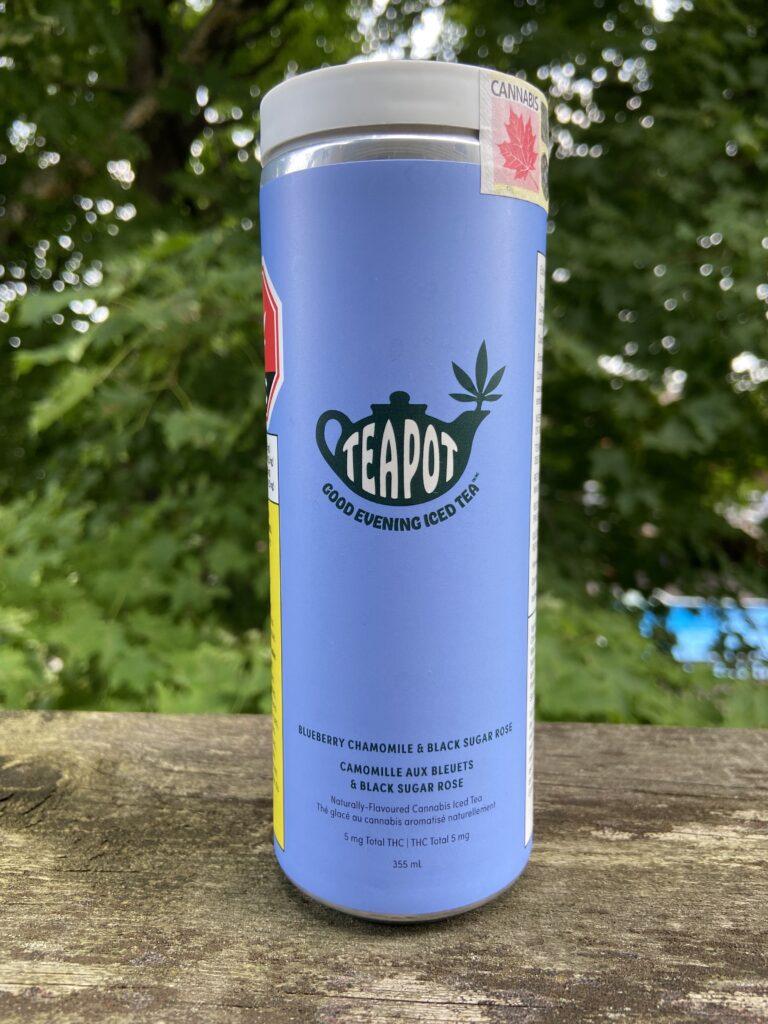
Boston Beer is behind brands you probably know: Sam Adams, Twisted Tea, Angry Orchard, Dogfish Head. In Canada, they’re bringing that same approach to the cannabis beverages space with Teapot Iced Tea.
What Actually Goes Into Making a Cannabis Beverage
This is the part of the conversation I found most fascinating. Dan walked me through the full formulation process, start to finish.
It begins with a product brief: a description of the brand’s identity and the flavor territory to aim for. From there, the team works through rounds of ingredient selection, sensory sessions, blending iterations, and stability testing to make sure the product is shelf-stable, that it delivers the cannabinoid content on the label, and that the flavor holds over time.
That stability testing piece is significant. Even if the beverage is only a month or two old when you drink it, Dan’s team has already tasted it at up to a year old to confirm it meets expectations. The total timeline from brief to retail shelf? Closer to a year and three-quarters to two years.
What a Sensory Session Actually Looks Like
You might picture something relaxed and fun. The reality is more controlled. The team sits in a quiet room, samples are handed out without commentary, and everyone stays focused. Sounds, facial expressions, even sighing can influence the group’s perception. Sweetness, bitterness, sourness, aromatic complexity — all of it gets evaluated and fed back into the formulation.
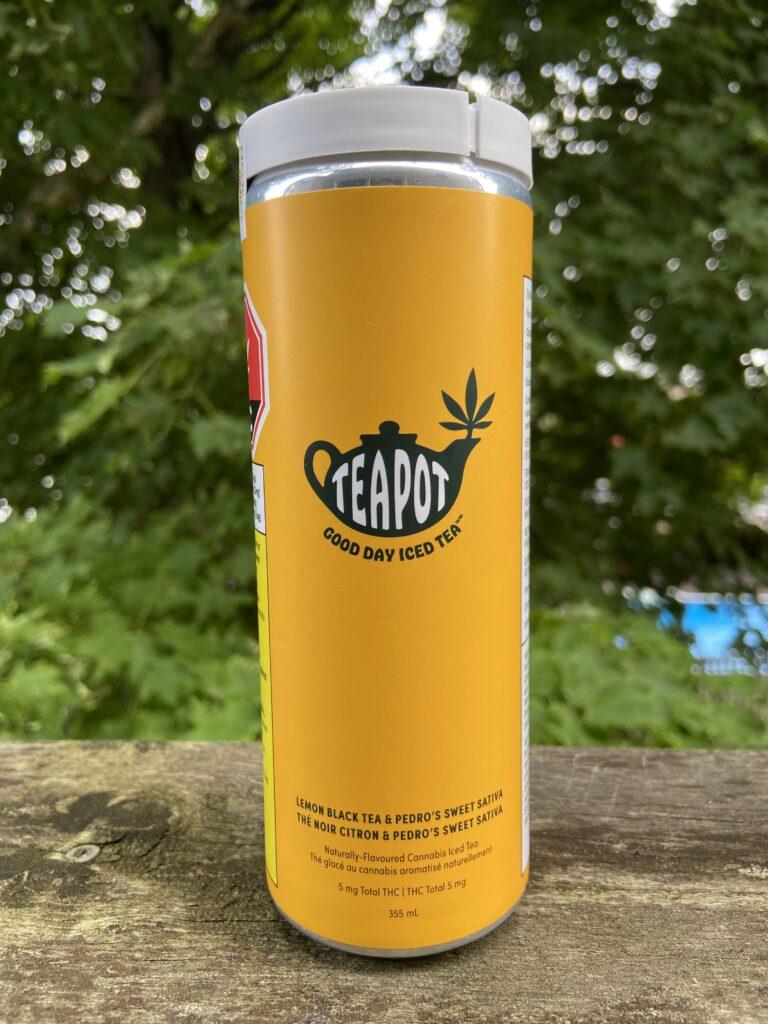
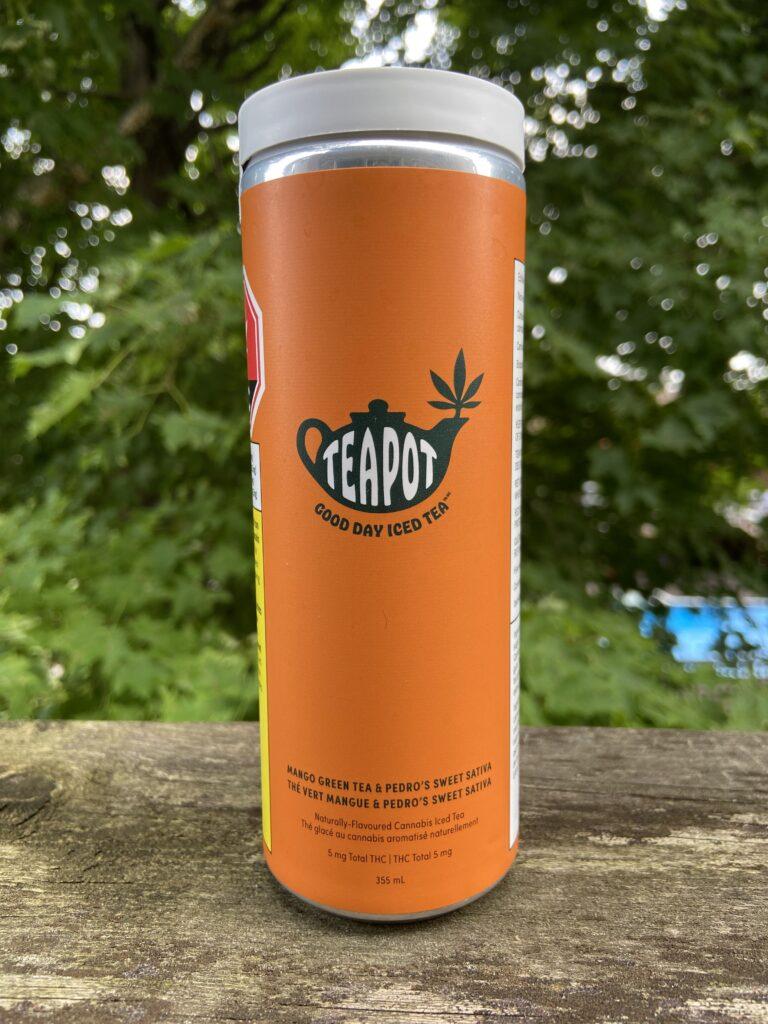
Dan developed the Mango Green Tea and Pedro Sweet Sativa specifically, and that one was particularly challenging. Everyone has a personal expectation of what green tea should taste like, and what mango should taste like, and combining them creates something new that still has to satisfy both.
Why Nanoemulsion Changes the Math
Most cannabis beverages use nanoemulsion to get cannabinoids into a water-based liquid. That technology supports faster onset and more predictable uptake, but it also adds formulation complexity. Some ingredients, particularly anything highly acidic or tannin-heavy, can interact with the emulsion in ways that compromise the product over time. You can’t just throw in a squeeze of cranberry and call it a day.
Terpenes in Cannabis Beverages: More Complicated Than the Marketing Suggests
With Teapot, Dan told me they’re deliberately blending for no cannabis taste. The goal is to bring in new consumers, people who are curious but not already comfortable with cannabis flavor. That means minimal terpene content.
But here’s the nuance. Terpenes are bitter. So is cannabis. Adding terpenes to a beverage can push the bitterness in directions that aren’t enjoyable. And in an edible or drinkable format, you’re primarily focused on the cannabinoid array and what those cannabinoids do for the experience, rather than on terpenes, which in inhalation drive much more of the sensory effect.
You may have seen cannabis beverages marketing 12 or 13 terpene profiles. Dan was measured about this. Some of the large flavor houses have sophisticated labs capable of analyzing cannabis down to 400 or 500 individual compounds and rebuilding that flavor profile into a beverage. But what Dan noticed in practice was that even high terpene content could produce a flavor that was singular rather than rounded. In the natural world, what we smell and taste is always a bouquet — a complex grouping of aromatic compounds, not a single terpene expressing itself alone.
Drinking Cannabis: What to Know Before Your First Can
Dan offered some of the clearest consumer advice I’ve heard on this topic. I’m adding my own notes throughout because some of this bears repeating.
Tolerance doesn’t transfer. A high tolerance to smoked or vaped cannabis does not translate to edibles or beverages. Your physiology is different in this context. I’ve seen large people with a five milligram sweet spot and small people who can handle far more. It has nothing to do with size or general tolerance. It’s personal.
Dan recommends starting with half a can if it’s your first time with a five milligram beverage, waiting 15 to 30 minutes before deciding you need more. I’d suggest starting with 2.5mg if you can find it. The Bite Me Dosage Calculator can help you think through your starting dose, and the Bite Me Dose Diary is built for tracking exactly how different products and doses land for you over time.
Know your cannabinoids. Are you drinking THC? CBG? CBN? Each affects you differently, and being aware of what you’re ingesting is part of getting the outcome you’re looking for. Cannabis beverages, like all edibles, require you to do a little reading before you crack the can.
Set and setting matter. What do you want to get out of the experience? Are you relaxing at home, socializing, looking for a low-key buzz? Your answer should shape what you choose and how much you take.
Teapot is still, not carbonated. This is practical: you can drink half, put the lid back on, and come back to it later without worrying about losing carbonation. That makes low and slow dosing genuinely easier.
Cannabis Beverages vs. Alcohol: The Health Case
The Cali sober movement came up organically in our conversation, and it’s worth spending a moment here. Cannabis beverages are generally about half the calories of their alcohol counterparts, often coming in around 35 to 50 calories per serving. People are paying attention to that.
Dan also made the point that the onset with beverage nanoemulsion is faster and the duration shorter than with traditional edibles. If you’re socializing, you don’t always want a six-hour experience. A one to two-hour window can be exactly right.
We also talked briefly about the fact that cannabis beverages still aren’t as accessible as they should be. A lot of curious people don’t realize they’re sold through dispensaries, not through the same channels as beer and wine. If you’re in Canada and you’ve been wondering where to find Teapot, your nearest cannabis retailer is the answer.
What Is THCV, and Why Did Dan Skip Lunch?
THCV came up in the context of a helper group Dan brought to a farm experience in Humboldt. One of the cultivars on hand was 18.5% total THCV, a variety called Get Shit Done.
THCV is sometimes described as stimulating and potentially appetite-suppressing. Dan confirmed from personal experience: it was energetic, motivating, and yes, he couldn’t finish his lunch afterward, which is notable because the lunch was made by Chef Alex Sherman, who has been on this show, and his food is exceptional.
THCV isn’t widely available in Canada yet, but it’s worth knowing about. Not one to consume before bed. Very much one to consume if you need to be productive and want to stay out of your kids’ school snacks.
Teapot Is Doing Something Good Beyond the Beverage
Before we wrapped up, Dan mentioned that Teapot has been paying for cannabis pardons in Canada as part of a Stop the Stigma campaign. At the time of recording, they had covered pardons for 1,010 people. Even though cannabis is legal in Canada, those with prior cannabis charges still need to apply for a pardon, and the process is not inexpensive. The fact that Teapot has put real money toward this is worth recognizing.
You can follow Teapot on Instagram at @drinkteapot and learn more at drinkteapot.com.
Related episodes:
- Discovering Taste with Madam Cannoli
- The Exciting Future of Cannabis with Keith
- The Exciting Art of Infusion with Chef Carson
- Cali Sober with Amanda Reiman
- LCBO to THC: Jackie McAskill’s Bold Move into Cannabis Beverages
Bite Me resources:
Do you drink cannabis beverages? Have a brand you love or one that surprised you? I’d love to hear about it. You can reach me at stayhigh@bitemepodcast.com or leave a voice message on the podcast hotline. And if this episode was useful, please share it with someone who’s been curious about cannabis drinks but hasn’t taken the leap yet.
You can also support the show by subscribing, sharing episodes, leaving a review or buying me a cookie! Whatever way you choose, I’m grateful that you’re listening.
Stay high,
Margaret
FAQ For Drink Teapot
What is Teapot Iced Tea? Teapot Iced Tea is a line of cannabis beverages made by the Canadian subsidiary of Boston Beer Company, using real tea as the base. It’s available in multiple flavors at cannabis retailers in Canada.
Where can I buy Teapot cannabis beverages? In Canada, Teapot is sold through licensed cannabis dispensaries, not the LCBO or other alcohol retailers. Check your nearest cannabis retail store or the Teapot website for availability.
How is cannabis put into a beverage like Teapot? Most cannabis beverages, including Teapot, use nanoemulsion technology to get cannabinoids into a water-based liquid. This allows for faster onset compared to traditional edibles, typically 15 to 30 minutes, and a shorter overall duration.
Does Teapot taste like cannabis? No. Teapot is formulated specifically to have no cannabis taste. The goal is to appeal to people who are new to cannabis beverages, so the focus is on the tea and fruit flavors rather than on any cannabis profile.
How much should I drink if it’s my first time? Start with half a can. Wait at least 15 to 30 minutes before drinking more. If you’re very new to cannabis or have a lower tolerance, look for products starting at 2.5mg. Use the Bite Me Dosage Calculator to help you think through your dose, and track your experience in the Bite Me Dose Diary.
Will my tolerance to smoked cannabis affect how cannabis beverages hit me? Not in the way you might expect. Tolerance to smoking or vaping does not translate to edibles or beverages. The absorption pathway is different, and your response may surprise you. Start low regardless of your inhalation tolerance.
Can I save part of a Teapot if I don’t want to finish it? Yes, and this is one of Teapot’s practical advantages. Because it’s a still beverage (not carbonated), you can recap the can and refrigerate it without losing anything. That makes splitting your dose over time genuinely easy.
What is THCV and what does it do? THCV is a minor cannabinoid that may act as a stimulant and potential appetite suppressant. It’s sometimes called the “get things done” cannabinoid. It’s energizing, best used during the day, and not something you want to take before bed. Availability in Canada is currently limited but growing.
What’s the difference between terpenes in flower vs. terpenes in a cannabis beverage? In flower, terpenes significantly influence your experience through something called the entourage effect. In edibles and beverages, the impact is mostly on flavor and aroma rather than effect. Because terpenes are bitter, adding them to a beverage is tricky: too many can create an unpleasant bitterness without meaningfully changing the high.
Is cannabis a healthier alternative to alcohol? That’s a personal decision, and I’m not your doctor. What I can say is that cannabis beverages are generally about half the calories of their alcohol counterparts, they don’t produce a hangover, and the duration of effects is typically much shorter than with traditional edibles. Plenty of people are choosing to reduce or replace alcohol with cannabis, and the Cali sober movement reflects that shift.
Timestamps For Drink Teapot Audio
The Introduction of Bite Me Cannabis Club (00:00:01)
Introducing the Bite Me Cannabis Club, an inclusive online space for cannabis lovers, offering workshops, recipes, and more.
Conversation with Dan, Cannabis Ingredient Specialist (00:01:17)
A conversation with Dan, the cannabis ingredient specialist at the Boston Beer Company, makers of Teapot iced tea.
Development of Teapot Cannabis Beverages (00:07:55)
The process of developing a formulation for cannabis beverages, including sensory sessions and scaling up the recipe for production.
The stability testing process (00:13:18)
The speaker discusses the lengthy stability testing process for cannabis beverages, which can take up to a year or more.
Importance of proper cannabinoids in edibles (00:14:19)
The speaker emphasizes the importance of being aware of the cannabinoids present in edibles and their effects, as it can impact the desired outcome of consuming the product.
Terpenes and their role in cannabis beverages (00:17:40)
The discussion revolves around the role of terpenes in cannabis beverage formulation and how they contribute to the overall experience, including flavor and aroma.
The legal landscape and cannabis beverages (00:26:13)
Discussion on the confusion around where to purchase cannabis beverages and the comparison to buying wine and beer.
Flavor profiles in the Canadian market (00:27:05)
Exploration of popular flavor profiles, particularly seltzers, in cannabis beverages in Canada.
Caloric intake and health-consciousness (00:27:55)
Conversation about the lower calorie content of cannabis beverages compared to alcohol and the appeal to health-conscious consumers.
The future of cannabis testing (00:38:04)
Discussion about laboratories testing cannabis for aromas and the need for further research.
The importance of continuing education (00:38:39)
Exploration of how prohibition has hindered research and the need for ongoing learning about cannabis.
Teapot’s contribution to cannabis pardons (00:39:55)
Teapot’s involvement in paying for cannabis pardons and the significance of helping individuals with cannabis charges.
Marge (00:00:01) - Introducing the Bite Me Cannabis Club. The Bite Me Cannabis Club aims to be an inclusive online space for cannabis lovers. Whether you're simply curious about how cannabis can improve your life or you're fully seasoned, there's always more to learn. When you join the Bite Me Cannabis Club, you'll have access to like minded people interested in cannabis, monthly workshops, live Q&A recipes and recipe swaps, digital cookbooks, a fully functional chat feature, and a whole lot more for a limited time. It's only $5 a month with a 30 day free trial, so you can try it out and see if it's right for you. This isn't just another Facebook group or confusing discord channel. I carefully chose a platform that offers a clear, uncluttered, and seamless community experience. See for yourself. Join today! Say hello! I can't wait to connect with you there. Join the Bite Me Cannabis Club today link in your podcast app. Hi friends. Welcome back. I'm excited this week to bring you a conversation with Dan. He's the cannabis ingredient specialist at the Boston Beer Company, makers of Teapot Iced Tea.
Marge (00:01:17) - Welcome to Bite Me, the show about edibles where I help you take control of your life. I'm your host and certified gonger. Marge and I love helping cooks make safe and effective edibles at home. I'm so glad you're here. And thank you for joining me today. Hi, friends, and welcome back to another episode. I'm super excited that you're here and you're listening along. And if you've been a long time listener, thank you so much for supporting me. And if you're new to the show, you're in for a treat today because I have Daniel Cluster of the Boston Beer Company, and he's the cannabis ingredient specialist makers of Tea pot iced tea. And if you're in Canada and you haven't tried that yet, you should go to your nearest store right now and pick them up because it's a great beverage. But you're going to learn why in this conversation. And Daniel is not only the cannabis ingredient specialist, but he's a husband, a father, a veteran, and also a certified ganjier. And that is how I first met Dan.
Marge (00:02:15) - He's one of the few Canadian Ganjier in Canada. And I must warn you ahead of time, I have a bit of a cold at the time of the recording of this episode. It's probably still still sticking around a tiny little bit. You may hear it in my voice, but if you if you notice it, that's what that is. It is. Tis the season for cold and flu right now. I know so many people who aren't feeling too well, so you'll just have to bear with that during the episode. But this is a fun and informative conversation about tea pot, the cannabis beverages space, what goes into making a cannabis beverage, and a whole lot more. So I hope you enjoy the episode. Be sure to check out the show notes, because there's a lot of great stuff there too, that you can get into to deepen your knowledge about tasting and cannabis beverages as well. So without further ado, please enjoy this conversation with Dan cannabis ingredients specialist Certified Ganjier with the Boston Beer Company.
Marge (00:03:18) - Guess it didn't count down. Hello everyone. I just want to say welcome to Dan who is joining us today. And Dan, can you take a second and introduce the listeners of Bite Me Yourself and what it is that you do?
Dan (00:03:32) - Hi everyone. My name is Dan KM. I'm I'm a veteran, a father, I served overseas, my husband a certified Ganjier, and currently I'm the cannabis ingredient specialist for the Canadian subsidiary of Boston Beer Company. Meaning I develop the liquids that you you put to your lips.
Marge (00:03:58) - That's really cool. And that's exactly why I wanted to have you on to talk about today. But I didn't know, actually, that you were a veteran and a father and all those kinds of things. But we did meet via the gangster program. And so maybe before we get started, you could talk a little bit about your experience becoming a concierge, and maybe we can talk a bit also about how that helps you in your work right now.
Dan (00:04:18) - Geez. My experience becoming a Ganjier was kind of a very unique journey.
Dan (00:04:24) - I've been to medical user cannabis for almost a decade now, working in the industry for a handful of years, and I've. Became a steadfast proponent of quality cannabis and kind of the methodology behind it. Like, why? What makes it quality? What can we do to improve or the product coming out at all times? I'd have to say the benefits of the certification are really multifaceted. In my field, you know, insight into canvas culture, knowledge of processing methodology, cultivar expression, expectations, general overall knowledge. You know, they tend to benefit me greatly.
Marge (00:05:05) - Yeah, well, that all makes sense. I'm sure you're bringing all of that to your work. And I have to say that one of the benefits I've found with the guanxi program and just the network of amazing people that you connect with, and that's one of the reasons why we're talking today, I should mention we're both Canadians, so that's kind of a cool thing. There aren't a ton of Canadian certified Ganjiers. So that's that's a little check mark there too, I guess.
Marge (00:05:27) - But how did you get into the world of product formulation in the first place?
Dan (00:05:35) - Well, you know, as we seen in cannabis space over the last few years, it's kind of turbulent and tough for many in the space. I was at the point of looking for a new role within cannabis, and I came across the product development role for Boston Beer Company. It wasn't something that I was thought I was overly qualified for, but it definitely piqued my interest. I hit many of the qualifications and kind of decided to apply. Um, you know, I'd always enjoyed Twisted Tea. Thought it was. That something cannabis like would be would be quite nice. So I applied to kind of what would be a dream role in my mind. And lo and behold, I was accepted. There were multiple interviews, but I landed the role and right two weeks before, I was prepping to head down to Gaba Ville for my two day hands on and examinations.
Marge (00:06:36) - Oh, right before that. So before you were even certified, you managed to to land this dream job.
Marge (00:06:41) - That's amazing. And you mentioned Twisted Tea for those of for those listeners who don't know what Boston Beer does, can you talk a bit about what other things that they they make twisted tea being one of them? Some people may be familiar with that.
Dan (00:06:56) - Okay. Yeah. On the alcohol side, Boston Beer has many, many big brands. Some that we had known in Canada are Sam Adams, Twisted Tea, Angry Orchard, Truly seltzers. In the in the States, they also have Dogfish Head which is like. They call it off center deals for off centered people. It's really a unique craft approach to to making a very unique and delicious liquid right now.
Marge (00:07:29) - So American and Canadian brands, I have sampled some Sam Adams and Angry Orchard a few times myself, so that just helps give people context that now they're breaking out into the cannabis beverages space with teapot. And maybe you can walk us through the process of developing a formulation for cannabis beverage from initial concept to getting the product on the retail shelves.
Dan (00:07:55) - Yeah.
Dan (00:07:55) - No problem. That's a that's a that's a big question. But right here. So usually we'll be given a product brief which is like a description of what the brand stands for as well as what realm of taste the beverage should fall into, like setting up some expectations and kind of a little bit of a landing zone for to aim for. We start with a very wide array of ingredients picking, choosing the best as we progress through, you know, multiple blending iterations. After those many blends and sensory sessions, we do sensory on everything we do. We run stability testing to ensure it's shelf stable for the consumer that they're receiving the cannabinoid content they're expecting and flavor profile that they expect. So even though your beverage may be only a month or two old, we have tasted it up to one year to ensure that it will meet those expectations. All right. Once we have our master formula, we hand it over to our co manufacturer who scales up our recipe and we dictate, you know, critical control points to them to hit to ensure that we're we're giving it the best.
Dan (00:09:11) - Well we're bringing out the best liquid. Right, right. So can you.
Marge (00:09:15) - Can you talk a bit about those sensory sessions? Because that sounds kind of interesting. I guess that's what you're really getting into dialing in the flavor profiles.
Dan (00:09:24) - Yes. So whether through development or lot release or stability, we, we perform or even benchmarking, we perform sensory on all of our beverages and a lot of other beverages. What that means is. We sit down in a very. Not an exciting room, right? You know, and you're you're handed the sample. You're encouraged not to speak, you know, not to impress any thoughts onto other people of what you think the beverage is or even like a sound or a face can, can do it. So you have to take it quite seriously when you're doing it. There's there's still fun, but you do have to take it seriously. So we sample the beverage. We go over the the the sweetness, the bitterness, the sourness. We go over all the kind of flavor and aromatic points that we may be looking for, as well as points that might be control levers to pull on, to maybe make that lemon juicer instead of peely or, you know, something like that, maybe candied instead of juicy.
Marge (00:10:36) - So this sounds like a pretty collaborative process. That's part of the research that goes into creating like a unique flavor for a cannabis beverage, then.
Dan (00:10:45) - Yes, it's. Yeah, it's quite some time. All that sensory feedback is brought back into our formulations to progress those forward. And even for, you know, testing it up to to long term, we still look for rather potentially improvements we could make in the future to bring that that flavor and shelf stability longer.
Marge (00:11:12) - And to someone like yourself, do you sort of bring forward some ideas? Because I understand and you can correct me if I'm wrong. The mango green tea and Pedro Sweet Sativa was sort of your baby. So can you talk a bit about that?
Dan (00:11:26) - That one? Yeah, that that beverage took a lot of iterations. It's green tea and mango is challenging. Everyone has an expectation themselves of what green tea should be and what mango should be. And when you mix them together, there's almost new new combinations created. So.
Dan (00:11:51) - Uh.
Dan (00:11:53) - Yeah.
Dan (00:11:53) - Going going through those constant iterations of, you know, is our mango aroma there? Well, maybe the aroma is not there, but the body of it is, you know, the flavor. So there's many ways to approach that. Right.
Marge (00:12:10) - Are there any specific challenges or considerations you have to think about when it comes to formulating flavors like that?
Dan (00:12:18) - Yes, yes there are. There's a lot of challenges. Many cannabis beverages will utilize Nanoemulsion for getting the cannabis into it. And while that's great for uptake and effects, there's things we have to consider that we don't want other particles droplets interacting with the emulsion that can cause some some issues. There's also the potential of ingredients containing certain compounds that may not jive well with others. So ingredient to ingredient interactions kind of critical over time. Uh, maybe an example of that is, uh, cranberries or something quite acidic or tannin heavy could could cause some issues.
Marge (00:13:03) - Right. So a lot of things to consider. It sounds like and you said earlier are you.
Marge (00:13:08) - It's like a year probably process to get start from the brief of what they kind of want to do to a finished product on store shelves. Or are we talking even longer than that?
Dan (00:13:18) - We're talking maybe three quarters of a year to a year. Considering that we do up to a year stability testing, the whole entire process is, you know, almost approaching a year and three quarters to two years. Wow.
Marge (00:13:31) - Okay. So that was a year just to get the product, I guess, to a point where you can then test it for another entire year to make sure that it's shelf stable and what it's labeled as, I guess.
Dan (00:13:43) - Yeah, it's, it's it can be challenging in cannabis because every time. You put an emulsion or, you know, spike it. I call it spiking it with, um, there's, there's a series of, of testing that you have to go through. It has to be, has to have a batch record and be released for us to do so. Um, yeah, we have our supermen out there and superwomen who believe they're all powerful and sometimes inedible will set them in their right place if they go that far.
Dan (00:14:19) - Secondly, the edibles you're used to prior to legalization can vary widely in potency. You know, there's there's no real limits. There's no guidelines for how it goes out. We can always try to get as close as possible to what we believe is an accurate dose. But without a lab test, you truly don't know. You know, you may think you have a high or low tolerance and be surprised with something. You think that's a low dose, that. They send you out to space. Third, what cannabinoids are in it, you know, are you aware of the effects of those? Are you ingesting CBG, CBN THC are you aware of maybe maybe some of those are stimulating or somewhat sedating. That's pretty important because you know, you want to assess your set and setting. You want to kind of figure out what you want to get out of your, your edible drug you're consuming. And if you're not consuming the proper cannabinoids and or ratio thereof, you're not going to get your expected outcome.
Dan (00:15:27) - And go low and slow. You know, if it's your first beverage, even if it's five milligrams. Drink half. Wait. Wait 15, 30 minutes. You know, the nano emulsions are reported to have a little bit faster of onset, so I'd usually wait 15 to 30 minutes if you're not feeling anything. And if you don't try that last bit, you know what? It's only five milligrams in the can. If it all hits you later at a certain time, you are still limited to that five milligrams in your system. You're not just right up on the back to try to catch up to your expected effects.
Marge (00:16:07) - Yeah, that's all great advice, and if you can, I'd probably suggest even starting with 2.5mg, which is, I guess, drinking half a can or buying something with just 2.5mg, because see that over and over again where somebody has like a monster tolerance to like smoking or vaping cannabis, and then they go to the edibles world and they are shocked to find that that does not translate.
Marge (00:16:29) - And it has nothing to do with like your height, weight, any of that stuff. It's just your personal physiology. I know big, large men that have a five milligram tolerance like that. That's their sweet spot. I know teeny tiny people that, you know, £100 soaking wet, and they could ingest 600mg of something and which would make me high for probably a week. So going low and slow is wonderful advice. So I'm glad that you mentioned that. Um.
Dan (00:16:57) - Yeah. I will add in that since teapot is a still beverage, you know it's not carbonated, right? You can drink half and cover it up, put it in your fridge. You're right. Have to worry about losing carbonation. That's a great point.
Marge (00:17:12) - Yeah, that's a really good one.
Dan (00:17:14) - Losing some of your beverage. You can you can go back to it.
Marge (00:17:17) - Yeah okay. I'm glad you mentioned that too because I do like a lot of the carbonated beverages. But you're right. If you don't if you don't drink it all, it's going to go flat.
Marge (00:17:24) - And that not be nearly as a nice of experience as you were hoping for the first time around. So that's a really great point. Can you take a minute to also discuss the role of terpenes in the cannabis beverage formulation, and how they're going to contribute to the experience?
Dan (00:17:40) - Okay, so right now with teapot, we're blending for no cannabis taste. We're trying to appeal to new consumers, people coming over. So there's very little terpene content in that beverage. Um, that being said as well, you know, terpenes are bitter and so is the cannabis we put into these beverages. So adding additional terpenes can exacerbate a bitter profile in some undesired ways. You know, I could think CBD is quite bitter too. Uh, but in in edibles, we're focused highly on the array of cannabinoids for effect. Whereas terpenes affect more of your aromatic and flavor experience versus inhalation, where you know her beans can drive much more of your actual experience.
Marge (00:18:36) - Right now, I am seeing sometimes a few drinks on the market that claim to have like 13 profiles in them.
Marge (00:18:42) - Is that sort of, in your opinion, maybe a little marketing?
Dan (00:18:47) - Uh, there's there's some marketing to it, but, you know, some of these flavor houses, these, these large flavor providers have very sophisticated, uh, laboratories and product development teams. So they are some of them are analyzing cannabis down to 2 to 500 individual compounds, and then rebuilding that back up and putting it into a beverage to hit that flavor profile. Um, it's it's definitely unique, but I've, you know, I was in Humboldt last week and I had a beverage that was infused with 6% cannabis or beans. And what I found from it was it was, you know, it was good. It was really good. They had a nice flavor profile to it. It was rounded. But the taste that you got from the turbines, because there's probably only so many they put in there was really singular. You know, it just it went in a direction and it didn't it didn't have any body to it. So working with terpenes can be very challenging because usually when we smell things or taste things, it's a it's a bouquet.
Dan (00:20:03) - It's a it's a large group. Right. Dramatic compounds. Whereas a terpene is just one of those that we feel expresses that, that thing. Well.
Marge (00:20:15) - Right. So basically what you're saying is some of those like the term things that we think of is a singular point. But out in the wild, if you will, we're we're enjoying it with a whole bunch of other things along with it. So it's not just one singular chirping that we're experiencing when we're smelling a lemon or whatever the case might be, or a flower or even smelling cannabis.
Dan (00:20:35) - You know, we can go through a ton of ton of different terpenes, but each of those in, in even very some small amounts, depending on the person and your level of detection can can make a huge difference, right?
Marge (00:20:49) - That's something I'm still always working on is improving my palate. It's always challenging, but a worthwhile pursuit for sure. I guess one of the questions I had for you as well is if you've had any particularly interesting customer feedback or stories when it comes to your cannabis beverages, maybe the one that you developed specifically or the suite of flavors available through tea pot.
Dan (00:21:12) - Unique customer feedback. I actually run into it more often than not, and I've been surprised a lot of the places I find it, you know, discord groups, Instagram, a few other Reddit, of course, but also I myself. I'm not a sales rep or anything or a marketing activation, but I actually just like to go into dispensaries and talked about tenders about. Well about what I make to just to make it more interesting to them and bring that passion forward. But I also take the time to. Ask them, do you have any questions? Do you? You want to know how that thing is made? You know what's what's the process behind that? What do these things mean on your ingredient list as to what what you're ingesting? As a you know, even some of these pre-rolls can infuse pre-rolls can have quite an ingredient list. So. Yeah. Um, so unique feedback. I entered a dispensary near to me recently, asked to purchase a few cans of tea pot, which I normally do, and the bartender really was enthusiastic and started telling me how awesome tea pot tastes.
Dan (00:22:29) - And it's sessionable and that's a nice complement to routine, she said. You know, a lot of a lot of the beverages out there can kind of stack with bitterness over time, especially if they're high cannabinoid content. That's that's going to kind of build on your tongue. And, you know, she she called her things sessionable. It was it was enjoyable over, over many which was great to hear. Um, I then, you know, they told me that they generally sell it by the case, not by the unit, which is also great to hear. I've been to a few dispensaries like that where, you know, beverages aren't exactly a unit format that many people are buying. They're they're buying a case a week. They're they're bringing it home. They're they're consuming it just like they would anything else. Right. Um. So you know, things like that. People returning to purchase more, recommending it to others. It that's memorable. It gives gives me a warm feeling that our approach is justified and embraced.
Marge (00:23:34) - Right. So does that mean you're going into dispensaries and engaging in these conversations and then telling them that you're with you're working with Boston Beer and tea pot?
Dan (00:23:41) - No. I usually go up, I ask about tea pot if if they have it, I usually that's my intro that I talk about a little bit, you know. Oh I, I work as a developer for this. I could tell you more about it if you have any questions that really approach it from an education standpoint more than anything else because. There isn't a lot of education out there, and a lot of people don't know how edibles or beverages function, right? And honestly, a lot of the processes even for. Concentrates extract some of these pre-roll types and these other product formats. Very little information out there for people, so they love any chance to become more informed, to be able to guide a consumer in a more appropriate direction.
Marge (00:24:37) - Yeah, that makes a lot of sense. And I feel like the cannabis beverages space, it's still relatively small I think compared to other product formats like you're talking about.
Marge (00:24:46) - But I see it growing myself. And like you said, those bud tenders that are saying it's sessionable, there's a lot of people that I've spoken to that were like, oh, cannabis beverages are kind of bullshit or whatever, and they've totally changed their mind on it. And I see that as pretty exciting because there is a lot of great aspects about beverages, like the faster onset, it doesn't last as long. So if you're looking to, you know, enjoy a cannabis high when you're out with friends or, you know, using that instead of alcohol, for instance, you're not going to be high for six hours because you don't always necessarily want that. But there's so many great advantages to them, and a lot of can can of curious people, I think, are particularly interested in beverages too. Have you been finding that as well?
Dan (00:25:30) - Yes, honestly, one of the unique challenges I found recently is still getting to the majority of the population that. Cannabis on cannabis is recreational, that there's dispensaries for one which, you know, it's been five years now.
Dan (00:25:47) - You think they know but that that beverages are a thing. Well my question is usually, well where can I buy it. They'll CBO.
Marge (00:25:55) - And right.
Dan (00:25:56) - If you don't have knowledge about cannabis, a lot of people just aren't stepping into the dispensaries and just taking that leap of faith because it's not familiar for them. It's it's quite a unique. So the situation.
Marge (00:26:13) - That's pretty interesting. I never would have thought of that. But you're right. If you're not really familiar with the legal landscape and you're not really super into cannabis, then you haven't been to a dispensary. You're like, well, do I get them at the Lcbo? That's where I pick up my wine and beer. So why wouldn't you be able to get your your cannabis beverages there? But yeah.
Dan (00:26:29) - Exactly. So what I tried to do honestly, is. I. I gave out a lot of my my teapot, my own teapot to people. I bring it to family gatherings just so even my family can try it. I bring it to gatherings with my friends, even extended gatherings, and people are often very intrigued because they've never seen anything like that.
Dan (00:26:56) - And they find it's quite enjoyable. Once, once you kind of break over that stigma with them of cannabis.
Marge (00:27:04) - Right?
Marge (00:27:05) - Right now, are you seeing any particular kinds of flavor profiles that happen to be popular right now on the, I guess, more specifically the Canadian market, but or Ontario, perhaps?
Dan (00:27:18) - There are a lot of shelters.
Marge (00:27:21) - Yes there are.
Marge (00:27:22) - There are a.
Marge (00:27:23) - Lot.
Dan (00:27:24) - Easily. There are a lot of seltzers. You know, there's there's a lot of different flavor profiles out there.
Marge (00:27:32) - I'd like you said there are a ton of seltzers. I've tried a number of them just because I find the seltzers tend to be a lower calorie beverage, because some of the beverages are pretty crazy high in sugar, but a lot of the times they can not have much of a flavor either. And sometimes when you want to drink and you're paying, you know, a certain amount of money for it, it's nice to have something with a little more flavor kick to it.
Dan (00:27:55) - So lightly flavored. You want full flavored, right?
Marge (00:27:59) - Yeah.
Dan (00:28:00) - And even on your calorie point, that's a that's an interesting point to bring up because, you know, the Cali sober movement is something that's becoming more prominent and even with people looking to monitor their caloric intake. Cannabis beverages are generally half the calories of any alcohol counterpart, so it's very appealing to people when when they do see, you know, generally calories below 100, you know, sometimes averaging around 35 to 50. So that's a great way forward. I think that's a very. Something that will be in demand and people are looking at and people are coming back now and asking about what type of sugar, what type of sweetener are you using? People are just becoming more health conscious and looking at that, and I think that might be driving them maybe more to cannabis beverages and that that sober lifestyle.
Marge (00:29:04) - Right. And it's funny, that sounds like just another nail in the coffin for alcohol, because it seems like these days there's a lot of people are sort of looking for other options to alcohol because of its, you know, the health factor, hangovers and how bad it is for you.
Marge (00:29:18) - And that's not even considering, like you said, the caloric intake of having several beers, for instance. And when you compare that to a, you know, however many cannabis drinks you might need to enjoy in an evening, the differences are pretty profound. So that's just another yeah, drink cannabis.
Marge (00:29:36) - Probably.
Dan (00:29:36) - You know, 350 calories in your evening versus a thousand. And, you know, if you're having. 5 or 7 cannabis drinks, even 5mg or 10mg. I don't think there's any way that you couldn't feel that. Oh, God.
Marge (00:29:55) - No, no, I just need one cannabis drink myself. Typically, I find it interesting because, like a ten milligram drink, I will feel that even though when I'm ingesting cannabis more traditionally, that a ten milligram limit is too low typically. So I find that interesting. So I don't really need to like be stacking a whole bunch of drinks. But the other advantage, too, is when you're consuming cannabis, whether you're drinking one drink or a bunch.
Marge (00:30:19) - I don't feel like ordering pizza at 11:00 at night. There's that other thing. Whereas you have a bunch of alcohol to drink, it's usually leads to some bad choices, dietary choices often.
Marge (00:30:31) - So okay.
Dan (00:30:33) - This this leads me into an awesome one. Last week I brought a helper group down there to yeah, keep them about cannabis. Um, and one of my big requests to the hosts was alternative cannabinoids. So we had five cultivars with THC one. Was called Get Shit Done and it was 18.5% thc v total thc v it was. It was unreal.
Marge (00:31:04) - Really.
Dan (00:31:05) - The morning I, you know, consumed. That was probably the only day that I couldn't eat my lunch later that day, the entire lunch. And he just. Yeah.
Marge (00:31:17) - It's it's.
Dan (00:31:18) - Stimulating. It's it's it's energetic. It's it's great. And we even had some teas with it too. That with with TV, it's oh, it's my new favorite thing.
Marge (00:31:29) - So because you don't see a lot of TCV out there, I've heard a little bit about it myself.
Marge (00:31:33) - Some say you're saying it's a get shit done cultivar, which sounds interesting. And so it's highly like motivating like you said. But I've also heard that some people have talked about it as a weight loss aid or something, or there's a whole bunch of things.
Dan (00:31:46) - Yeah, there's a bunch of words floating around that.
Marge (00:31:51) - It's.
Dan (00:31:53) - Connect as a suppressant, right? Suppressant. So right now I would never suggest consuming TCV in the evening because you probably won't get to sleep in any time. But during the day, you know, if you're if you're consuming it, you don't have to worry about crushing the bag of chips.
Marge (00:32:10) - Next to you or.
Dan (00:32:11) - Going and in my case, maybe rating my kids school snacks.
Marge (00:32:15) - Right.
Marge (00:32:16) - We've all been there.
Marge (00:32:18) - That's okay.
Marge (00:32:18) - So basically you're saying that the TCV was like highly stimulating, but then also did. That's why you didn't want to eat your lunch because you were not necessarily that hungry.
Dan (00:32:28) - Exactly, exactly. And so lunch was really, really, really good.
Marge (00:32:33) - Like it was.
Marge (00:32:34) - That Alex.
Dan (00:32:35) - Normally. Yeah.
Marge (00:32:36) - Alex Sherman, he's been on my show before two. He's great. And his food looks amazing. So I'm sure you guys all ate very, very well and enjoyed a lot of wonderful cannabis.
Dan (00:32:46) - It's like he can predict the amount of calories and nutrition nutrients that you burned right prior to that meal and create something that is just perfect, right? It's not too overfilling. It hits every energy requirement, right? Delicious.
Marge (00:33:01) - That's awesome. Now, is there anybody doing THC flower in Canada right now?
Marge (00:33:07) - Your flower.
Dan (00:33:07) - No, there is a company with an edible, and I believe a vape cart. Okay. You know, into who the company is. We can all find out ourselves fairly easily. But, yeah, that that's all there is in Canada right now. I'll be. It'll be interesting to see that that cultivar kind of come up, come up here in some higher percentages and just yeah, even the kind of the aromatics you would relate to it with, with the flower, it smell itself.
Dan (00:33:41) - We're interesting. I found it either came out and express itself with the terpenes and everything else is quite piney with a bit of earth to it, or even some citrus or kind of a real musky dank. If you were, you were finding it in lower concentrations.
Marge (00:34:01) - All right.
Marge (00:34:02) - Part of me. That's pretty interesting. I would be definitely interested in that because I like the sort of stimulating stuff, was it? But sometimes I can find the stimulating cultivars can make me also a little anxious. So I don't know if you found that, but I.
Marge (00:34:15) - Have to be with.
Dan (00:34:16) - This one. Not with this one. Yeah, but that's me, right? Yeah. We're all we're all unique. So. Yeah.
Marge (00:34:23) - Yeah. Well I would give it a shot anyway. So maybe, just maybe not before bed like he said. But what's next for you and teapot in the coming months or, or year, perhaps a couple of years. What's on the horizon?
Dan (00:34:37) - Uh.
Dan (00:34:39) - Well, I'm always working on new formulations for teapot or, you know, maybe, maybe other brands that we work on or are working on, um, you know.
Dan (00:34:51) - I have a lot of things in my back pocket that I'm excited to to see on the market. And, you know, actually come January, we'll have our blackberry rooibos tea coming out. Yeah, yeah, I'm actually really excited for that one. It's I quite enjoy it. And we've got a lot of good feedback you know. Otherwise it's there's a lot of exploratory blending looking into future concepts. And then, you know, even even at home I'm getting into a little bit of testing, a little bit of benchtop blending, just stuff that you can't legally do at a production facility. So try to get a head start on the day that we might be able to do those things legally.
Marge (00:35:43) - Right?
Marge (00:35:43) - Right. The black is that blackberry rooibos. I guess that would be a tea. Another tea.
Marge (00:35:50) - It is.
Dan (00:35:50) - Under teapot. Yeah, but but that we can be technical here is a design.
Marge (00:35:57) - Right. Okay.
Dan (00:35:59) - Does it come in. That's this which is the tea plant okay. So there's that differentiation.
Dan (00:36:04) - But honestly everyone calls it a tea anyways. We know it as a tea so. Right. It's blackberry rooibos coming in right.
Marge (00:36:12) - Well I like that because I find that the I've tried numerous of the teapots out there, maybe all of them I think, but the flavor combinations are really interesting. And I think that's one of the things that sets you apart from some of the other beverage makers on the market, where it's just. I don't know, boring or a seltzer with a little splash of flavor or whatever, you know? So the tea pot flavors are really nice. They're very sophisticated. So for anybody who's looking for something nice to bring to, you know, a little gathering, family gathering, some of the instances like you were talking about earlier. It's a great idea. And I'll link to those in the show notes so that people can find them in Canada. Is there anything else that you're excited about, whether it's professionally, personally coming up for you want to share.
Dan (00:36:57) - Professionally or personally.
Marge (00:36:59) - Coming up?
Dan (00:37:00) - Um, geez. You know, I'm I'm always big about continuing education. So even though I'm almost 40, I'm looking at going back to university and getting my masters. Um, just. That you can never stop learning. You can never know enough. Right. And and that kind of speaks true for cannabis to, you know.
Marge (00:37:26) - Absolutely.
Dan (00:37:26) - It's been legalized. Research is only now being done outside of Israel and, and other countries. Like there's so much we don't know. There's there's so much even about the aromatics that we don't know. You know, we we claim THC is king. But you know, after a little bit of time. Oh, well, THC isn't king. It's kind of singular on your high.
Marge (00:37:50) - It's it's. Yes.
Dan (00:37:51) - Not rounded. And then, you know, we start talking about terpenes. That's awesome. We're talking about more and more things, but still we don't have that whole pie yet. We still have like, only two thirds of it that we know about.
Dan (00:38:04) - And the future where, you know, some of these laboratories for fragrances and other things that test for thrills, aldehydes, esters, everything else will will run some cannabis through. I think they're, you know, they're probably limited due to legalities. They're probably a whole nother or something. But finding out more about that and finding out what causes these aromas so we can even dive deeper into finding something very appropriate for for your own self, so you can go to the dispensary and really hone in on something.
Marge (00:38:39) - Yeah, I love that because I find continuing education for myself. Whether you're someone's getting a entering into a master's degree program, congratulations on that. That's going to be challenging for you, I'm sure, with your work and family life. But I have no doubt that you'll be a success at that. But the continuing education is so important, and that's why prohibition has been such a detriment to learning more about cannabis, because that stops all the research. And we, like you said, there's so much that we don't know.
Marge (00:39:06) - It feels like we know, but we just don't. Case in point, THC that's just an alternative cannabinoid that they're starting to talk about now. And the potential for that is huge. And like you said, the ester is flavonoids. All this kind of stuff that make up cannabis is it's like such a nuanced plant that it's really exciting to be in this space and learning about it. So I'm really grateful to you, Dan, for the work that you're doing out in the world, and you're helping to educate people and even in your small way, when you're bringing your tea pot beverages to a family, function like those small things not only help educate people, but they also help break the stigma as to what a cannabis user looks like because they come from all walks of life, I've found. So I just want to thank you for your time today, and I wish you all the best in your future endeavors.
Dan (00:39:51) - Thank you. And if I could just have a moment to to plug tea pot.
Marge (00:39:55) - Of course.
Dan (00:39:55) - You know, you can follow us on Instagram at Drink Tea Pot. Com our website is dot drink Tea pot.com. We do have some solid merch going on with with grassroots and whole Stop the Stigma campaign, where a portion of our sales goes towards paying for Canadians cannabis pardons. Right. I believe the last metric I heard was we've paid for 1010 people's pardons so far.
Marge (00:40:26) - That's amazing. Actually, it's I'm really glad you mentioned that. I didn't know that tea pot was doing that. I'll make sure to link to all of that in the show notes as well. But a lot of people don't realize that even though it's legal in Canada, you still have to apply for a pardon if you've had any kind of cannabis charges and it's not inexpensive. So that's amazing. That has been able to help people with that because it's costly and it can affect your life. So that's that's amazing. So thank you for that Dan for your time today. And we'll be. Well friends, I hope you enjoyed that conversation and that you learned a little something about the process of making a cannabis beverage.
Marge (00:41:06) - And of course, be sure to check out the show notes. Like I mentioned earlier, there's lots of good stuff in there and you can see where to connect with Teapot Online and their website to learn more about their specific cannabis beverages and what they have coming up. And now I turn the question back to you, do you enjoy cannabis beverages and if so, how often? What ones do you like? If is there any kind of brand that you enjoy? I know there's a lot of American listeners here, so they might have access to a whole different array of cannabis beverages, but I happen to really love them, which is why I've been talking about them on the show for a little while. It's the new it's a new frontier when it comes to beverages, because a lot of people are eschewing alcohol and looking for healthier alternatives, and cannabis beverages really do fit into that space quite beautifully. Now, if you enjoyed this episode, please consider sharing it with somebody that you care about that you think would also enjoy it.
Marge (00:41:59) - You can always talk to me. Let me know your thoughts about cannabis beverages by sending me an email. You can hit me up on Instagram DMs or just on my posts. Hit up the podcast hotline. I love to hear your voices as well. You can always stay up to date with news, events, questions for guests, giveaways. All kinds of fun stuff with the Edibles enthusiast email newsletter, and consider using the products and services on the Marge Recommends page, because that really helps us support the show at no additional cost to you. And there's lots of products and services there that I've been using for years that really help elevate your edibles game. I'm your host, Marge, and until next week, my friends stay high. Are you tired of trying edibles that are inconsistent and strength and flavor? Attempting to figure out your tolerance? Do you want to take control of your edibles experience and find the optimum combination of factors that results in the best outcome? If so, this edibles journal is perfect for you.
Marge (00:42:54) - The Bite Me Edibles Journal provides a convenient and organized way for you to track and record your edibles experience, whether it's homemade edibles or store bought. It includes 48 fillable pages. It sized eight and a half by 11 for plenty of writing. Space includes information on calculating the potency of homemade edibles, and it was created by an edibles expert. Whether you're a seasoned edibles enthusiast or just starting out on your cannabis journey, the Bite Me Edibles Journal is an essential tool for anyone interested in enjoying their edibles to the fullest. Take control of your high life with this convenient and helpful resource. Add it to your Amazon cart today! Tap the link in the show notes.
Sign up to receive email updates
Enter your name and email address below and I'll send you periodic updates about the podcast.

[…] Dan Klomstra – Recipe developer with Tea Pot Iced Tea […]