Updated Jan 2026.
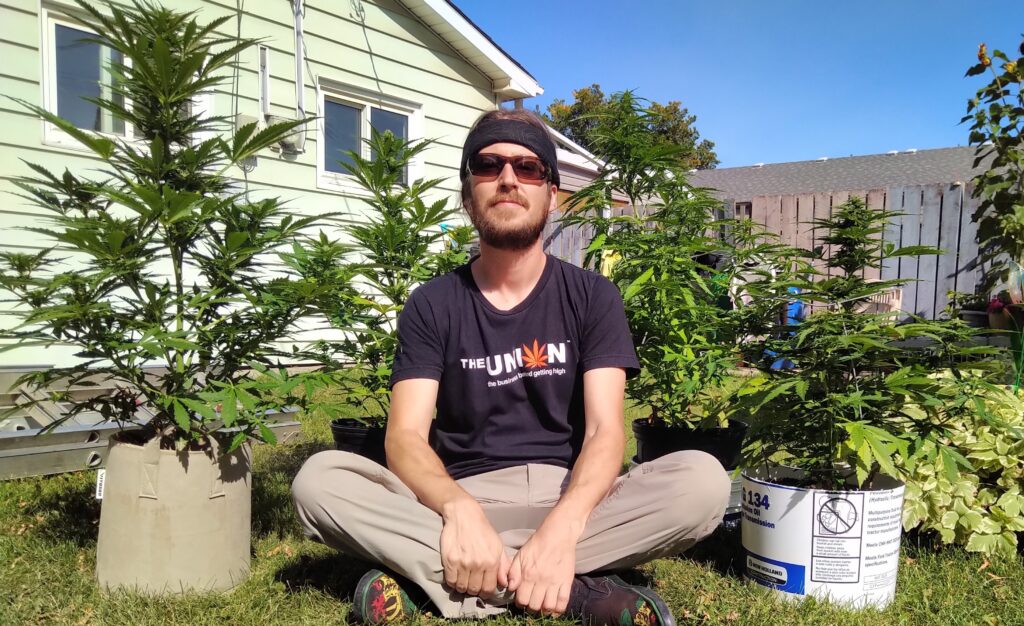
If you’ve been thinking of making your own cannabis concentrates, then this episode is for you. Inspired by listeners who have been asking about making and using concentrates in edibles, having this knowledge can allow to make your own OR if you’re buying concentrates, understand why quality matters. I’m joined by Chase, known online as TempleGrower, a guest who knows a lot more about making concentrates than the average person. Not only does he work in the legal cannabis industry in a lab making distillate, he is an avid cultivator, breeder, living soil advocate and concentrate maker. He’s truly a believer in growing and making your own medicine so you can take control of your high life!
Listen to this episode:
Cannabis Concentrates For The Homemaker
Cannabis concentrates make for potent edibles and lend themselves well to many candy-making recipes. They’re great for topicals, making infusions or you can also ingest them directly. Since they’re so potent, a little goes a long way so be sure to start with the smallest possible dose and work your way up from there.
Here are the links for making your own cannabis concentrates:
Last but not least, do this outdoors or in a well-ventilated area as alcohol fumes are highly flammable!
- Temple Grower YouTube, Twitter & Instagram @templegrower, TempleGrowing website
- Chef Charleen Caabay likes to use concentrates in her edibles – episode
- Rick Simpson Oil (RSO) vs. Full Extract Cannabis Oil (FECO)
- Difference between types of concentrates is based on type of solvent used
- Ethanol – drinking alcohol, Isopropyl – 99% alcohol, Acetone – toxic, don’t use
- Concentrated cannabis oil RSO/FECO does not preserve terpenes, tinctures can preserve terpenes
Step By Step Guide to Making Cannabis Concentrates
- Method:
- Get your solvent – ethanol or isopropyl
- Get your plant material – do not decarb!
- 1 pound trim/1 gallon solvent ratio – can scale down as needed, just as much oil to saturate the plant material
- large clean food grade pails of an appropriate size
- put weed in pail, add solvent next, mix together vigorously for up to 15 minutes, let sit for up to an hour
- nut milk bags (90-120 microns), cheesecloth, tea ball for straining
- rice cooker – set to high, lid off, the more alcohol to boil off, the longer the process will take
- will boil at 78C
- candy thermometer clipped to side of rice cooker
- use a hairnet over the top of the rice cooker to keep out leaves and debris when doing this outdoors
- once alcohol is gone, the temp will start to climb very quickly – you want as little residual solvent as possible, start to mix as bubbles form, once you reach higher temps 120C and no bubbles despite mixing, that means solvent is gone, last 10 minutes of boiling off process
- syringes – Amazon best place, add oil while it’s still warm
- let cool a little bit and draw up into the syringe
- double boiler method on a hot plate can work in lieu of the rice cooker
- Get all that solvent out – improves the taste and reduces harm from ingesting the solvent which would be counterproductive
- Lasts quite a while, store in syringe in the refrigerator to keep the molasses like consistency
- Can use in gummies, candies, eaten directly, infused into fats
- Start low and go slow – these oils are potent, proceed with caution
- Test for potency by sending to a local lab, Gemmacert, tCheck
- Buy RSO/FECO from a legal source unless you’re confident with the producer, process and have a certificate of analysis. When you concentrate cannabinoids, you concentrate potentially bad stuff along side
Full Extract Cannabis Oil
That’s it for this week friends. Please email me any questions, comments, pictures of your creations or anything else, I love hearing from listeners! Direct messages to bitemepodcast@fastmail.com or leave me a voice message. You can also support the show by subscribing, sharing episodes, leaving a review or buying me a cookie! Whatever way you choose, I’m grateful that you’re listening.
Stay high,
Marge
Cannabis Concentrates: Your Questions Answered
This FAQ is designed to answer your most common questions about cannabis concentrates, based on this episode with expert Chase, also known as Temple Grower. Whether you’re new to concentrates or looking to refine your process, this guide provides clear, concise answers to help you understand and safely work with these potent products.
Understanding Cannabis Concentrates
What are cannabis concentrates?
Cannabis concentrates are highly potent extracts from the cannabis plant that contain a much higher percentage of cannabinoids (like THC and CBD) than raw flower. They are created by using a solvent to strip the desired compounds from the plant material, resulting in a thick, powerful oil. The most common forms discussed for at-home production are RSO and FECO.
What is the difference between RSO and FECO?
The primary difference between Rick Simpson Oil (RSO) and Full Extract Cannabis Oil (FECO) is the solvent used during the extraction process. FECO is typically made using food-grade alcohol like ethanol, while traditional RSO was made with solvents like naphtha. However, the end products are very similar, and the term “crude oil” is often used to describe both. For safety and accessibility, ethanol or high-purity isopropyl alcohol are the recommended solvents for at-home production.
What are the benefits of using cannabis concentrates in edibles?
Using cannabis concentrates for edibles offers several key advantages over traditional flower infusions. The main benefit is the ability to achieve precise and consistent dosing, as concentrates can be tested for exact potency. This eliminates the guesswork and potential for uneven batches. Additionally, concentrates can create more potent edibles without the excess plant matter, leading to a cleaner taste and more reliable effects.
Making Cannabis Concentrates at Home
How do you make cannabis concentrates like RSO or FECO at home?
Creating cannabis concentrates at home involves a multi-step process that requires careful attention to safety. The basic steps are:
1.Extraction: Soaking cannabis flower or trim in a solvent (99% isopropyl alcohol or high-proof ethanol) to dissolve the cannabinoids.
2.Agitation: Stirring the mixture for about 15 minutes to ensure the solvent fully extracts the plant’s resin.
3.Filtration: Straining the mixture through a fine filter, such as a nut milk bag or cheesecloth, to separate the plant material from the liquid tincture.
4.Evaporation: Gently heating the tincture in a well-ventilated area using a rice cooker to evaporate the solvent, leaving behind the concentrated cannabis oil.
Disclaimer: This process involves flammable materials and must be performed with extreme caution, preferably outdoors and away from any open flames or ignition sources.
What safety precautions are necessary when making cannabis concentrates?
Safety is the most critical aspect of making cannabis concentrates at home. The alcohol vapors released during the evaporation stage are extremely flammable and can be explosive in an enclosed space. Always work in a well-ventilated area, preferably outdoors. Never use an open flame or a gas stove. An electric rice cooker is recommended because it provides controlled heat without a flame. Avoid smoking or creating any sparks near your workspace.
Potency, Dosing, and Effects
How potent are cannabis concentrates?
Cannabis concentrates are significantly more potent than flower, with cannabinoid content often ranging from 55% to 60% or higher. This high potency means that a very small amount can produce strong effects. It is easy to consume too much, especially for those with a lower tolerance.
How should I dose cannabis concentrates?
When it comes to dosing cannabis concentrates, the golden rule is to start low and go slow. Because of their high potency, it is crucial to begin with a very small amount (e.g., the size of a grain of rice) and wait at least two hours to gauge the effects before considering taking more. For better absorption, consume the concentrate with a high-fat food, as THC is fat-soluble.
Are terpenes preserved in cannabis concentrates?
Most of the volatile terpenes, which are responsible for the distinct aroma and flavor of different cannabis strains, are lost during the evaporation process due to the heat required to boil off the solvent. While some of the more resilient terpenes may remain, homemade cannabis concentrates are not typically made to preserve a strain-specific terpene profile. Tinctures, where the alcohol is not fully evaporated, will retain more of the original terpenes.
Storage
How do you store cannabis concentrates?
Cannabis concentrates are best stored in airtight containers to protect them from air and light, which can degrade the cannabinoids over time. Glass or silicone containers are popular choices. For easy and precise dosing, storing the thick oil in syringes is highly effective. If the oil becomes too thick to dispense, you can gently warm the syringe in your hands or in a cup of warm water.
Thank you, this has been so informative. I’ll return to this volume of info: again.
Glad you found it helpful