Demystifying Medical Cannabis: Lessons from Realm of Caring
Welcome friends! This episode is a special Podcasthon release highlighting the important work of the non-profit Realm of Caring. If you’ve ever wondered how medical cannabis can transform lives, or how a nonprofit can drive real change in a stigmatized field, this episode is a must-listen. I sat down with Sasha, Executive Director of Realm of Caring, to unpack the organization’s journey, impact, and the nuanced realities of cannabinoid therapies, especially for pediatric and seriously ill patients.
This post dives deep into the main themes and actionable insights from our conversation. Whether you’re a patient, caregiver, healthcare professional, or simply curious about the world of medical cannabis, you’ll find expert advice, practical tips, and a roadmap for advocacy and support.
Listen to this episode:
Realm of Caring: Origins and Mission
A Story Born from Urgency and Hope
The Realm of Caring was founded in 2013 by two mothers, Heather Jackson and Paige Figi, whose children were in hospice care due to severe epilepsy. After exhausting all conventional treatments, a hospice nurse suggested high-CBD cannabis. The results were nothing short of miraculous: both children left hospice, returned to school, and regained independence. This personal triumph became the catalyst for a movement.
Key Takeaways:
Patient-Driven Origins: The organization’s roots are in real, urgent need, not industry hype.
Focus on Vulnerable Populations Pediatric patients and those with serious health conditions remain at the heart of their mission.
Global Reach: What started in Colorado now supports over 76,000 people worldwide.
Breaking Down Realm of Caring’s Approach
- Personalized, Nonjudgmental Support
When someone reaches out to The Realm of Caring, the journey begins with listening. Their care specialists provide free, one-on-one guidance tailored to each individual’s story and needs.
Actionable Advice:
Start with Your Story: Don’t be afraid to share your full health journey, including what hasn’t worked.
Expect Empathy, Not Judgment: The Realm of Caring’s team is trained to meet you where you are, regardless of your cannabis knowledge or experience.
Empowerment Over Prescription: They don’t give medical advice but equip you with research, product information, and self-advocacy tools.
Expert Insight:
Many referrals come from doctors, friends, or family. If you’re hesitant, know that you’re not alone, most people start with questions, not answers.
- Education That Meets You Where You Are
Cannabis can be intimidating, especially with so much jargon and misinformation. The Realm of Caring’s resources are designed for everyone, from total beginners to seasoned advocates.
What You’ll Find:
Elementary-Level Guides: Learn the basics, like what cannabinoids are, how to use different products, and what to expect at a dispensary.
Research Library: Search by condition, product type, or published studies.
Webinars and Blogs: Stay updated on the latest science and policy changes.
Actionable Advice:
Don’t Be Afraid to Ask “Basic” Questions: Whether it’s What’s a tincture? or How do I talk to my doctor about cannabis?, there are no dumb questions.
Use the Website: RealmofCaring.org is a treasure trove of accessible, science-backed information.
Prepare for Dispensary Visits: Read up before you go, so you can ask informed questions and feel confident.
Expert Insight:
Education is the antidote to stigma. The more you know, the more empowered you are to make safe, effective choices.
- Advocacy and Policy: Keeping Patients at the Center
The cannabis landscape is a patchwork of state and federal laws, with ongoing debates about access, safety, and legitimacy. The Realm of Caring is at the forefront of advocacy, ensuring that patient voices drive policy, not just industry interests.
Current Focus Areas:
Federal Rescheduling: Pushing for cannabis to move from Schedule I to Schedule III, which would recognize its medical value and open doors for research.
Cross-State Access: Advocating for laws that allow patients to use medical cannabis across state lines.
Insurance Coverage: Working toward a future where cannabinoid therapies are covered by insurance, making them accessible to all who need them.
Actionable Advice:
Share Your Story: Personal experiences are powerful tools for changing minds, whether with lawmakers, doctors, or your community.
Stay Informed: Policy changes can happen quickly; sign up for updates from advocacy organizations.
Support Patient-Centered Laws: When voting or contacting representatives, prioritize policies that protect patient access and affordability.
Expert Insight:
The cannabis industry was built on the backs of patients. Keeping their needs at the forefront ensures that progress benefits those who need it most.
- Research: Building the Evidence Base
One of the most exciting aspects of The Realm of Caring’s work is their partnership with Johns Hopkins University. Together, they’re collecting real-world, longitudinal data on how people use cannabis and what outcomes they experience.
Why This Matters:
Real-World Evidence: Unlike clinical trials with synthetic cannabinoids, this research reflects how people actually use commercially available products.
Filling Knowledge Gaps: Data on efficacy, safety, and optimal cannabinoid ratios is crucial for both patients and policymakers.
Reducing Caregiver Burden: Studies show that when patients improve, so do their families’ quality of life.
Actionable Advice:
Participate in Research: Whether you use cannabis or not, you can contribute valuable data as a control participant.
Track Your Progress: Journaling symptoms, dosages, and outcomes helps both you and researchers understand what works.
Advocate for Science: Share research findings with your healthcare providers to foster open, informed conversations.
Expert Insight:
Research isn’t just about numbers, it’s about stories. Every data point represents a real person, and together, these stories drive change.
- Community: The Power of Peer Support
Healing doesn’t happen in isolation. The Realm of Caring’s OG Family began with pediatric patients, but now includes adults, caregivers, and advocates from all walks of life.
How Community Helps:
Peer Connections: Sometimes, the most valuable support comes from someone who’s walked your path.
Family-Centered Care: Health challenges affect entire families, not just individuals.
Alliances with Other Nonprofits: Collaborations with organizations in chronic pain, epilepsy, and autism expand the support network.
Actionable Advice:
Reach Out: Don’t hesitate to connect with others through The Realm of Caring’s events or online forums.
Share Resources: If you know someone struggling, refer them to the organization.
Celebrate Small Wins: Every improvement, no matter how minor, deserves recognition.
Expert Insight:
Community is both a safety net and a springboard. It’s where stigma is dismantled, hope is restored, and advocacy is born.
Tackling Stigma and Misconceptions
Despite growing acceptance, cannabis remains stigmatized. Sasha shared a telling story from a women’s health conference, where a participant voiced fears about legalization, concerns about smell, intoxication, and drug use. The Realm of Caring counters these narratives with science and lived experience.
How to Address Stigma:
Lead with Facts: Highlight the therapeutic benefits, especially non-intoxicating options like CBD.
Share Success Stories: Real-life examples are more persuasive than statistics alone.
Normalize the Conversation: The more openly we talk about cannabis, the less room there is for fear and misinformation.
Actionable Advice:
Be Patient: Changing minds takes time, especially with deeply held beliefs.
Use Accessible Language: Avoid jargon when explaining cannabis to newcomers.
Invite Dialogue: Encourage questions and respectful discussion.
Expert Insight:
Stigma thrives in silence. Every conversation chips away at the barriers to acceptance and access.
How You Can Get Involved
Feeling inspired? Here’s how you can support The Realm of Caring and the broader movement for safe, legal, and effective cannabinoid therapies:
Participate in Research: Join ongoing studies, whether you use cannabis or not.
Donate:Just $25 a month helps compensate a research participant, directly fueling scientific progress.
Spread the Word: Share The Realm of Caring’s resources with friends, family, and healthcare providers.
Refer Someone in Need: Many people don’t know this support exists, be the bridge.
Stay Connected: Visit realmofcaring.org for resources, or email info@realmofcaring.org for direct support.
Final Thoughts: A Movement Rooted in Compassion
The Realm of Caring’s story is a testament to the power of patient advocacy, rigorous research, and unwavering compassion. Whether you’re navigating a health crisis, supporting a loved one, or simply curious about the future of medical cannabis, remember: you’re not alone, and help is available.
Let’s keep the conversation going, share this post, reach out for support, and join the movement to make cannabinoid therapies accessible, safe, and stigma-free for all.
Explore more charities through the Podcasthon platform, and don’t forget to share this episode with anyone who might benefit. Together, we can transform lives, one story, one study, one conversation at a time.
Pair this episode with:
- Inside Australia’s Cannabis Shift with Paul O’Donoghue
- Thriving With Cannabis: The Ultimate Guide to Mindful Consumption with Amanda Reiman
- North Bloom Is Normalizing Cannabis with Angelique Zerillo
That’s it for this week friends. Please email me any questions, comments, pictures of your creations or anything else, I love hearing from listeners! Direct messages to stayhigh@bitemepodcast.com, or leave a voice message on the podcast hotline.
You can also support the show by subscribing, sharing episodes, leaving a review or buying me a cookie! Whatever way you choose, I’m grateful that you’re listening.
Stay high,
Margaret
Timestamps for Podcasthon’s Realm of Caring
Introduction to the Episode and Guest (00:00:03)
Host introduces the special episode, the “Podcast On” event, and welcomes Sasha from The Realm of Caring.
Origins and Mission of The Realm of Caring (00:01:18)
Sasha explains the founding story, initial focus on pediatric epilepsy, and the organization’s core mission.
Charlotte Figi’s Story and Advocacy Roots (00:03:29)
Discussion of Charlotte Figi’s impact, her role as “Patient Zero,” and the advocacy work inspired by her journey.
Changing Perceptions and Addressing Stigma (00:06:14)
Exploring misconceptions about cannabis, stigma, and how The Realm of Caring educates the public and medical community.
Education and Basic Cannabis Knowledge (00:10:18)
Importance of answering basic questions, providing accessible information, and supporting newcomers to cannabis.
How The Realm of Caring Supports Individuals (00:11:34)
Overview of the typical client journey, one-on-one support, and empowering individuals to advocate for themselves.
Research and Partnership with Johns Hopkins (00:15:01)
Why scientific validation matters, the importance of real-world data, and key findings from ongoing research.
Impact on Families and Caregivers (00:17:27)
How cannabis therapies improve quality of life for patients and reduce caregiver burden, with personal anecdotes.
Client Success Stories (00:20:24)
Specific examples of life-changing outcomes for individuals and families supported by The Realm of Caring.
Advocacy and Policy Change Efforts (00:23:24)
Current legislative priorities, federal rescheduling, and the vision for safe, legal access to cannabinoid therapies.
Challenges with Access and Global Advocacy (00:26:01)
Addressing barriers for clients in restrictive regions and fostering advocacy internationally.
Building and Sustaining Community (00:27:18)
The importance of community for clients, efforts to connect families, and partnerships with other organizations.
Future Vision and Milestones (00:29:43)
Long-term goals for research, education, advocacy, and the aim for insurance coverage and systemic change.
Participation in Podcast On and Mainstream Outreach (00:32:21)
Why joining Podcast On matters, breaking out of the cannabis echo chamber, and hopes for global awareness.
How Listeners Can Support The Realm of Caring (00:34:06)
Ways to get involved: participate in research, donate, and spread the word to those in need.
Where to Find The Realm of Caring (00:36:03)
Website, resources, contact information, and how to access support or research opportunities.
Closing Remarks (00:36:44)
Host thanks Sasha, wraps up the episode, and encourages listeners to share and stay curious.
Margaret 00:00:03 Welcome back, friends to episode 343. Today we are doing something a little bit different. Bite me. The show about edibles is happy to participate in this fourth edition of podcast on. For one week, thousands of podcasts from around the world will highlight a charity or non-profit of their choice. And today I have the pleasure of welcoming the realm of caring. The realm of caring is bettering lives through research, education, advocacy and community. And in today's conversation, I had the distinct pleasure of sitting down with Sasha, the Executive director of The Realm of Caring, to talk about the organization, its impact, and how they are improving the lives of others through education, research and support. So without further ado, please enjoy this conversation with Sasha of The Realm of Caring. Hello, I just wanted to welcome you, Sasha, to bite me. The show about edibles. And I'm really excited that you're here with me today. Could you just take a minute to start off our conversation, to introduce yourself and the realm of caring to the listeners of Bite Me, and then also share a little bit about your core mission that drives your organization.
Sasha 00:01:18 Absolutely. Well, thank you so much for having me. Yes, my name is Sasha. I'm executive director at Realm of Caring and we've been around for about 13 years now. So we were formally founded in 2013 by two moms who were both, dealing with, of course, you know, the, the, the unimaginable. Both of their kiddos were in hospice receiving palliative care, had exhausted all pharmaceuticals, all treatments that were available for their diagnosed forms of epilepsy. And, you know, both just simultaneously looking into what is the last thing that could help our kids live out a quality of life. And they were introduced by their hospice nurse Because they were both simultaneously looking into cannabis, specifically high CBD cannabis. Given there was some old research that they had dug up to look at epilepsy and CBD, and so they both tried it. And then both kids got out of hospice, went back to school, rode bikes. Oh, you know, walking, becoming independent versions of themselves. And so when they saw this, they started talking in these epilepsy mom groups and word spread.
Sasha 00:02:29 They started helping families move out to Colorado. So they set up this fund to help families move out for access, because if we're talking in the States, that was one of the only places that, you know, you could medically, have cannabis for, for pediatrics. And so they, and then once they, you know, they saw the overwhelming response from people who are just looking for some support and some one on one help. And what is the research say, how do I get started? How do I find product? They opened up a call center which is now globally open. We've helped over 76,000 people across the globe with just free one on one support. And then we also conduct research because we know that's a very key missing component in this space is understanding how people are using on a global scale, how people are using commercially available products in their everyday life. So in a nutshell, that's us.
Margaret 00:03:22 That's incredible too. I like to think that these children were on the precipice and in hospice care, and then they're out riding their bikes.
Margaret 00:03:29 Like, what a story. So the fact that they like, channelled that positive energy into something that's helping so many people is really wonderful to hear. And obviously, the foundation of the realm of caring is deeply connected to the story of Charlotte. And can you share how her incredible journey inspired the creation and direction of the Foundation?
Sasha 00:03:48 Absolutely. So those two kiddos were Sakai Jackson and Charlotte Figgy. And so Charlotte would be Patient Zero who tried CBD and And found that success and and she went on. She was the one who. She. She's our North star. We we honor her bravery every day. her mom, Paige, was a co-founder with Heather Jackson. Of our organization. because they they recognize that this medicine is. Or I should say that that this should be treated as a medicine for people. It should be available and accessible to people. They should have more options. They should be able to talk to their doctors about this. And and so, you know, Paige really went into an advocacy route to to because she saw the magic with her own kiddo, and she wanted to go on and spread that advocacy and, and help other kids access it as well.
Sasha 00:04:46 And so with her and Heather together, you know, on behalf of their kids, they went state to state, just passing medical laws. And they're still active today. And, you know, we still exist today as just that. you know that place where people can share stories and they can talk about their successes and ask their questions, and then we can then bring that to state leaders, federal leaders, different country leaders, and talk about the power of this plant as a medicine and how we can increase access and how we can look at Charlotte Story of success and translate that to people of all ages. And I think that was such an important time, because there is that High Times cover where it said, you know, the face that changed the face of cannabis, right? Or the face that changed the way we think about cannabis. And it's so true because it's, you know, we hear about the benefits. You know, maybe in the past it was somebody who had cancer and they might be using cannabis to alleviate some symptoms.
Sasha 00:05:54 But then when you see a child go from hospice to school. Riding a school bus and pharmaceutical free. Other than the one tincture that they're taking. It's it's kind of unbelievable. And it starts to change your mind and, you know, just eradicate that stigma that surrounds it.
Margaret 00:06:14 Yeah. That's such a that's so beautiful. It gives me chills just hearing about that. And that advocacy work is so important because a lot of the lawmakers probably don't understand cannabis the way that you or I might, or the people that you're serving. So being able to share these stories with them is incredibly important. And I'm sure it helps your your clients also feel not so alone because they have somebody to talk to and other shared experiences that they can that they can just share. And I think that's really important. Yeah. So your motto is taking the confusion out of cannabis. What are some of the most significant misconceptions that you've encountered, and how does the realm of caring work to educate the public, patients, and the medical community.
Sasha 00:06:58 Yeah, I would say that there is a lot of misconceptions that still exist. you know, despite how far we've come in the medical allowance from different various countries or states, depending on where you're living. we've seen progress made. But, you know, for every one story of progress, there's ten stories of how this ruined somebody's life, that they, you know, my neighbor son. And not to say that those stories don't have legitimate value, but those are the stories that are louder than the stories of progress, which is very unfortunate. And, and, I would say like one of the biggest misconceptions, I just had a conversation with somebody about this. I was at a women's health conference last November, and it was not a not a cannabis space by any means. It was, you know, a lot of, AI and technology and, you know, different not a lot of holistic health care. But so I was entering a space that I knew I would come against some confrontation, maybe.
Sasha 00:08:02 And thankfully there really wasn't a lot. It was very welcoming in a great conference, but I did have one woman who came to the table and talked about how she just despised it, and she had teenage boys and they legalized in her zip code. And so, you know, now she smells it all the time. And, and I said, yeah, I have a I have an issue too, because this is an unregulated plant. People don't know if they're getting quality, safe products. Doctors can't talk to their patients about it. People are using it as medicine, but we're not treating it like a medicine. So yeah, I agree there are a lot of problems. And so at the end of the conversation she said, okay, I'm interested, but I still don't like it. And that was a that was if I could bottle up the like the misconceptions. You know, that's still what that it would be that conversation because it's the people who are have these stigmas ingrained in their minds that it's it smells.
Sasha 00:08:55 It's a drug. It's. It gets people high. But if what we're working towards that realm of caring is bringing forth the science and the anecdotal data of how people are using it, why they're using it, and what success they're finding without the without feeling intoxicated. There's the therapeutic. The therapeutic value is is what we're hitting home to. So, across a myriad of conditions. And so that's just really our role, as you know, we here right now, people of course, are still demonising THC, the single most singular molecule in this beautiful plant. And so it's our role to talk about what the science is saying about the benefits or the the benefits of ratio products CBD to THC, CBD, CBG to THC. You know what, what a what does the research show and and how is it helping people?
Margaret 00:09:51 Yeah, I think that's I mean, just getting it in the world and talking about this stuff. As long as people have a little bit of curiosity around it, because it's easy to forget when you're in the space so much, so much stigma still exists.
Margaret 00:10:03 And but sometimes it's just like one conversation at a time, and it's painfully slow sometimes. But I guess when you're putting on a larger, like when you have a larger network, like the realm of caring that is pushing the agenda forward a little bit faster, hopefully. So.
Sasha 00:10:18 Okay, yeah, we're trying, we're trying. But yeah, it is. I agree with you. It's definitely easy to be jaded by it or stuck in the echo chamber. And then I think what's important right now, especially just in the political sense, it's getting outside of that echo chamber and talking at mainstream press conferences or events or, you know, bringing this conversation into the healthcare space, into the book clubs, into, you know, these where you wouldn't normally, you know, have it or people are afraid to. They don't have a safe space to ask questions or they feel stupid. Or if you look at our some of our metrics on our website. Some of our highest search queries that lead to our website are blogs on how to roll a joint or what is.
Sasha 00:11:04 So it's these very basic questions that us who are, you know, quote unquote in the industry. We're like, of course everybody knows this, but we're it's it's not true. People are still confused and they don't want to go into a dispensary and not know the language. And so they Google it. And we see that and we see that people are coming to our website because of that. And so we want to keep that elementary or the rudimentary knowledge, you know, there and available for people. So they don't they have a safe space to go to.
Margaret 00:11:34 Yeah. That's wonderful. So I mean, I'm glad you touched on that. The Realm of Caring offers a range of free services, including one on one support. So when somebody finds your site through maybe what is our so or how to roll a joint, can you walk me through what happens, like the typical journey of an individual or family who reaches out to you for the first time.
Sasha 00:11:54 Oh, yeah. yeah, that's. I would say that blogs are a big driver to the site from Google, but as far as our referral sources to our free call center, it's doctors, it's friends and family.
Sasha 00:12:07 It's other companies. you know, I can't tell you how many times a person has come. And they said my doctor gave me the clear to try it, but they don't know how to help me. And so they referred me to you, which is great. You know, we'd love to be a part of that conversation and also give, so we get on the phone with individuals who will we meet them for the first time? And they say, I had no idea you existed. I wish I knew about you sooner. Oh, my aunt who passed away would could have benefited if only we knew something like this happened, you know, was available for help. So we we meet people kind of where they're at. It's just giving a free space for people to talk and ask questions and just what's your story? What's going on? And we're non-medical and that's by design where researchers and educators and. Our intention is that we give you the tools then so you can make the informed decisions about your health.
Sasha 00:13:02 So then you can go and bring a summary of a few research articles to your next provider appointment. And you talk with your physician about incorporating, cannabis or some ratio of cannabinoid profile into your regimen. But understanding the, the, you know, the, the metabolism pathways and the drug to herb or drug to drug interactions that take place. So I would say, you know, that's a big part of what we're talking to people about is like, here's the tools. This is now you can go and have these conversations with your doctor or here are the tools. This is how you find a quality product. Make sure there's a certificate of analysis. You know, make sure that you're asking questions about consistency and product. and then also helping people to scour dispensary menu sometimes, and just try and help them narrow down a few different products that they could choose from based on their condition. So that way when they go into to the retail store to buy, they don't feel so overwhelmed by all of the options that are available to them.
Sasha 00:14:06 But yeah, just kind of setting expectations also that this is a plant. It's not something where magically you're going to feel a hundred times better. And so we also talk about the power of journaling a lot. And because it could be such a small and significant, what you might see is insignificant change. But it's all of a sudden, you know, oh, I slept to the night. I woke up to use the bathroom and I was able to go right back to sleep. And, you know, so it's just, you know, so just kind of having those small wins along the way too. So making sure we're really holding their hand and supporting them throughout their process.
Margaret 00:14:38 Right. So it sounds like you're giving them the tools to advocate for themselves when they're seeing their medical practitioners, which is a pretty big deal because a lot of doctors, if they don't understand the plant or don't know how to work with it, then they often don't want to advise you on it. but I guess if you're providing them the tools to do that, and the educational research I think is so key because like you said, you're clarifying all these.
Margaret 00:15:01 What seems tricky at first because, you know, health is always a tricky thing. But I think that's I think that's fantastic. And now you've mentioned already research and that's obviously a big piece of the work that you're doing. And you have a major partnership with John Johns Hopkins University. Why is the scientific validation so critical, and what are some of the most impactful findings that you have found emerge from your studies so far?
Sasha 00:15:28 Yes, I think, it's so impactful because what is truly missing that we've been working at for the last decades decade with Johns Hopkins is real world data, how people are utilizing cannabis in their everyday lives from commercially available products. You know, we see controlled trials. We see trials with synthetically derived or synthetic formulations. there's a lot of survey based, you know, data for, you know, just a single survey. How are you finding experience? What are you using this for? But having a longitudinal, very in-depth, observational study that's self-reported for people where they're every three months, they're reporting on how their, their progress is going, for a year to two years, depending on which study that we have with Johns Hopkins, is very critical because that is that's giving us trends, that's understanding cannabinoid ratios, that's understanding, you know, what what are the conditions that we can look deeper into.
Sasha 00:16:37 So we can we're setting the stage for those clinical trials to take place. And some of the most impactful findings that we've seen that I have really enjoyed to look into. And we're going to dive a little bit deeper in this year are, of course, the health outcomes, you know, like less seizures, less and anxiety, better sleep. But what I really love to see is, the caregiver burden decrease. So if we're thinking about not caregivers necessarily who are utilizing cannabinoids, but if you're a caregiver of a child or an aging parent and you're helping them use cannabinoids, your burden lessens because their quality of life improves. And I don't think we I don't think we treat diseases often enough as a whole. Family.
Margaret 00:17:27 Yes.
Sasha 00:17:28 Issue. It's not it's not singular to any one parent or spouse or child. It is the whole family that's affected by it. And so if we're welcoming something into the person who's suffering, we welcome something into their life that has low adverse events, low risk and, you know, benefits that improve their quality of life and help them to walk and talk and go to school and go to work and less miss work days and less school days missed.
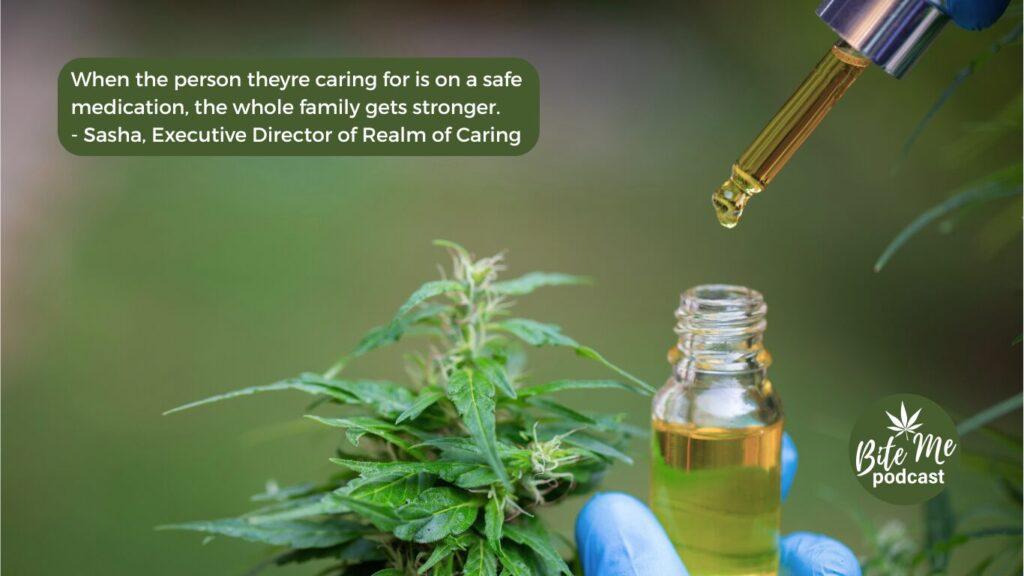
Sasha 00:17:58 Then we're having an effect on the whole entire family unit. And we're we have more, you know, contributors to society. People want to go get up and go back to work, work out, live healthier lifestyles. It's a it's a complete ripple effect. And I think that's one of the best gifts that I've received in my role here is seeing the parents who grew our organization and just how their whole family gets stronger when the person that they're caring for is on a safe medication.
Margaret 00:18:30 I love that, and that actually really hits home for me because I live with my 94 year old father, who was recently diagnosed with lung cancer, and I've talked about that on the show already. But they did catch it early. But I started him right away on a CBG CBD blend, based on some recommendations from somebody who does this kind of work. And, you know, we started really slow. We've worked our way up, and he's already reporting, like, sleeping better, which, you know, he has been, has told me numerous times.
Margaret 00:18:59 He gets up like 4 or 5 times a night, sometimes, especially earlier in the morning. And I ask him regularly because I keep notes on his dosing and how he's feeling. But just the improved sleep is right there, like something that's been very elusive for him for a long time, actually long before the cancer diagnosis. So the fact that he's willing to do that because of my own advocacy, of course, because he was never a cannabis consumer, but the quality of life, obviously, his quality of life affects my quality of life. So just focusing on that with your clients, I think, is something that often doesn't get talked about enough because, yeah, when somebody gets sick, it does affect the whole family unit or the people that are in your circle. And yeah, I'm really glad that you touched on that.
Sasha 00:19:44 So yeah. Yeah. It's so true. Yeah. It's and you know, and yeah, we just don't think about our health enough ourselves when we're caring for somebody else.
Sasha 00:19:52 And that's always the first thing people say to you. Well, how are you taking care of yourself? And it's like, how am I supposed to do that?
Margaret 00:19:59 When do I have the time? Yeah.
Margaret 00:20:00 Right. Exactly. Yeah, yeah.
Margaret 00:20:02 Now you've served over 10,000 clients and you've had a pivotal role in legislative work. And obviously your impact is clear. Can you share a specific story that illustrates the life changing effect of your work on an individual family? And I recognize the whole founding of this organization was based on that same work. But are there any other stories that really stand out to you?
Sasha 00:20:24 Oh, yeah. We've had I've, I've talked about some of these publicly before. but there's yeah, there's been so many great stories, like just if we had a, a kiddo who had an autism diagnosis and she was mostly nonverbal, and one night she asked for to get up from the dinner table because she was finished eating in her own way. And the parents were like, oh my gosh, that's it's working.
Sasha 00:20:52 It's helping that they, you know, just shocked at the fact that she was able to do that. Or one of our care specialists had a conversation with a man and his wife had suffered with dementia, and it had been nearly a decade since they had a good conversation or, you know, a real conversation. And one day she turned around and she said, when did we get a new stove? And it was, you know, the first time he got to have a conversation with his wife in almost a decade. And I think those are always some of the most beautiful and impactful stories, because it's just something that's we take for granted, you know? And then it's you lose it and then it's so and it comes back in a way that's so natural and organic and, and and those are the ones that are really cool. And it just through our research we've seen recently, a woman who claimed that she went on vacation with her family, she forgot her pharmaceuticals. She was, of course, getting very anxious about it.
Sasha 00:21:49 Her husband convinced her to. They were in a in a place where they could purchase cannabis. And so he. He convinced her to try something. I guess he had used it. Maybe that story wasn't included. And she said, just in the days that she's been on vacation, she felt better than she ever has. And when she got that home, she started conversations with her doctor about tie trading off of some of those narcotics and heavy medications that she was taking. So, you know, just really, really beautiful stories. that we get a lot of, you know, our we work on a four day work week. Our care team does, anyway, because it's just a big it's a big job. You're wearing a lot of, you know, or you're carrying a lot of weight, I should say. And these stories, and even though they can be very happy sometimes, there's a lot of struggle that comes with it, too, that we're navigating through. But yeah, it's it's been a it's been a great joy, I think, for all of us to see the success that people can have at a global scale by introducing something so simple into their into their routine.
Sasha 00:22:50 So simple but complex because of all the constraints around it.
Margaret 00:22:54 Of course. Yes, it's.
Margaret 00:22:55 Definitely complex, but I and I'm sure it's hard to pick out, like, you picked out a few beautiful stories there, but I'm sure you see the impact of the work that you're doing every single day. And it's got to feel really good.
Margaret 00:23:05 Yeah, yeah it does. Yeah it does.
Sasha 00:23:08 It's it's I think I've said this before, like the addicting, just kind of task of working for a nonprofit where you're just, you know, it's it's difficult and it's hard and there's ups and downs, but it's, gosh, helping people. I mean, what's better?
Margaret 00:23:24 Yeah, absolutely. Now you do a lot of advocacy. That's a key pillar of your organization. What are some of the most significant policy changes that you're tackling right now? And I know there's a lot going on in the US in particular. And what would a major victory look like for the ongoing fight for safe and legal access to cannabinoid therapies?
Margaret 00:23:42 Oh, that's.
Sasha 00:23:42 A good question. Yes. Right now, there are currently a lot going on given what's going on at the federal level in the states, every legislative year, we're used to state to state restrictive laws taking place because they open up the floodgates. And then some state leaders, you know, start to pull back, and then we start to see restrictive policies happen. But what's happening at the federal level is pretty significant in, in removing in the in the pathway to move cannabis from a schedule one to a schedule three. Because while that doesn't, I understand the argument from a lot of people that it doesn't necessarily change a whole lot. As far as allowances and purchasing and accessibility, but it does create a pathway towards research, towards acknowledging for the first time at the federal level in the states that it has medicinal value, which is massive. And what I hope to see continue through a lot of a lot of work, and it has to be a very collaborative effort Is moving towards that medical allowance and understanding why we have an industry in the first place and where it came from, where was it bred from, and it was bred from the patients who are relying on it, who are vulnerable, who are at risk, who are sick and dying.
Sasha 00:25:04 Not to be too dramatic about it, but, you know, that's the truth of it. And understanding that as an industry, we stand on their shoulders and we need to keep on pulling them up and and including them in conversations and bringing the conversation back to their access and their affordability and their quality and safe products and ensuring that that happens. And so I think it's going to take we've all worked very hard, but it's going to continue to take a lot of work to make sure that we do it right. We have this window of opportunity. We were given the okay, you know, we understand it has medicinal value. Let's keep on going. So let's ride that. Let's ride that train and and keep acknowledging that and and making it a priority for the health care industry, for physicians, for for for companies to be held to a very high standard. and then just making accessible laws. So, you know, crossing state borders, for example, for medical patients.
Margaret 00:26:01 Right.
Margaret 00:26:01 Because what do you do when you have a client that comes to you? But they're in a state where there is no medical program or rec program either.
Sasha 00:26:08 Yeah. And that happens a lot. And so they they might ask questions like, oh, I'm close to this place. And so we give them the information that they need, the we let them know, still what the science says, what the research says, because it also, I mean, you know, talk about a global scale. We've had whenever the the we documentary from Sanjay Gupta and CNN comes out and we'd one where Charlotte Fish's story is told. We can always tell when it gets on YouTube in a different country because we'll get calls, we'll start to get calls from them. So this happened a few years ago where we were getting inundated by calls from France and we found out, oh, the YouTube documentary just released the the we'd won documentary there. And so people are gaining interest, but we couldn't help point them to any CBD product or any dispensary to, to purchase and make their own. So it was very hard. But what we could do is still explain the science behind it.
Sasha 00:27:08 And hopefully by that we're just creating more advocates in these spaces that can, you know, start to fight for fair.
Margaret 00:27:18 Yeah, make change in their own jurisdictions wherever they happen to be. Yeah. Because that's, I guess, how it happens over time. Yeah. Yeah. Now you've cultivated a global community. You mentioned already that you've served over 70, 76,000 people, which is incredible. How vital is the sense of community for the individuals and the families that you serve? Many who've probably felt really isolated in their struggles until they met the realm of caring.
Margaret 00:27:43 Yeah.
Sasha 00:27:44 It's so important. And I we call them our OG family, OG kiddos. And because and I say kiddos a lot because we in the beginning we of course we're helping a lot of pediatrics and their families, but now we're about 70% adult and 30% pediatrics. But in Colorado, where we're headquartered and where we started, we have a great community base of families who had moved out from there, from Pennsylvania or from Georgia, their respective states, to come to Colorado, from North Carolina to to access the plant and get care.
Sasha 00:28:16 And, because we have, you know, of course, we had some doctors who are willing to to help pediatrics as well. So that was really important. and we have try every year to do a gathering or a couple times a year to do a gathering with our community, but also trying to, you know, to create those communities in other places, too. And that could be aligning with other nonprofits who are not necessarily in the cannabis space. They might be in the pain, the chronic pain space, or epilepsy or autism spaces, but aligning with them. So that way we're we're collectively providing the support system to our joint communities that we're helping for different reasons. But yeah, it's incredibly important because we do also still get a lot of calls from people who are wondering if we have somebody we can connect them to who have gone through the same thing, just because they want to talk to somebody who can relate to their experience. And even though we can relate to, you know, we can tell them the stories.
Sasha 00:29:13 They want to just talk to somebody one on one. So we try to do that a lot to is connect people and community spaces or virtual support groups or whatever it might be.
Margaret 00:29:22 Yeah, that's that's great because obviously community is everything. And when you have people that you can rely on and they can rely on you, then it changes everything for sure. Now, looking to the future, what is the long term vision for the realm of caring? And what are the next major milestones you're aiming to achieve in terms of research, education, advocacy?
Sasha 00:29:43 Yes. So I would say currently we're just still in the thick of providing a very needed resource and and making sure that the patient is included in every conversation that happens that has to do with their access. So at the policy level, the medical conversations, whatever it might be, but just including their voice, their story, because if it's not included, we won't we won't get anywhere when it comes to policy. And so I would say that's the, the intermediate or the, the immediate goal.
Sasha 00:30:19 But then also with that, it's making sure that we're continuing to collect this very ethical, rich data to showcase how and why people are utilizing cannabinoids and the outcomes that they're witnessing from these products that are available commercially. And then so through that, making sure that we're compensating people who are dedicating their time and energy to give their data and give their information to the cause. So that's, you know, we have a couple of ongoing campaigns where we're constantly fundraising. So that way we can just get compensation to the patient. So for every survey, they get a $25 Amazon gift card. In some cases the raffle, depending on how much you know, spend we have that month. But we have a couple of surveys that are guaranteed. $25 gift card. So just trying to do our part the best way that we can and increasing some affordability. So even if it's not directly paying for their medicine, it's paying for, you know, baby wipes. So then they can, you know, spend some extra on their cannabis that month.
Sasha 00:31:27 and then with that, you know, making sure that we're taking that data and being very mindful and purposeful with it to use it for good to make sure that we are moving change forward. Because long term, if we're thinking long term goals, it is insurance coverage. It is a conversation that a doctor can have with their patient. It is making sure that all of the gaps that we're currently filling in are filled by the entities that are in place to help provide health care to people. And and I think that's just the nature of a nonprofit, right. We're just filling in those gaps until it exists at a, at a level that you don't even need a nonprofit to care for it anymore. But right now, we're just so needed and necessary. I don't see a day where we don't exist. so I don't want to say that, but I do see that we're, you know, filling in these necessary gaps until these other systems can catch up.
Margaret 00:32:20 Right. Yeah.
Margaret 00:32:21 So this episode is part of a podcast on and for the listeners, it's a global event designed to unite podcasters for charitable causes.
Margaret 00:32:30 Why was it important for the realm of caring to be a part of this event? And what do you hope to achieve by sharing your story with podcast audiences worldwide?
Sasha 00:32:39 You know, I think that it was important, and this goes back to what we were sort of talking about earlier, and it's bringing the conversation out of our echo chamber and into the mainstream space. And so if we're having podcasts on to even future, a nonprofit that is cannabis aligned, I think is is such a big step. And it's so cool that, you know, we there's just so many options. We have research grants that we work on, but there's so many other grants we get denied for, likely because we are cannabis affiliated. And even if we're not plant touching, we're delivering education and and conducting research. so we don't get picked for a lot of things. So it was nice to see that we're in this place where, you know, people are starting to consider what it is that we're offering here and that, yeah, it is actually a real thing that people need help with.
Sasha 00:33:27 So. So my goal here in with podcasts on is to make sure that people know about us, that they know we're a resource that exists for them. So that way they can call us and ask questions because we are 100% free. and then if they feel so inclined to support our initiatives, such as our research, so we can continue to gather that legitimate data to prove that there is medicinal value in this beautiful plant, and we can keep on pushing policy and access forward.
Margaret 00:33:55 That's beautiful. Now, for our listeners who've been inspired by your mission today, what's the most effective way that they can get involved and support the work of the realm of caring?
Sasha 00:34:06 Oh, that's that's a good one, because I had immediately I had three answers go into my head. But I would.
Margaret 00:34:12 Say.
Sasha 00:34:13 first get involved in research because even if you are a non user, we have a place for you because you can serve as a control. But we have two great studies. One is a national cannabis study that is only United States based, and that is with Johns Hopkins on behalf of a Nida grant that was awarded to Johns Hopkins and that is for new users to cannabis.
Sasha 00:34:35 The other is our observational Research Registry, which is a global observational research registry where anybody, as long as you have computer access and you can read and write English fluently, that's just one of the eligibility requirements. You can take this survey and start, you know, accumulating that great body of data. So that would be the one great way to get involved. Another great way is giving, you know, monthly, if you wanted to give $25 a month then that is getting one person every single month through surveys. So that way they can get compensated for their time. and then I would say another way is just spreading the word, just letting people know that we exist. because there's a lot of people out there who could use some help. And even if you I know how uncomfortable it is when you have a family member and you know something about cannabis and they they're going through something, whether it's chronic or, you know, not, but they're going through something that you believe cannabis might be able to help with, but you don't really want to bring it up to them because you don't know how they'll react.
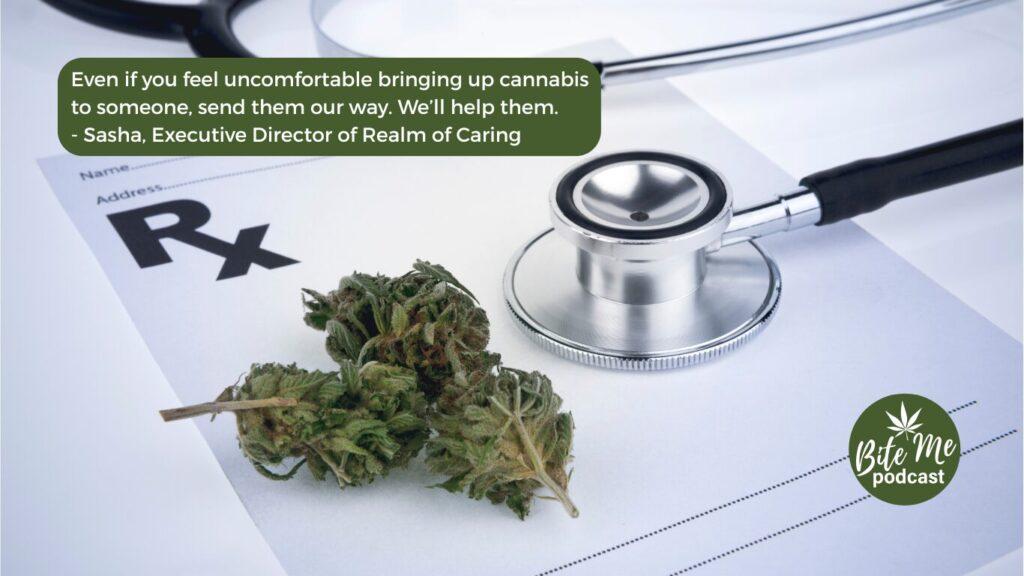
Sasha 00:35:37 Because, again, it's still very highly stigmatized. And there's a lot of misconceptions. Send them our way. We'll help them. So, you know, don't worry about that. We're here for that. So, Yeah, just letting people know that we exist.
Margaret 00:35:51 Yeah.
Margaret 00:35:51 So it sounds like there's a few different ways that people can get involved to help and support the realm of caring and the work that you're doing. Now. Sasha, where can people find you, like these studies and the realm of caring? Where can people find you?
Sasha 00:36:03 We our website is Realm of caring, and we don't try not to get too overwhelmed because there's a lot of information there. But we do have a beautiful research library of all of these peer reviewed articles that you can search by condition. We also have our published research. They're featured at the top we have. You can access our care team from there to get your free one on one support. We have all of our blogs, our previous webinars, every everything is there at your fingertips for you to access.
Sasha 00:36:34 And if you ever want to just contact us directly, it's just info at Realm of Caring. Org Send us an email that will go straight to our care team and we'll be able to help you out.
Margaret 00:36:44 That's amazing. So, Sasha, I just want to thank you so much for your time today and sharing the story about the realm of caring and the work that you're doing. I think it is absolutely vital, the work that you're doing in the world, and I really appreciate all your efforts.
Sasha 00:36:57 Well, thank you so much. Thanks for having me. And realm of Caring.
Margaret 00:37:00 Yeah, absolutely. And that wraps up this special episode is part of a podcast on. If you enjoyed it, feel free to visit podcast on.org and discover many other charities and nonprofits through the voices and talents of other amazing podcasters. And of course, I hope you enjoyed this conversation with Sasha and learn something new about the realm of caring and the important work that they're doing in the world. To help spread awareness. Consider sharing this episode with some of that you think would love to hear it.
Margaret 00:37:27 As always, you'll find the links in the show notes you can easily find podcast on and the realm of caring. And with that, my friends, I'm your host, Margaret. Until next time, stay curious and stay high.
Sign up to receive email updates
Enter your name and email address below and I'll send you periodic updates about the podcast.
Leave a Reply