Kitchen Table Edibles: Why Homemade Edibles Matter More Than Ever
Hello, friends! I’m sharing my presentation from the Forbidden Session, an online summit created by Rob Sanchez of Apartment 113. This summit was all about giving a voice to the smaller, often-overlooked creators and educators in the cannabis space. Today, we’ll dive deep into the heart of my talk: why homemade edibles are not just accessible and creative, but absolutely vital to the culture, community, and future of cannabis. We need homemade edibles more than ever!
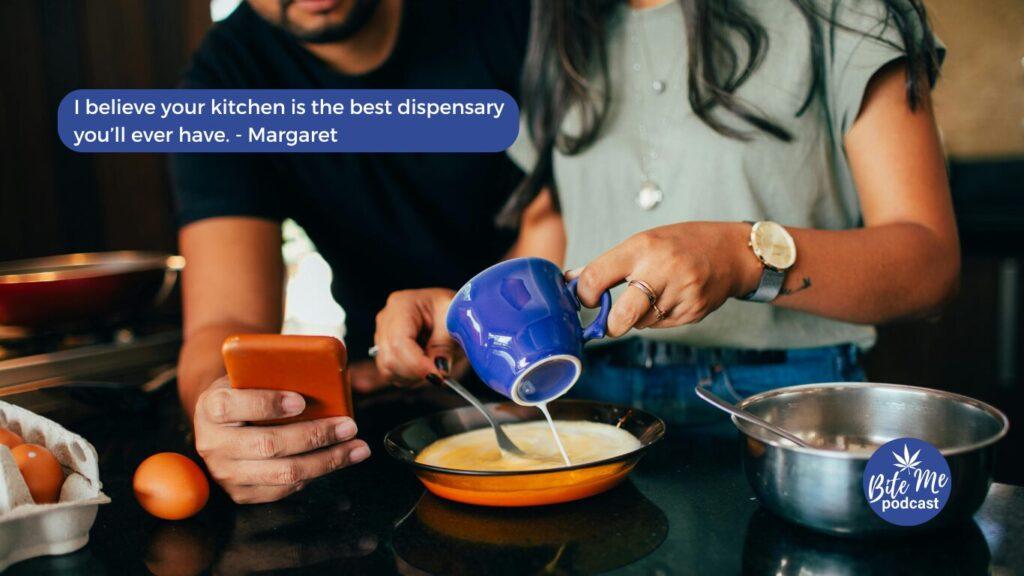
If you’ve ever felt intimidated by the idea of making your own edibles, or wondered if you need to drop hundreds of dollars on gadgets, this post is for you. Let’s break down the myths, celebrate the culture, and get practical about how you can make safe, effective, and delicious edibles right in your own kitchen.
Listen to this episode:
The Real Story: My Journey with Homemade Edibles
Let’s start with a confession: when I first started making edibles, I had no fancy equipment. No high-tech infusion machines, no digital potency testers—just a saucepan, a mason jar, and a willingness to experiment. Like many, I was drawn to edibles because smoking didn’t agree with me. Anxiety, paranoia, and a racing heart were not my idea of a good time. Edibles, on the other hand, offered a gentle, long-lasting relief that felt like a warm hug.
But here’s the kicker: dosing is everything. My first batch of infused butter could have been a disaster if I’d overdosed. Edibles hit differently than smoking—slower onset, longer duration, and if you overdo it, you’re in for a wild (and not always pleasant) ride. Thankfully, I got it right, and it changed my relationship with cannabis forever.
Myth-Busting: You Don’t Need Expensive Gadgets To Make Great Homemade Edibles
One of the biggest barriers I see is the belief that you need to invest in pricey equipment to make edibles at home. Let’s break that down:
What You Actually Need
Basic Kitchen Tools: A saucepan, a mason jar, a strainer, kitchen utensils, stuff you already own.
Patience and Curiosity: Infusing takes knowledge and time, but it’s not rocket science.
Simple Math: Basic calculations or a free online calculator can help you estimate potency. Keep notes and adjust as you go.
What’s Nice, But Not Necessary
Infusion Machines: Sure, they’re convenient, but not essential. A nice to have, not a must have.
Potency Testers: Devices like the tCheck are helpful, but you can manage without them if you’re careful and keep good records.
Bottom line: Accessibility matters. Everyone deserves access to cannabis medicine, regardless of budget or tech skills.
The Cultural Roots of Homemade Edibles: More Than Brownies
When people picture cannabis culture, they often think of joints, bongs, or dabs. But homemade edibles have a rich, global history:
Moroccan Majoun: A hash-infused sweet with dried fruit and nuts.
Indian Bhang: A traditional cannabis beverage enjoyed for centuries.
Brownie Mary: The San Francisco legend who baked cannabis brownies for HIV/AIDS patients, risking arrest to provide relief.
These stories remind us that edibles are about more than just getting high, they’re about care, community, and culture.
Modern Grassroots Efforts
Programs like Vancouver’s High Hopes Foundation continue this tradition, distributing high-dose edibles to those in need as a form of harm reduction. These efforts often operate in legal grey areas, but they’re lifelines for many.
Homemade Edibles vs. Commercial Edibles
Let’s talk about the elephant in the room: the legal cannabis market is booming, but it’s not always serving everyone’s needs.
The Corporate Approach
Precision Dosing: Yes, commercial edibles are consistent.
Shelf Stability: They last longer on the shelf.
Limited Variety: Most products fall into a small number of categories like gummies, cookies, or chocolates.
The Homemade Advantage
Ingredient Control: Choose your cannabis material, buds, trim, shake, or concentrates.
Potency Customization: Tailor the dose to your needs.
Dietary Flexibility: Gluten-free, vegan, sugar-free? No problem.
Cultural Connection: Infuse family recipes, experiment with global traditions, and make it your own.
Homemade edibles have soul. They’re creative, personal, and rooted in tradition.
Edibles as Community Builders
Not everyone smokes, but everyone eats. Edibles are a social equalizer and a fantastic alternative to alcohol at gatherings.
How Edibles Foster Connection
Recipe Sharing: Swap recipes, tips and tricks with friends or online communities like the Bite Me Cannabis Club.
Edible Swaps: Trade your creations and discover new favorites.
Gifting: Homemade edibles make thoughtful, personalized gifts.
Inclusive Rituals: Enjoy infused meals, coffee, or tea together, no smoke required.
Food and cannabis are natural partners, and sharing them creates safe, welcoming spaces for everyone.
The Future of Edibles: Innovation and Education
I’m genuinely excited about where edibles are headed. Here’s what I see on the horizon:
Trends to Watch
Workshops and Classes: More hands-on learning opportunities for home cooks.
Meal Kits and Baking Mixes: Infused products that make DIY even easier.
Microdosing: Finding the minimum effective dose for gentle, functional effects.
Functional Blends: Combining cannabinoids (CBD, CBG, CBN, THC-A, THCV) with adaptogens and herbs for targeted wellness. Imagine a THC-lion’s mane mushroom combo for cognitive support!
What We Need
Robust Education: Demystify the process and empower people to make safe, effective edibles.
Policy Protection: Safeguard home grow and home infusion rights. If we lose the right to grow, we lose the right to make our own medicine.
Actionable Tips for Making Edibles at Home
Ready to get started? Here’s my expert advice for kitchen table edibles:
- Start Simple
Use what you have: a mason jar, saucepan, and strainer.
Begin with small batches to minimize waste and risk.
Check out the Complete Guide To Great Edibles.
- Mind Your Math
Use free online calculators to estimate potency.
Keep detailed notes on your process and results.
Adjust future batches based on your experience.
Check out the Easy Edible Dosing.
- Prioritize Safety
Label your edibles clearly, especially if you share a household.
Store them securely, away from children and pets.
Start low and go slow with dosing, especially for new consumers.
- Get Creative
Infuse oils, butters, alcohol, or even salt and sugar.
Experiment with recipes from different cultures.
Try savory dishes, not just sweets.
- Build Community
Join online groups or local meetups to share knowledge and recipes.
Participate in edible swaps or potlucks.
Advocate for home grow and infusion rights in your area.
Final Thoughts: Your Kitchen, Your Dispensary
Your kitchen and garden are the best dispensaries you’ll ever have. Cannabis belongs in every kitchen, and homemade edibles don’t need to be expensive or exclusive. With a little knowledge and a lot of heart, anyone can make safe, effective, and delicious edibles at home.
I invite you to share your stories, recipes, and wisdom, whether it’s with the Bite Me Cannabis Club, your local community, or just friends and family. If you haven’t tried making edibles yet, give it a shot! You might discover a new passion for cooking and baking, infused or not.
In a world of increasing corporate consolidation, it’s more important than ever to protect our rights to grow, make, and share cannabis medicine on our own terms.
That’s it for this week friends. Please email me any questions, comments, pictures of your creations or anything else, I love hearing from listeners! Direct messages to stayhigh@bitemepodcast.com, or leave a voice message on the podcast hotline.
You can also support the show by subscribing, sharing episodes, leaving a review or buying me a cookie! Whatever way you choose, I’m grateful that you’re listening.
Stay high,
Margaret
FAQ on Homemade Edibles
Q: Do I need expensive equipment to make edibles at home?
A: No, you don’t need expensive equipment to make effective edibles at home. The idea that you need high-tech gadgets is a common misconception. Many people make great edibles with basic kitchen tools.
Q: What are the benefits of making edibles at home?
A: Making edibles at home allows you to control your consumption, avoid adverse effects from smoking, and tailor the experience to your preferences. It can also be more cost-effective and accessible.
Q: How can I avoid overconsumption with edibles?
A: Start with a small dose and wait to see how you feel before consuming more. This is especially important with edibles because their effects can take longer to kick in and last longer than smoking.
Q: What is the importance of set and setting when consuming cannabis?
A: Set and setting refer to your mindset and environment when consuming cannabis. Being in a comfortable and safe environment can greatly enhance your experience and reduce the risk of negative effects.
Q: How did you get started with making edibles?
A: Margaret started making edibles as an alternative to smoking, which often led to anxiety and other adverse effects. Making edibles at home allowed her to have a more controlled and enjoyable experience.
Q: What is the role of homemade infusions in cannabis culture?
A: Homemade infusions play a significant role in cannabis culture by promoting accessibility and creativity. They allow individuals to make their own products tailored to their needs and preferences.
Q: Can anyone make edibles at home?
A: Yes, anyone can make edibles at home with basic kitchen tools and a bit of knowledge. It’s a great way to take control of your cannabis experience.
Timestamps for Homemade Edibles
Introduction and Podcast Overview (00:00:05)
Margaret introduces herself, the podcast, and the episode’s unique focus on her summit presentation.
The Forbidden Session and Cannabis Industry Gatekeeping (00:01:04)
Discussion of the Forbidden Session summit, its purpose, and the exclusion of smaller cannabis creators from mainstream conferences.
Margaret’s Approach to Edibles and Home Infusion (00:02:13)
Margaret’s ethos: encouraging home cultivation and edibles, and her place outside the commercial cannabis industry.
Kitchen Table Edibles: Accessibility and Creativity (00:03:15)
Introduction to the main topic: making edibles without fancy gadgets, and Margaret’s personal journey with edibles.
Challenges with Smoking and Discovering Edibles (00:04:26)
Margaret’s negative experiences with smoking cannabis and how edibles became her preferred method.
First Edibles Experience and Avoiding Overdose (00:05:24)
Her first attempt at making edibles, the risks of overdosing, and stories from dispensary customers.
Making Homemade Edibles Without Expensive Gadgets (00:06:18)
How she made her first edibles with basic kitchen tools and the benefits of slow onset effects.
The Myth of High-Tech Edibles and Accessibility (00:07:17)
Debunking the idea that expensive gadgets are necessary; advocating for budget-friendly, accessible edibles.
Potency Control and Dosing Without Labs (00:08:18)
Explaining how to control potency using simple math, free calculators, and experience-driven dosing.
Importance of Potency Information and Safe Sharing (00:10:24)
Emphasizing the need for clear potency info when gifting edibles and avoiding “mystery” edibles.
Homemade Edibles in Cannabis Culture and History (00:11:34)
Exploring the historical and cultural significance of edibles, from ancient recipes to modern mutual aid.
Homemade Edibles: Control and Customization (00:13:41)
Benefits of making your own edibles: control over ingredients, potency, cost, and cultural dishes.
Corporate Edibles vs. Homemade Edibles (00:14:48)
Post-legalization market dynamics, pros and cons of commercial edibles, and the loss of variety and soul.
Community, Connection, and Homemade Edibles as Social Glue (00:15:56)
How edibles foster community, sharing, and social connection, both online and in real life.
The Future of Edibles: Trends and Innovations (00:18:32)
Predictions for edibles: more workshops, low-dose options, functional blends, and plant pairings.
Protecting Home Infusion and Cannabis Rights (00:19:44)
The need for education, policy protection for home infusion and home grow, and preserving cannabis culture.
Conclusion and Call to Action (00:21:03)
Encouragement to share knowledge, try making edibles, and join the Bite Me community.
Outro and Farewell (00:23:06)
Margaret thanks listeners, invites them to share the episode, and signs off.
Margaret 00:00:05 What happens when you take a love of food, a passion for culture, and a deep knowledge of cannabis and you toss them all to one bowl, you get. Bite me, the podcast that explores the intersection of food, culture and cannabis and helps cooks make great edibles at home. I am your host, Margaret, a certified Ganjier Tsai Certified Cannabis Educator, and I believe your kitchen is the best dispensary you'll ever have. Together, we'll explore the stories, the science, and the sheer joy of making safe, effective, and unforgettable edibles at home. So pre-heat your oven and let's get ready for a great episode, shall we? Dive in? Yes we shall. So today is episode 337, and I'm doing something a little bit different, so I hope you'll join me for the ride. And a little while ago I attended an online summit called the Forbidden Session, and this was put together by Rob Sanchez, host of apartment 113. He wanted to bring together some of the voices in cannabis that don't make it to the main stages, he said.
Margaret 00:01:04 And I think he was thinking of some of these large conferences that you probably have heard about, like MJ bisschen. That one comes to mind quite frequently because that's a huge conference that happens in Las Vegas every year, and there's lots more out there. There's plenty of them here in Canada as well where I live. He really wanted to give the opportunity for smaller creators and smaller educators an opportunity to speak, and I really loved that. So I wanted to support it. So I was one of his speakers and I helped to help to promote it. Last year when it happened, it happened late last fall. I had the opportunity to give a talk at this online summit, if you will, and I am sharing my presentation here today. Whether it's politics, gatekeeping or just playing it safe when these voices don't get an opportunity to join the conversation, some of these larger conventions and gatherings, they're keeping vital ideas out of the conversation. I couldn't agree more, even with the Bite Me brand. I don't necessarily fall into the traditional cannabis industry because I am not selling a product per se.
Margaret 00:02:13 Yeah, sure, you can buy my edibles journal on Amazon or you can join my online community, but I'm encouraging people to grow their own cannabis and make their own edibles. And I think there's a place for everybody in this industry, including the home cultivators, the home makers, the healers, the disruptors, those who don't just fit neatly into the industry when it's become commercialized. I was thrilled to have the opportunity to practice some of my speaking skills and put together a presentation. And so I'm going to share that with you today. So if you're joining in for the first time, this one will be a little bit different. But I hope you'll stick with me as I cover this topic. And if you've been here for a while, thank you so much for being here. I'm sure you're here because my ethos Resonates with yours as well. And you're here because you love to take control of your high life. Do it on your own terms. And maybe that means you are buying from a dispensary or from a medical provider, or you're making your own, or a combination of both.
Margaret 00:03:15 I think the beautiful thing about the cannabis industry is that there is room for all of us. So today I present to you kitchen table edibles, accessibility, creativity and the role of homemade infusions in cannabis culture. So I guess to just introduce the topic, how I started making my own edibles and without fancy tools, I think oftentimes there's this idea that you have to have expensive, high tech gadgets in order to make effective edibles at home, and that makes it really inaccessible for a lot of people. Because if you think you have to have like a $300 gadget in order to make good edibles, then you might not even bother trying. And I started making edibles years ago now because I found that consuming cannabis, the traditional method by smoking joints, often led me to feeling anxious and to having a lot of those adverse effects that a lot of people experience when they get kind of paranoid, rapid heart rate, drop in body temperature. Like that didn't make it enjoyable for me. And as someone who has been consuming cannabis off and on my entire life, I found that I was like, missing out.
Margaret 00:04:26 I realized now, looking back, it was probably also because when I was in these situations, set and setting does apply as well as much with cannabis as it does with other substances like psilocybin, which sentence setting is often applied to that particular substance? But it applies just as much to cannabis as well. And I was less aware of that idea then. And also, the idea that my tolerance was probably very low then hasn't really gotten that much higher when it comes to smoking or vaping since, especially after a month long tolerance break that I just finished, I was probably just consuming too much. I could have taken a puff of the joint, taken some time to wait and see how I feel before consuming more. But a lot of the times in social situations when enjoys being passed around. You know, it's really easy to over consume. So for a lot of reasons, I was getting really uncomfortable when I was smoking cannabis. And then I found that I didn't want to be social, which was kind of like the antithesis of what I was actually consuming it for in the first place.
Margaret 00:05:24 So I had the opportunity to try making edibles. And I can tell you right now that it's just a small miracle that I didn't fuck it up. If I had overdosed myself with that first batch of butter that I had made, which I then used to make a batch of cookies, I would probably not be here today. Bite me. Wouldn't exist. This podcast wouldn't be here because I would have been so turned off of the experience of using edibles, which would have been way worse than overdosing when you smoke cannabis, because it just lasts so much longer and can often be way more intense. And I have since, you know, overdosed myself numerous times. But if I had done it that very first time, I probably would never have done it again. And I know when I worked at the dispensary for many for a couple of years, I worked at the first legal dispensary in the town where I live. I heard numerous stories every time somebody came over to the glass case with the edibles, when the when those first started being released.
Margaret 00:06:18 People often had a story about someone themselves or someone that they knew personally that had really had a terrible experience with edibles. So I found that making edibles, when I did make that first batch, I did it the slowest, most painful way on the stove that you possibly could. But I managed to not overdose myself, and I loved the effects. I found that I really liked that slow onset, and if it's something that you can plan for, you can just build that into when you're consuming. I loved how it just slowly came on. It was like a warm hug, the way it made my body feel. I could still, when I found the right dose, carry on a conversation and not feel self-conscious, not feel paranoid. And I just really love the way it made me feel. And of course, later it gave me a lot of pain relief because, you know, like anybody who gets to be a certain age, I do experience a lot of aches and pains, and the long effects of edibles really lends itself well to relieving some of that, too.
Margaret 00:07:17 So the problem is, of course, cannabis edibles are often presented as high tech and expensive. Whether you're buying them in a store, they can be quite expensive to buy. And a lot of the times, people are presented with gadgets to make edibles that seem like you have to have them. To make safe and effective edibles at home, you need something to test them. You need a gadget to to discard them. You need a gadget, another gadget to infuse. And altogether these become very expensive. I mean, one of those gadgets alone might cost you 2 or $300. And if you were thinking about trying out edibles for the first time, and you're presented with this idea that you need to have fancy gear in order to make good edibles, you're probably not even going to try. So the opportunity is to me, the edibles are a way to democratize cannabis and bring people together. Because I'm here to tell you you don't need fancy gadgets. Edibles can be done on a budget, and I'm going to break the gatekeeping for you.
Margaret 00:08:18 The $300 infusion machine versus a $10 Mason jar and a saucepan. That's really the difference we're talking about here. Now, don't get me wrong, I have a few gadgets in my kitchen. I've been doing this podcast for long enough that I have purchased and been given some of these gadgets, and I've made very good use of them. But when I started out, I didn't have any of that stuff. I did later on purchase some of these. Actually, somebody bought me my magical butter machine for the first time as a gift because I was getting into making edibles and I, you know, it was a nice, thoughtful gift. Do you need them to make great edibles? No, you really don't. You can use your everyday kitchen tools to make fantastic edibles, whether it's strainers, coffee filters, slow cookers, the pot and pan that I already mentioned. And you can also do potency control without a lab as well. You can use simple math experience driven dosing. And if you do want to spend the money, you can buy something like a tech.
Margaret 00:09:19 But again, it's not necessary because not everybody has the money for fancy gadgets. And as we are finding right now, we're out of time. This is being recorded in 2026. This presentation was first presented in late 2025. Life is just getting more expensive and accessibility matters. Not everyone has money for gadgets, but everyone deserves access to medicine. So for potency control, you can figure out the potency of your edibles with simple math and free online calculators. There's also experience driven dosing by taking really detailed notes and logs on your experience on potency and dosing, which of course, you should do with your simple math and free online calculators, especially if you're gifting them to other people. And if you're really wanted to. You could get something like a tea check, which can help. But of course, that's another expensive gadget that may scare people away from dosing their edibles properly over time. You get a lot of the information that you need, so you can stay in a safe range and consume your edibles safely without overdosing yourself.
Margaret 00:10:24 But figuring out the math and doing every single time is really important, especially if you're gifting them to somebody else. But don't discount yourself. You don't want to be overdosing yourself all the time. So learning the simple math is important, but it's pretty simple and it makes a big difference. Accessibility is the great equalizer as well. Not everybody has the money for gadgets, but everyone deserves access to medicine. And at the end of the day, when I'm eating an edible that someone's made, I have no idea if they've used a device to make their infusions or a pot in a glass jar on the stove, and it doesn't really matter, as long as what they're telling me is that they have figured out the dosage and can make recommendations around that. Like they tell me, they think it's about 25mg, then great. Knowing what my tolerance is, I can make a decision based on that information and enjoy their edible, I will say. Gone are the days that I will eat the mystery edible. I have been gifted edibles before and somebody is just like I made this, but they give me zero information about their potency other than, well, it's really strong.
Margaret 00:11:34 Or it's, you know, some other descriptors that are kind of vague and not quantifiable information. So I can't make a decision on that. And sadly, those ones usually end up in the trash because I'm not going to go on that ride anymore. So what place does edibles have in cannabis culture and in the industry? When people think of cannabis culture, they usually think of people smoking joints, hitting bongs, doing dabs. But edibles have been around for literal ages. Think of edibles like May-June, which is a Moroccan confection that typically includes dried fruit and hash, or bong, which is a cannabis beverage that originated in India like millennia ago. We all need to eat, so it's only natural that we, as human beings, would find ways to incorporate cannabis into the things that we love to eat and drink. Before legalization, we had our favorite edibles. There were infused butters and underground cannabis kitchens. Brownie Mary comes to mind, and if you're unfamiliar with her, she's the granny in San Francisco who made brownies for HIV Aids patients that were needing relief from their symptoms.
Margaret 00:12:38 And she's the embodiment of mutual care that edibles can foster. These patients were often super stigmatized, and people didn't know very much about HIV and Aids back in those days. People were afraid of them, in essence. And she was arrested more than once for the edibles that she made in her home kitchen that she brought to these patients. You fast forward now to programs like the High Hopes Foundation in Vancouver, and they distribute high dose edibles to vulnerable people in the Vancouver Downtown Eastside for medical purposes. This is an underground sharing economy that's built on trust, so even groups like High Hopes operate on a quasi legal status, as the edibles they're making are a way higher dose than what you could buy in the legal market. But they're using it as a harm reduction tool for folks who are disenfranchised or marginalized. If you've been consuming cannabis edibles for any length of time, you've probably purchased legacy market edibles. I know I have. I still do from time to time, and I still buy them from time to time from the legal dispensary in my town.
Margaret 00:13:41 But making your own allows you to take control of your high life because you have control over the the input material. Whether you're going to use bud or shake, trim, concentrates, popcorn buds, whatever you have on hand, what you have access to, you can control the potency, the cannabinoid blend, the ingredients, and you can take into account your dietary preferences. You can turn almost any recipe into an edible or culinary cannabis dish with basic know how. And this also means that beloved cultural dishes can also be disseminated, disseminated and shared in. The cost of this is significantly reduced when you go into a dispensary and you see the price of the gummies or the cookies that are available, and then you contrast that to how much it will cost you to make your own, it's usually a pretty significant difference. And and again, you can control a lot of those other inputs that you can't when you go to a dispensary. And frankly, I love the options I have when I make edibles at home, I can turn Taco Tuesday into an infused, elevated dinnertime meal.
Margaret 00:14:48 I can I can infuse the ketchup. I'm going to use my burger in the summertime. I have way more access to different ways to infuse my food safely than I would with the limited options I have in a dispensary where you're going to see a lot of gummies, a lot of cookies, a lot of chocolate wash, rinse, repeat. So post legalization has created a for profit market for infused consumer packaged goods, which increases the cost, requires packaging, which is often waste that goes into the landfill. There's marketing and branding where allowed, and it's designed to sell you something that you don't necessarily need. And consumers don't have a whole lot of input into what is going to be put out on the market. I mean, of course there is what where the demand is. But at the end of the day, consumers don't have a lot of input. You do get precision dosing and nano emulsion tech for faster onset, shelf stability, consistency and standardization. Those are all pluses. You do get all of those things when you're purchasing an illegal dispensary, but it comes at the cost of variety and soul.
Margaret 00:15:56 So we end up with this tension between corporate consistency versus homemade creativity. But homemade traditions hold irreplaceable cultural value. That is the line that I feel like I walk with bite Me. So let's talk about community and connection. Edibles are a great social equalizer. Not everyone smokes, but everyone eats and drinks. And people are increasingly looking for alternatives to alcohol consumption, and edibles can really fit the bill. I found that members of Bite Me, the community and the podcast have really bonded over their experiences growing cannabis and making edibles, and they want to share that with others in the group where people will ask questions and share recipes and knowledge. And there's no gatekeeping. And this has created a sharing mindset in the community, which I really love to see. And I think that extends beyond into their own personal communities in which they live. Edibles can be as communal or socially oriented as you want them to be. You can make them for yourself or for others. Maybe you're making edibles for those in need, gifting them to someone you care about, or trading via edible swaps or just trading in general.
Margaret 00:17:08 I've traded edibles for plenty of things over the years. Edibles made in your own home kitchen are a powerful tool of sharing and fostering relationships. And there's also this cultural glue that comes with edibles because they're food based and it's a food based way to get elevated. The rituals around food sharing, meals, bonding, or getting to know someone often happens around the table. So even something as simple as enjoying a coffee or tea together can be included in the edibles experience, and the cannabis kitchen can be a safe space. I mean, how simple is it to stir in a little infused oil into your coffee or tea to elevate that experience? If you choose DIY edibles, preserve what corporate products cannot replicate accessibility, heritage, and the human touch. So this is why I think homemade edibles still matter, especially now. They're affordable. They offer cultural preservation. They give creative freedom, personalisation and medical access. And who doesn't want all of those things in the infused foods that you're going to eat and enjoy? So what is the future of edibles then? Here's what I hope to see more workshops, classes, hands on learning meal kits, infused baking mixes.
Margaret 00:18:32 I know plenty of people who are doing all of these things. I can think of your candy chef, who's doing a lot of workshops in his hometown, Benevolent Bakery, who's making infused baking mixes, hands on classes, their community like the Bite Me Cannabis Club. I think you're going to see more low dose options as well, because there's a growing interest in microdosing and also that idea of finding your minimum effective dose. People are far more willing to talk about using cannabis and edibles in a way that serves them differently than what is often portrayed in pretty mainstream cannabis culture, which is, you know, getting really high. But a lot of folks aren't looking for that kind of effect. They're looking for that minimum effective dose, that small amount that can give them the effects that they're looking for, the help that they're looking for without necessarily blasting off into space. You're going to see more functional blends. CBD CBG CBN thc thc a thc VA, all these things new cannabinoids or emerging cannabinoids, the cannabinoids that haven't been activated by decarboxylation.
Margaret 00:19:44 So the raw cannabis combinations targeting specific wellness goals for people. And I think you're going to see more plant pairings. We're going to see I'm already seeing some of this. Adaptogens herbs chirping rich ingredients for enhanced benefits. Think your THC infusion paired with a lion's mane infusion. So where does this leave us right now? We need to join and support robust education platforms, including workshops, recipe sharing sites and community spaces that demystify the edibles making experience and empower home cooks with knowledge and confidence. Much like the Bite Me Cannabis Club, we need protective policies, laws that safeguard home infusion rights and keep DIY cannabis accessible to everyone. Protecting the right to make edibles at home without corporate gatekeeping or excessive regulation. And this probably also looks like protecting home grow. You must always be protecting the right to home grow, because so many folks who are growing at home are using some of that excess plant material to make edibles. And if we don't have the right to grow our own medicine, then it's very easy for other rights, like the ability to make edibles at home, to be stripped away as well.
Margaret 00:21:03 So we want to preserve what makes cannabis culture meaningful while expanding access for everyone. The future of cannabis culture depends on balancing industry innovation with grassroots creativity. Innovation should expand access and not replace tradition. Your kitchen and garden are the best dispensaries you'll ever have. Cannabis belongs in every kitchen. Edibles don't need to be expensive or exclusive, and every kitchen can be a cannabis kitchen with the right knowledge. And notice I didn't say the right tools because you already have the tools. The future of cannabis is homemade, so here's my invitation. Share your recipes, your stories, your knowledge through community platforms like Bite Me Cannabis Club, your local community, friends, family and if you haven't made edibles before. Why not try it out and see how it works? I didn't do much baking before I started making edibles myself, but after I made all kinds of baked goods and it's encouraged me to cook and bake non infused items as well, and you might find the same thing. And of course there's always cheaters for that too.
Margaret 00:22:12 You're not crazy about baking. Well, guess who makes really good baking mixes? A whole bunch of different companies. You can go down to your store right now and pick up a brownie mix or a cake mix. Muffins, cookies, and all you have to do is add your infusion. You have to learn how to do that first. So friends, thank you for being a part of the Bite Me community. Being part of this ethos that I have, how I feel about edibles, and I feel like it's even more important in this day and age where where corporate consolidation seems to be happening across more and more industries. I want to make sure that you and I can be making growing our own cannabis, making our own edibles, sharing them with people we care about for decades to come. With that, my friends, if you enjoyed this episode, please share it with somebody that you think might enjoy it. I invite you to join the Bite Me Cannabis Club so we can talk about this further.
Margaret 00:23:06 And finally, I'm your host, Margaret. And until next time, stay high.
Sign up to receive email updates
Enter your name and email address below and I'll send you periodic updates about the podcast.
[…] Pair this with: Homemade Edibles: Where Culture, Community, And Cannabis Meet In The Kitchen […]